Posted on Leave a comment

Fintech CEO and Forbes 30 Under 30 alum has been charged for alleged fraud

By now, the Forbes 30 Under 30 list has become more than a little notorious for the amount of entrants who go on to be charged with fraud. Notable alumni include FTX founder Sam Bankman-Fried, Frank CEO Charlie Javice, Joanna Smith-Griffin, founder of the AI startup AllHere Education, and “pharma bro” Martin Shkreli, among others. Now, another member of the list has been hit with federal charges.

Gökçe Güven, a 26-year-old Turkish national and the founder and CEO of fintech startup Kalder, was charged last week with alleged securities fraud, wire fraud, visa fraud, and aggravated identity theft.

The New York-based fintech startup — which uses the “Turn Your Rewards into [a] Revenue Engine” tagline — says it can help companies create and monetize individual rewards programs. The company was founded in 2022, and offers participating firms the opportunity to earn ongoing revenue streams via partner affiliate sales, Axios previously reported.

Güven was featured in last year’s Forbes 30 Under 30 list. The magazine notes in the writeup that Güven’s clients included major chocolatier Godiva and the International Air Transport Association, the trade organization that represents a majority of the world’s airlines. Kalder also claims to have enjoyed the backing of a number of prominent VC firms.

The U.S. Department of Justice alleges that, during Kalder’s seed round in April of 2024, Güven managed to raise $7 million from more than a dozen investors after presenting a pitch deck that was rife with false information.

According to the government, Kalder’s pitch deck claimed that there were 26 brands “using Kalder” and another 53 brands in “live freemium.” However, officials say that, in reality, Kalder had, in many cases, only been offering heavily discounted pilot programs to many of those companies. Other brands “had no agreement with Kalder whatsoever—not even for free services,” officials said in a press release announcing the indictment. The pitch deck also “falsely reported that Kalder’s recurring revenue had steadily grown month over month since February 2023 and that by March 2024, Kalder had reached $1.2 million in annual recurring revenue.” 

The government also accuses Güven of having kept two separate sets of financial books. One of those sets included “false and inflated numbers,” and was presented to investors or potential investors to hide the “true financial condition of the company,” the government claims. The DOJ also alleges that Güven used lies about Kalder as well as forged documents to obtain a category of visa reserved for individuals of “extraordinary ability,” that would allow her to live and work in the United States.

Techcrunch event

TechCrunch Founder Summit 2026: Tickets Live

On June 23 in Boston, more than 1,100 founders come together at TechCrunch Founder Summit 2026 for a full day focused on growth, execution, and real-world scaling. Learn from founders and investors who have shaped the industry. Connect with peers navigating similar growth stages. Walk away with tactics you can apply immediately

Save up to $300 on your pass or save up to 30% with group tickets for teams of four or more.

TechCrunch Founder Summit: Tickets Live

On June 23 in Boston, more than 1,100 founders come together at TechCrunch Founder Summit 2026 for a full day focused on growth, execution, and real-world scaling. Learn from founders and investors who have shaped the industry. Connect with peers navigating similar growth stages. Walk away with tactics you can apply immediately

Save up to $300 on your pass or save up to 30% with group tickets for teams of four or more.

Boston, MA
|
June 23, 2026

TechCrunch reached out to Güven through her personal website. The CEO said that she would be sharing a statement about the charges on Tuesday.

Ref link: Fintech CEO and Forbes 30 Under 30 alum has been charged for alleged fraud
Posted on Leave a comment

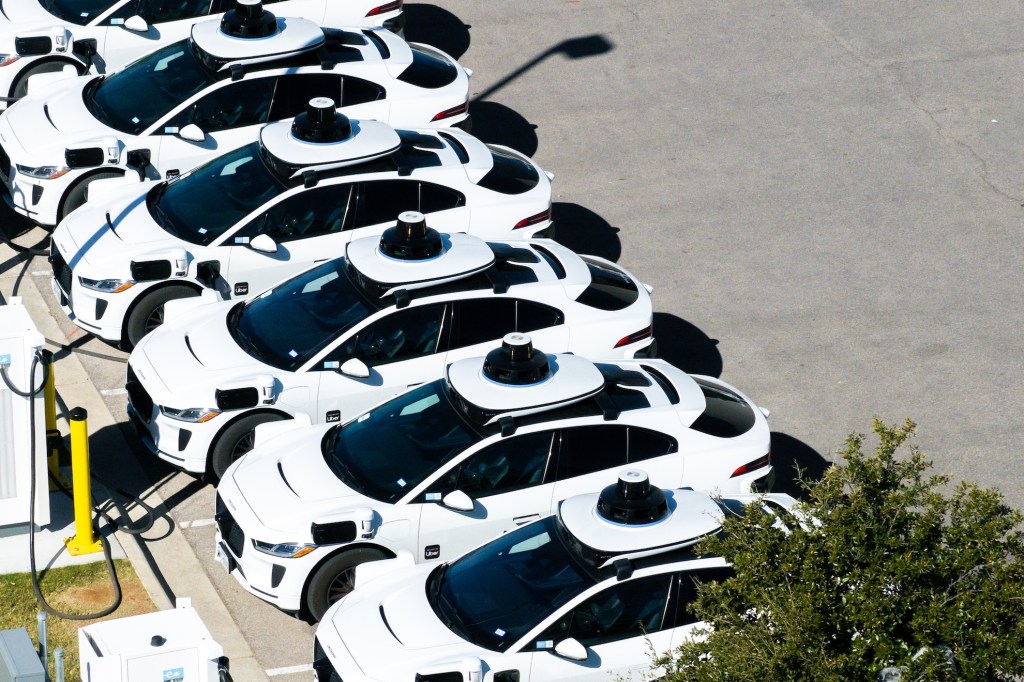
Waymo raises $16B to scale robotaxi fleet internationally

Waymo, the Alphabet-owned autonomous vehicle company, has raised $16 billion as it plans to grow its fleet of driverless taxicabs this year to more than a dozen new cities internationally, including London and Tokyo.

Dragoneer Investment Group, DST Global, and Sequoia Capital led the funding round, which now values Waymo at $126 billion, the company said in a blog post Monday. Parent company Alphabet supported the round and maintained its position as majority investor.

The round also included significant investments from Andreessen Horowitz and Mubadala Capital, as well as Bessemer Venture Partners, Silver Lake, Tiger Global, and T. Rowe Price. Additional investors included BDT & MSD Partners, CapitalG, Fidelity Management & Research Company, GV, Kleiner Perkins, Perry Creek Capital, and Temasek.

Waymo said the funds will be used to fuel its growth, which has accelerated over the past year and doesn’t appear to be slowing. The company recently secured rides to and from San Francisco International Airport and has expanded its robotaxi service throughout Northern California and several major metropolitan areas in the U.S., including Los Angeles, Austin, and Miami.

For years, the former Google self-driving project slowly progressed forward, testing its autonomous vehicle tech on public roads in Silicon Valley and the Bay Area and providing the occasional public or media demo. In 2016, it made its first geographic leap forward and began testing in Phoenix, where it eventually pulled its human safety driver out of the vehicles. Phoenix became Waymo’s first robotaxi market, in which the public could hail driverless Chrysler Pacifica minivans.

Waymo pushed down the accelerator in August 2023 after receiving the final necessary permit to operate a robotaxi service — and charge for rides — in California. It launched a limited service in San Francisco, later expanding to much of the greater Bay Area, Silicon Valley, and more recently to the freeways that connect the dozens of towns in the area. It also expanded to Los Angeles. The company launched in Austin and Atlanta in 2025 through a partnership with Uber. It kicked off the year by expanding to Miami.

The geographic expansion has translated to 400,000 rides provided every week across six major U.S. metropolitan areas. The company said that in 2025 alone, it more than tripled its annual volume to 15 million rides, surpassing 20 million lifetime rides to date.

Techcrunch event

TechCrunch Founder Summit 2026: Tickets Live

On June 23 in Boston, more than 1,100 founders come together at TechCrunch Founder Summit 2026 for a full day focused on growth, execution, and real-world scaling. Learn from founders and investors who have shaped the industry. Connect with peers navigating similar growth stages. Walk away with tactics you can apply immediately

Save up to $300 on your pass or save up to 30% with group tickets for teams of four or more.

TechCrunch Founder Summit: Tickets Live

On June 23 in Boston, more than 1,100 founders come together at TechCrunch Founder Summit 2026 for a full day focused on growth, execution, and real-world scaling. Learn from founders and investors who have shaped the industry. Connect with peers navigating similar growth stages. Walk away with tactics you can apply immediately

Save up to $300 on your pass or save up to 30% with group tickets for teams of four or more.

Boston, MA
|
June 23, 2026

“We are no longer proving a concept,” the company wrote in its blog post. “We are scaling a commercial reality, laying the groundwork for ride-hailing operations in over 20 additional cities in 2026, including Tokyo and London.”

The rapid expansion has also led to increased scrutiny and criticism as Waymo’s robotaxis have made missteps and the technology creates problems for some residents.

Some robotaxis have exhibited dangerous behaviors particularly in school zones. The National Highway Traffic Safety Administration’s Office of Defects Investigation as well as the National Transportation Safety Board (NTSB) have opened investigations into the illegal behavior of Waymo robotaxis around school buses. The NHTSA also launched another investigation last week after a Waymo robotaxi hit a child near a school. The child, who sustained minor injuries, was struck at about 6 mph.

Ref link: Waymo raises $16B to scale robotaxi fleet internationally

Posted on Leave a comment

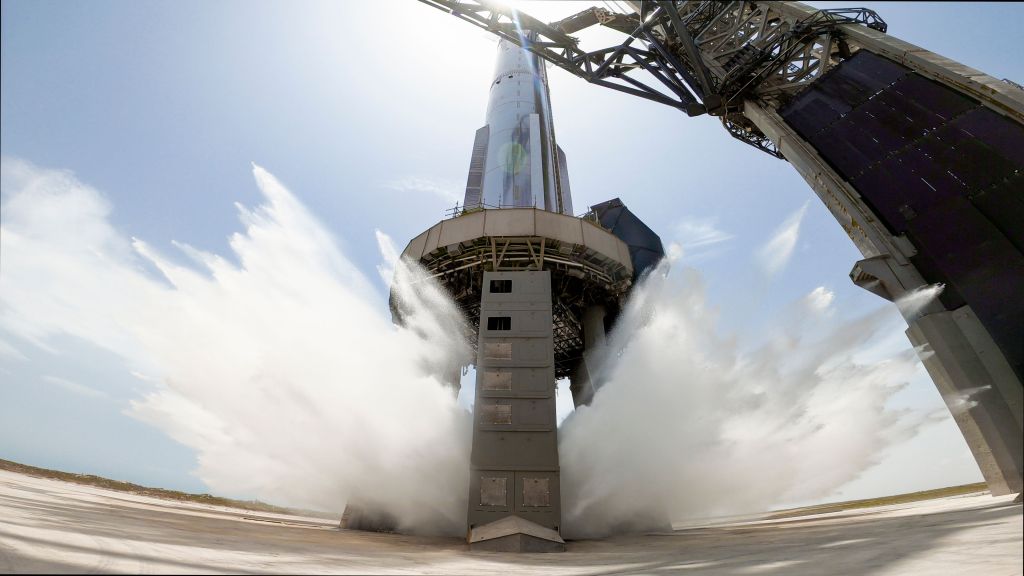
Elon Musk’s SpaceX officially acquires Elon Musk’s xAI, with plan to build data centers in space

SpaceX has acquired Elon Musk’s artificial intelligence startup, xAI, creating the world’s most valuable private company, the spaceflight company announced Monday.

Musk, who is also the CEO of SpaceX, wrote in a memo posted to the rocket company’s website that the merger is largely about creating space-based data centers — an idea he has become fixated on over the last few months.

“Current advances in AI are dependent on large terrestrial data centers, which require immense amounts of power and cooling. Global electricity demand for AI simply cannot be met with terrestrial solutions, even in the near term, without imposing hardship on communities and the environment,” he wrote. (xAI has been accused of imposing some of that hardship on the communities near its data centers in Memphis, Tennessee.)

The tie-up values the combined company at $1.25 trillion, according to Bloomberg News, which was first to report the completed deal. SpaceX has been reportedly preparing an IPO for as early as June of this year. It’s unclear whether the merger will affect that timeline. Musk did not address the IPO in his public memo.

The merger brings together two of Musk’s companies, each with its own financial challenges. xAI is currently burning around $1 billion per month, according to Bloomberg. SpaceX, meanwhile, generates as much as 80% of its revenue from launching its own Starlink satellites, according to Reuters. Last year, xAI acquired X, the social media company also owned by Musk, with Musk claiming a combined company valuation of $113 billion.

Musk wrote in his memo that it will take a constant stream of many — although he did not specify how many — satellites to create these space-based data centers, ensuring that SpaceX will have an even-larger constant stream of revenue for the foreseeable future. (That revenue loop likely looks even more attractive when you consider that satellites are required to be de-orbited every five years by the Federal Communications Commission.)

While space data centers may be the stated goal, SpaceX and xAI have very different near-term objectives.

Techcrunch event

TechCrunch Founder Summit 2026: Tickets Live

On June 23 in Boston, more than 1,100 founders come together at TechCrunch Founder Summit 2026 for a full day focused on growth, execution, and real-world scaling. Learn from founders and investors who have shaped the industry. Connect with peers navigating similar growth stages. Walk away with tactics you can apply immediately

Save up to $300 on your pass or save up to 30% with group tickets for teams of four or more.

TechCrunch Founder Summit: Tickets Live

On June 23 in Boston, more than 1,100 founders come together at TechCrunch Founder Summit 2026 for a full day focused on growth, execution, and real-world scaling. Learn from founders and investors who have shaped the industry. Connect with peers navigating similar growth stages. Walk away with tactics you can apply immediately

Save up to $300 on your pass or save up to 30% with group tickets for teams of four or more.

Boston, MA
|
June 23, 2026

SpaceX is currently trying to prove that its Starship rocket is capable of bringing astronauts to the moon and Mars, while xAI is competing with leading artificial intelligence companies like Google and OpenAI. The pressure on xAI is so great, the Washington Post reported Monday, that Musk loosened restrictions on the company’s chatbot Grok — which contributed to it becoming a tool for making AI-generated nonconsensual sexual imagery of adults and children.

Musk is also the head of Tesla, The Boring Company, and Neuralink. Tesla and SpaceX previously invested $2 billion each in xAI.

Ref link: Elon Musk’s SpaceX officially acquires Elon Musk’s xAI, with plan to build data centers in space

Posted on Leave a comment

China is leading the fight against hidden car door handles

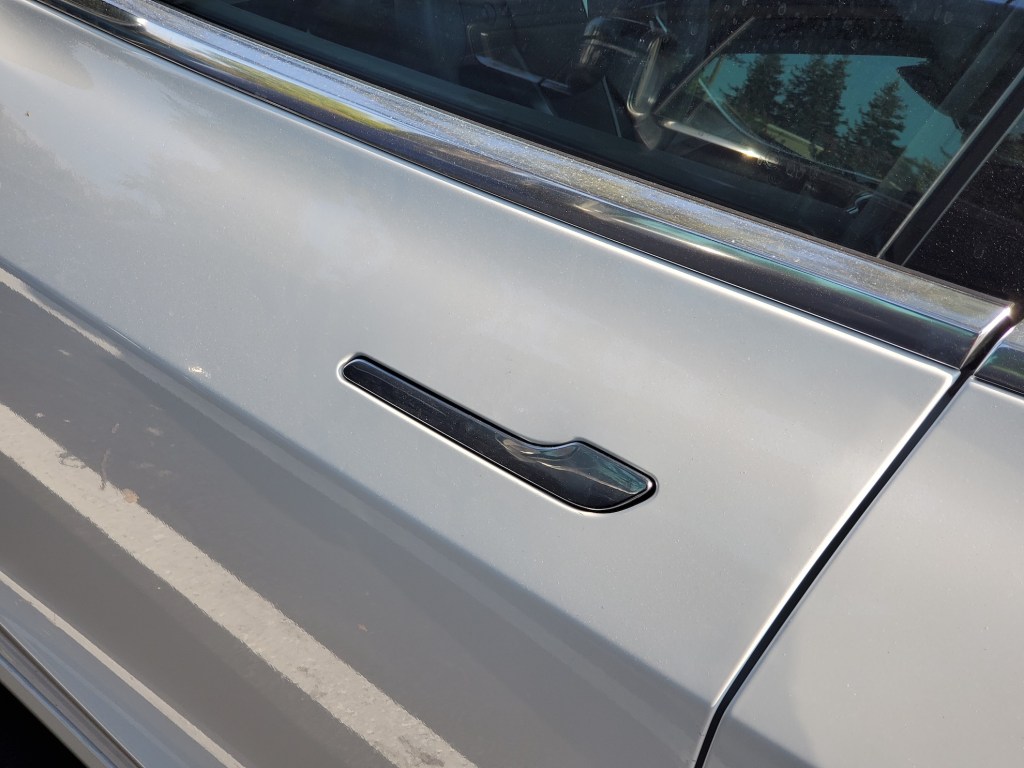
One of the design features that became synonymous with Tesla has been banned in China.

Under new safety rules published Monday by China’s Ministry of Industry and Information Technology, cars sold in the country must have mechanical releases on their door handles. The new rules, which go in effect January 1, 2027, will prohibit the hidden, electronically actuated door handles popularized by Tesla — and now found on numerous other electric vehicles in China.

The new rule dictates that each door (excluding the tailgate) should be equipped with a mechanically released external door handle. Vehicles must also have a mechanical release on the interior of the vehicle. Bloomberg previously reported on the new safety policy.

Numerous high-profile fatal incidents, in which occupants have become trapped in their vehicles, have raised concerns among safety regulators and advocates globally. China is the first country to issue a ban.

An investigation by Bloomberg last September uncovered problems with the concealed door handles on Tesla vehicles, citing several crashes in which first responders or occupants were unable to open the doors because the electronic door locks weren’t getting enough power from the vehicle’s battery system to work properly. The U.S. National Highway Traffic Safety Administration then opened a defect investigation into certain Tesla Model Y and Model 3 door handles. While Tesla does have manual releases inside its vehicles, federal investigators noted that the releases can be hard for children to access, and many owners are unaware of their existence. Some U.S. lawmakers have proposed regulation requiring manual door releases in all new vehicles.

Fatal incidents in China, including a crash involving a Xiaomi SU7 electric sedan, prompted regulators there to propose changes to EV door handles last year.

The Chinese government began the process in May 2025 with more than 40 domestic vehicle manufacturers, parts suppliers, and testing institutions participating in the initial research. More than 100 industry experts held multiple rounds of discussions to determine the standard framework and form a draft standard of what would become the Safety Technical Requirements for Automobile Door Handles rule, according to the Chinese government’s standards agency.

Techcrunch event

TechCrunch Founder Summit 2026: Tickets Live

On June 23 in Boston, more than 1,100 founders come together at TechCrunch Founder Summit 2026 for a full day focused on growth, execution, and real-world scaling. Learn from founders and investors who have shaped the industry. Connect with peers navigating similar growth stages. Walk away with tactics you can apply immediately

Save up to $300 on your pass or save up to 30% with group tickets for teams of four or more.

TechCrunch Founder Summit: Tickets Live

On June 23 in Boston, more than 1,100 founders come together at TechCrunch Founder Summit 2026 for a full day focused on growth, execution, and real-world scaling. Learn from founders and investors who have shaped the industry. Connect with peers navigating similar growth stages. Walk away with tactics you can apply immediately

Save up to $300 on your pass or save up to 30% with group tickets for teams of four or more.

Boston, MA
|
June 23, 2026

That included dozens of automakers, including Chinese companies such as BYD, Geely Holdings, SAIC, and Xiaomi, as well as foreign automakers, including General Motors, Ford, Hyundai, Nissan, Porsche, Toyota, and Volkswagen. Tesla, however, was not listed as an official “drafter,” according to information posted on the standards agency’s website.

Ref link: China is leading the fight against hidden car door handles

Posted on Leave a comment

Adobe Animate is shutting down as company focuses on AI

As Adobe ramps up its investments in AI, the company has decided to shut down its 2D animation software, Adobe Animate. On Monday, Adobe issued an update to the company’s support site and sent emails to existing customers announcing Adobe Animate will be discontinued on March 1, 2026.

Enterprise customers can continue to receive technical support through March 1, 2029, to ease the transition. Other customers will have support through March of next year, the company said.

The decision has been met with incredulity, disappointment, and anger among Adobe Animate users, who are concerned about the lack of alternatives that mirror Animate’s functionality.

One customer, posting on X, pleaded with Adobe to at least open source the software rather than abandon it. Commenters on the thread responded with angst, saying things like “this is legit gonna ruin my life,” and “literally what the hell are they doing? animate is the reason a good chunk of adobe users even subscribe in the first place.

Adobe explained its decision to discontinue the program in an FAQ, saying, “Animate has been a product that has existed for over 25 years and has served its purpose well for creating, nurturing, and developing the animation ecosystem. As technologies evolve, new platforms and paradigms emerge that better serve the needs of the users. Acknowledging this change, we are planning to discontinue supporting Animate.”

Reading between the lines, it sounds as if Adobe is saying that Animate no longer represents the current direction of the company, which is now more focused on products that incorporate AI technologies.

What’s surprising is that Adobe can’t even recommend software that will fully replace what customers are losing with Animate. Instead, it says customers with a Creative Cloud Pro plan can use other Adobe apps to “replace portions of Animate functionality.”

For instance, it suggests that Adobe After Effects can support complex keyframe animation using the Puppet tool, and Adobe Express can be used for animation effects that can be applied to photos, videos, text, shapes, and other design elements.

There were hints that Adobe was headed in this direction after Animate was ignored at the company’s annual Adobe Max conference. Plus, no 2025 version of the software was released.

The software will continue to work for those who have it downloaded, Adobe noted. Typically, Adobe charged $34.49 per month for the software, which dropped to $22.99 with a 12-month commitment. The annual prepaid plan was available for $263.88.

Some users are recommending other animation programs to use instead, including Moho Animation and Toon Boom Harmony.

TechCrunch has reached out to Adobe for comment. This article will be updated if the company responds.

Ref link: Adobe Animate is shutting down as company focuses on AI