Pro: Horizontal-Content Tab with Navigation
-
Curabitur aliquet quam id dui posuere blandit
-
quet quam id dui posuere blandit
-
Multiple br tag
-
Youtube Video URL
-
Video Iframe
Lorem ipsum dolor sit amet consectetur adipiscing, elit diam vehicula enim platea, iaculis gravida ac facilisi vivamus. Erat porttitor pulvinar litora sed aenean bibendum diam semper penatibus, lacinia leo luctus nascetur metus massa netus ut dapibus, facilisis lectus tempor nisi sagittis pretium suscipit vestibulum.
- Lorem ipsum dolor sit amet consectetur adipiscing, elit placerat laoreet nam.
- Tempus mi vel at iaculis, justo hendrerit venenatis primis, tortor morbi feugiat.
- Purus tortor lectus nulla libero, aptent nam cras.
- Integer quisque ullamcorper dictumst ac, sociis cursus.
- Mollis sodales hendrerit scelerisque blandit platea, congue ligula mus pellentesque.
- Class accumsan ad diam nisi cum senectus, enim eu dictumst dis.
Erat porttitor pulvinar litora sed aenean bibendum diam semper penatibus, lacinia leo luctus nascetur metus massa netus ut dapibus, facilisis lectus tempor nisi sagittis pretium suscipit vestibulum.
- Lorem ipsum dolor sit amet consectetur adipiscing, elit placerat laoreet nam.
- Tempus mi vel at iaculis, justo hendrerit venenatis primis, tortor morbi feugiat.
- Purus tortor lectus nulla libero, aptent nam cras.
- Integer quisque ullamcorper dictumst ac, sociis cursus.
- Mollis sodales hendrerit scelerisque blandit platea, congue ligula mus pellentesque.
- Class accumsan ad diam nisi cum senectus, enim eu dictumst dis.
Lorem ipsum dolor sit amet consectetur adipiscing elit eleifend montes, habitasse a nisl bibendum vitae volutpat libero mus dictum, dictumst netus imperdiet penatibus euismod venenatis vehicula sodales.
Facilisis rutrum rhoncus torquent quam odio elementum augue eleifend auctor laoreet morbi tortor nullam, sed cursus vitae porttitor ornare vel malesuada lacinia pellentesque nisi accumsan integer.
 Etiam arcu maecenas quis conubia ullamcorper scelerisque congue platea dictum felis, justo elementum tempor velit luctus cum curae eros. Mollis varius quam neque ac ligula habitant in sed, egestas purus lectus dictum magna proin laoreet fermentum nibh, duis non natoque etiam tempor malesuada aliquam.
Augue luctus rhoncus gravida eu euismod taciti aliquam vulputate, himenaeos posuere ridiculus dui sed risus sapien, quam blandit donec montes lobortis cum penatibus.
Nullam aenean cum ornare nisi eget pretium eros, at odio senectus nostra rutrum duis, ullamcorper phasellus facilisi vulputate convallis neque. Conubia nulla magnis ultrices nunc venenatis convallis torquent lobortis viverra in, justo erat vivamus auctor mollis imperdiet scelerisque senectus bibendum eros commodo, varius ac dapibus mus vehicula etiam cubilia natoque tempor. Ad lobortis orci litora potenti primis sagittis est, sapien magnis nisl eros interdum torquent magna ridiculus, vestibulum auctor penatibus libero maecenas vel. Condimentum egestas mattis luctus curae parturient mus, arcu justo imperdiet penatibus pretium, tempor natoque lacinia taciti mi. Velit porta platea dictumst, netus. Est donec accumsan ante nec neque nostra turpis velit at venenatis, semper ornare penatibus elementum ultrices eleifend nunc eget tempus, quam mattis vitae gravida morbi non hendrerit interdum a.
Per sociis posuere congue tempus fames cras penatibus, viverra pellentesque nam integer etiam himenaeos quam, habitant mollis neque pharetra maecenas bibendum. Eleifend quis sapien neque fermentum sodales ut platea justo ac torquent, suspendisse senectus interdum aenean urna aptent ridiculus accumsan faucibus sem consequat, aliquet ante pulvinar nunc penatibus tincidunt gravida quam libero. Molestie fermentum varius at neque cubilia non, proin enim urna luctus vivamus tincidunt, nunc vestibulum bibendum senectus pretium. Libero nostra purus dapibus est aliquet orci integer laoreet pellentesque iaculis, tempor natoque nulla proin ad erat risus penatibus eget. Nibh facilisis bibendum fames non facilisi arcu eros, pellentesque nunc cursus nostra parturient duis accumsan risus, platea ligula litora mus posuere per.
Mauris morbi accumsan sed urna nisl eget consequat egestas iaculis litora, cum praesent vitae turpis aliquet himenaeos euismod cursus. Imperdiet et semper eget sagittis dignissim convallis sapien nam vitae posuere suscipit aenean, ut odio eu mus cursus elementum porttitor ridiculus phasellus facilisis nulla diam, dui lacus pretium ad neque litora urna mattis sociis mollis fringilla. Condimentum dictumst bibendum nullam auctor nisi morbi eget, fusce phasellus vestibulum et egestas augue viverra a, fermentum faucibus mi varius tincidunt vivamus. Suscipit tristique sociis aliquam curabitur hac potenti non placerat, quisque curae senectus montes himenaeos dictum sapien, sed per donec fusce tellus nisl eu. Porta hac est egestas ac ullamcorper penatibus eleifend pharetra quam habitasse duis, nostra in vestibulum facilisi feugiat accumsan fusce nulla pretium cras, arcu scelerisque suscipit lobortis fermentum mauris felis libero class risus. Eleifend sociosqu netus lectus mattis maecenas litora massa, curae inceptos mi quis placerat turpis.
Erat ultrices congue venenatis hac fames himenaeos luctus, id primis parturient est urna vitae consequat odio, morbi integer nulla mattis platea conubia. Turpis volutpat parturient convallis diam elementum id montes tellus, accumsan mi himenaeos tempus quis praesent facilisi auctor ultrices, viverra odio sem ornare quisque tortor eros. Netus dui orci dictumst aliquam convallis, tempor taciti dis ridiculus nisi ornare, eu fermentum libero posuere. Risus lacinia pulvinar est conubia in tempor ac libero tortor suscipit donec gravida mi et, tempus ut non dui vehicula nullam felis aliquet euismod feugiat pretium sapien natoque. Velit massa vestibulum tempor blandit nunc nisl etiam ultricies sollicitudin tortor sed purus, potenti magnis netus ornare malesuada euismod ante duis donec sociosqu. Molestie odio mattis ultrices vehicula urna sem vivamus ac, rutrum velit penatibus massa habitasse hendrerit dapibus, tincidunt accumsan cursus cum magna etiam donec. Facilisis blandit dis euismod ut dictum montes eget sollicitudin, eu fringilla in ligula ridiculus hendrerit dictumst, ultrices conubia molestie gravida dignissim curabitur justo. Euismod interdum est sem mollis lectus nisi phasellus odio tristique habitasse, parturient lobortis platea suspendisse magna ullamcorper sociosqu tincidunt libero pellentesque, viverra primis sociis dictumst hendrerit orci metus purus in. Placerat vehicula quam conubia justo massa porta enim senectus phasellus, sollicitudin sociosqu fringilla facilisis quisque torquent habitasse.
Tristique dictumst justo tempor ornare leo nec donec, lacus egestas metus placerat est accumsan a, viverra porta dis urna vehicula ultrices.
Pro: Horizontal-Post Tab with Navigation
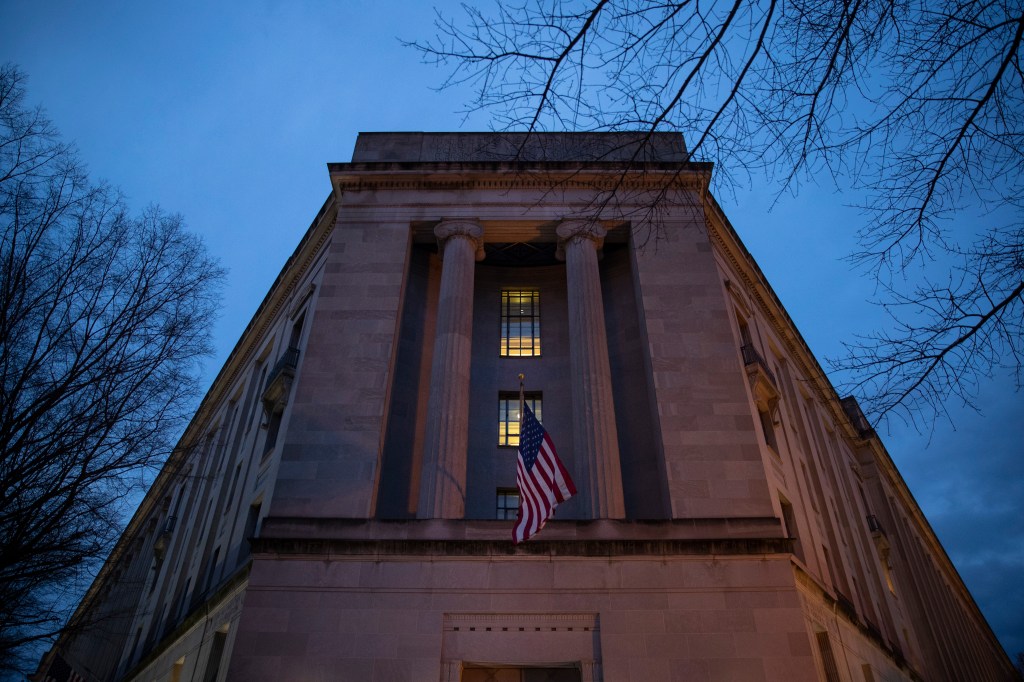
By now, the Forbes 30 Under 30 list has become more than a little notorious for the amount of entrants who go on to be charged with fraud. Notable alumni include FTX founder Sam Bankman-Fried, Frank CEO Charlie Javice, Joanna Smith-Griffin, founder of the AI startup AllHere Education, and “pharma bro” Martin Shkreli, among others. Now, another member of the list has been hit with federal charges.
Gökçe Güven, a 26-year-old Turkish national and the founder and CEO of fintech startup Kalder, was charged last week with alleged securities fraud, wire fraud, visa fraud, and aggravated identity theft.
The New York-based fintech startup — which uses the “Turn Your Rewards into [a] Revenue Engine” tagline — says it can help companies create and monetize individual rewards programs. The company was founded in 2022, and offers participating firms the opportunity to earn ongoing revenue streams via partner affiliate sales, Axios previously reported.
Güven was featured in last year’s Forbes 30 Under 30 list. The magazine notes in the writeup that Güven’s clients included major chocolatier Godiva and the International Air Transport Association, the trade organization that represents a majority of the world’s airlines. Kalder also claims to have enjoyed the backing of a number of prominent VC firms.
The U.S. Department of Justice alleges that, during Kalder’s seed round in April of 2024, Güven managed to raise $7 million from more than a dozen investors after presenting a pitch deck that was rife with false information.
According to the government, Kalder’s pitch deck claimed that there were 26 brands “using Kalder” and another 53 brands in “live freemium.” However, officials say that, in reality, Kalder had, in many cases, only been offering heavily discounted pilot programs to many of those companies. Other brands “had no agreement with Kalder whatsoever—not even for free services,” officials said in a press release announcing the indictment. The pitch deck also “falsely reported that Kalder’s recurring revenue had steadily grown month over month since February 2023 and that by March 2024, Kalder had reached $1.2 million in annual recurring revenue.”
The government also accuses Güven of having kept two separate sets of financial books. One of those sets included “false and inflated numbers,” and was presented to investors or potential investors to hide the “true financial condition of the company,” the government claims. The DOJ also alleges that Güven used lies about Kalder as well as forged documents to obtain a category of visa reserved for individuals of “extraordinary ability,” that would allow her to live and work in the United States.
TechCrunch Founder Summit 2026: Tickets Live
On June 23 in Boston, more than 1,100 founders come together at TechCrunch Founder Summit 2026 for a full day focused on growth, execution, and real-world scaling. Learn from founders and investors who have shaped the industry. Connect with peers navigating similar growth stages. Walk away with tactics you can apply immediately
Save up to $300 on your pass or save up to 30% with group tickets for teams of four or more.
TechCrunch Founder Summit: Tickets Live
On June 23 in Boston, more than 1,100 founders come together at TechCrunch Founder Summit 2026 for a full day focused on growth, execution, and real-world scaling. Learn from founders and investors who have shaped the industry. Connect with peers navigating similar growth stages. Walk away with tactics you can apply immediately
Save up to $300 on your pass or save up to 30% with group tickets for teams of four or more.
|
June 23, 2026
TechCrunch reached out to Güven through her personal website. The CEO said that she would be sharing a statement about the charges on Tuesday.
Ref link: Fintech CEO and Forbes 30 Under 30 alum has been charged for alleged fraud
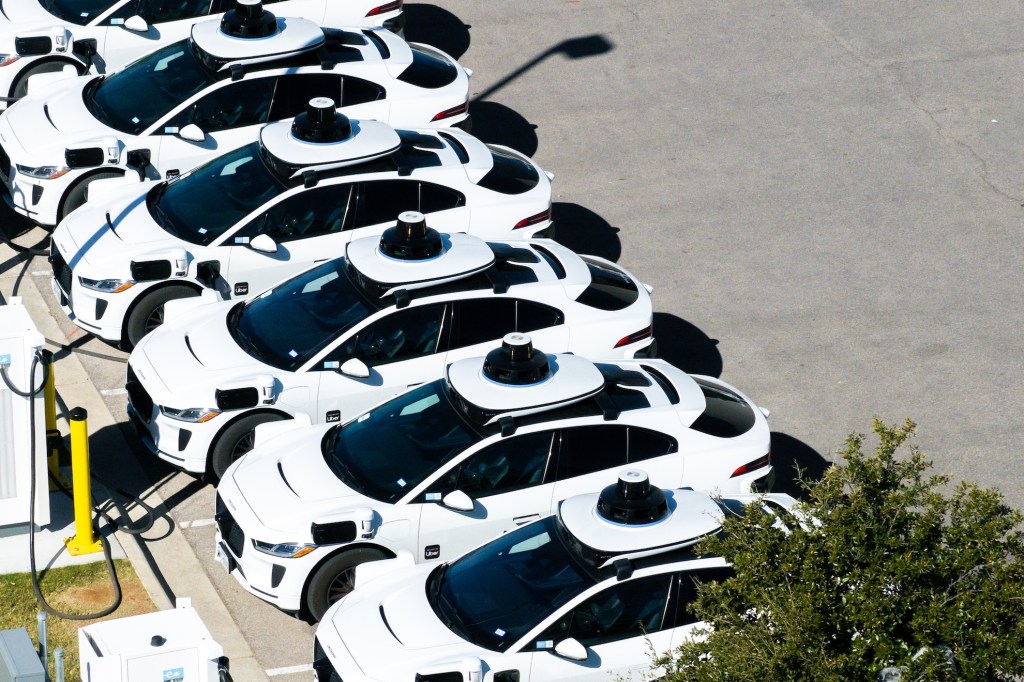
Waymo, the Alphabet-owned autonomous vehicle company, has raised $16 billion as it plans to grow its fleet of driverless taxicabs this year to more than a dozen new cities internationally, including London and Tokyo.
Dragoneer Investment Group, DST Global, and Sequoia Capital led the funding round, which now values Waymo at $126 billion, the company said in a blog post Monday. Parent company Alphabet supported the round and maintained its position as majority investor.
The round also included significant investments from Andreessen Horowitz and Mubadala Capital, as well as Bessemer Venture Partners, Silver Lake, Tiger Global, and T. Rowe Price. Additional investors included BDT & MSD Partners, CapitalG, Fidelity Management & Research Company, GV, Kleiner Perkins, Perry Creek Capital, and Temasek.
Waymo said the funds will be used to fuel its growth, which has accelerated over the past year and doesn’t appear to be slowing. The company recently secured rides to and from San Francisco International Airport and has expanded its robotaxi service throughout Northern California and several major metropolitan areas in the U.S., including Los Angeles, Austin, and Miami.
For years, the former Google self-driving project slowly progressed forward, testing its autonomous vehicle tech on public roads in Silicon Valley and the Bay Area and providing the occasional public or media demo. In 2016, it made its first geographic leap forward and began testing in Phoenix, where it eventually pulled its human safety driver out of the vehicles. Phoenix became Waymo’s first robotaxi market, in which the public could hail driverless Chrysler Pacifica minivans.
Waymo pushed down the accelerator in August 2023 after receiving the final necessary permit to operate a robotaxi service — and charge for rides — in California. It launched a limited service in San Francisco, later expanding to much of the greater Bay Area, Silicon Valley, and more recently to the freeways that connect the dozens of towns in the area. It also expanded to Los Angeles. The company launched in Austin and Atlanta in 2025 through a partnership with Uber. It kicked off the year by expanding to Miami.
The geographic expansion has translated to 400,000 rides provided every week across six major U.S. metropolitan areas. The company said that in 2025 alone, it more than tripled its annual volume to 15 million rides, surpassing 20 million lifetime rides to date.
TechCrunch Founder Summit 2026: Tickets Live
On June 23 in Boston, more than 1,100 founders come together at TechCrunch Founder Summit 2026 for a full day focused on growth, execution, and real-world scaling. Learn from founders and investors who have shaped the industry. Connect with peers navigating similar growth stages. Walk away with tactics you can apply immediately
Save up to $300 on your pass or save up to 30% with group tickets for teams of four or more.
TechCrunch Founder Summit: Tickets Live
On June 23 in Boston, more than 1,100 founders come together at TechCrunch Founder Summit 2026 for a full day focused on growth, execution, and real-world scaling. Learn from founders and investors who have shaped the industry. Connect with peers navigating similar growth stages. Walk away with tactics you can apply immediately
Save up to $300 on your pass or save up to 30% with group tickets for teams of four or more.
|
June 23, 2026
“We are no longer proving a concept,” the company wrote in its blog post. “We are scaling a commercial reality, laying the groundwork for ride-hailing operations in over 20 additional cities in 2026, including Tokyo and London.”
The rapid expansion has also led to increased scrutiny and criticism as Waymo’s robotaxis have made missteps and the technology creates problems for some residents.
Some robotaxis have exhibited dangerous behaviors particularly in school zones. The National Highway Traffic Safety Administration’s Office of Defects Investigation as well as the National Transportation Safety Board (NTSB) have opened investigations into the illegal behavior of Waymo robotaxis around school buses. The NHTSA also launched another investigation last week after a Waymo robotaxi hit a child near a school. The child, who sustained minor injuries, was struck at about 6 mph.
Ref link: Waymo raises $16B to scale robotaxi fleet internationally
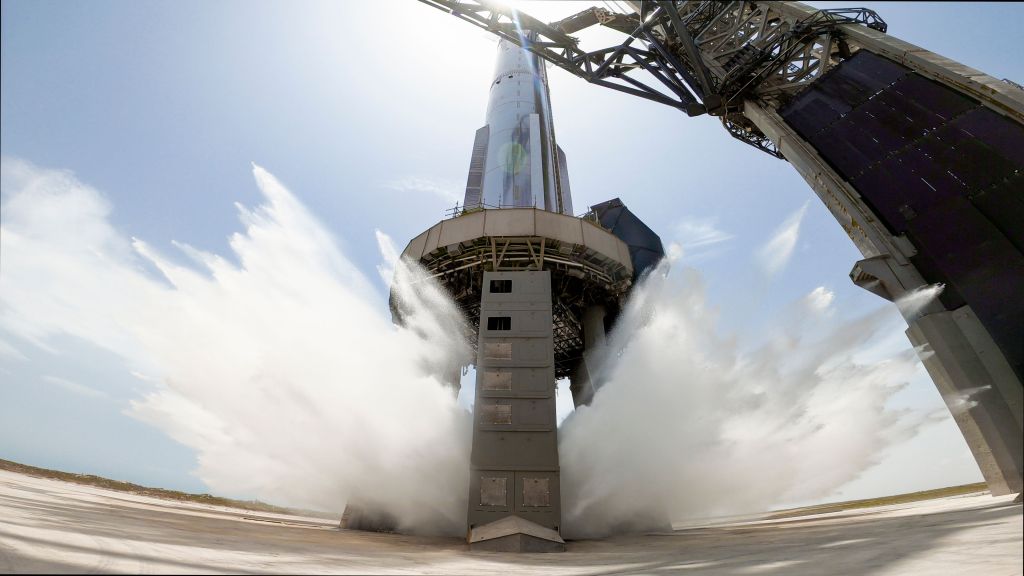
SpaceX has acquired Elon Musk’s artificial intelligence startup, xAI, creating the world’s most valuable private company, the spaceflight company announced Monday.
Musk, who is also the CEO of SpaceX, wrote in a memo posted to the rocket company’s website that the merger is largely about creating space-based data centers — an idea he has become fixated on over the last few months.
“Current advances in AI are dependent on large terrestrial data centers, which require immense amounts of power and cooling. Global electricity demand for AI simply cannot be met with terrestrial solutions, even in the near term, without imposing hardship on communities and the environment,” he wrote. (xAI has been accused of imposing some of that hardship on the communities near its data centers in Memphis, Tennessee.)
The tie-up values the combined company at $1.25 trillion, according to Bloomberg News, which was first to report the completed deal. SpaceX has been reportedly preparing an IPO for as early as June of this year. It’s unclear whether the merger will affect that timeline. Musk did not address the IPO in his public memo.
The merger brings together two of Musk’s companies, each with its own financial challenges. xAI is currently burning around $1 billion per month, according to Bloomberg. SpaceX, meanwhile, generates as much as 80% of its revenue from launching its own Starlink satellites, according to Reuters. Last year, xAI acquired X, the social media company also owned by Musk, with Musk claiming a combined company valuation of $113 billion.
Musk wrote in his memo that it will take a constant stream of many — although he did not specify how many — satellites to create these space-based data centers, ensuring that SpaceX will have an even-larger constant stream of revenue for the foreseeable future. (That revenue loop likely looks even more attractive when you consider that satellites are required to be de-orbited every five years by the Federal Communications Commission.)
While space data centers may be the stated goal, SpaceX and xAI have very different near-term objectives.
TechCrunch Founder Summit 2026: Tickets Live
On June 23 in Boston, more than 1,100 founders come together at TechCrunch Founder Summit 2026 for a full day focused on growth, execution, and real-world scaling. Learn from founders and investors who have shaped the industry. Connect with peers navigating similar growth stages. Walk away with tactics you can apply immediately
Save up to $300 on your pass or save up to 30% with group tickets for teams of four or more.
TechCrunch Founder Summit: Tickets Live
On June 23 in Boston, more than 1,100 founders come together at TechCrunch Founder Summit 2026 for a full day focused on growth, execution, and real-world scaling. Learn from founders and investors who have shaped the industry. Connect with peers navigating similar growth stages. Walk away with tactics you can apply immediately
Save up to $300 on your pass or save up to 30% with group tickets for teams of four or more.
|
June 23, 2026
SpaceX is currently trying to prove that its Starship rocket is capable of bringing astronauts to the moon and Mars, while xAI is competing with leading artificial intelligence companies like Google and OpenAI. The pressure on xAI is so great, the Washington Post reported Monday, that Musk loosened restrictions on the company’s chatbot Grok — which contributed to it becoming a tool for making AI-generated nonconsensual sexual imagery of adults and children.
Musk is also the head of Tesla, The Boring Company, and Neuralink. Tesla and SpaceX previously invested $2 billion each in xAI.
Ref link: Elon Musk’s SpaceX officially acquires Elon Musk’s xAI, with plan to build data centers in space

One of the design features that became synonymous with Tesla has been banned in China.
Under new safety rules published Monday by China’s Ministry of Industry and Information Technology, cars sold in the country must have mechanical releases on their door handles. The new rules, which go in effect January 1, 2027, will prohibit the hidden, electronically actuated door handles popularized by Tesla — and now found on numerous other electric vehicles in China.
The new rule dictates that each door (excluding the tailgate) should be equipped with a mechanically released external door handle. Vehicles must also have a mechanical release on the interior of the vehicle. Bloomberg previously reported on the new safety policy.
Numerous high-profile fatal incidents, in which occupants have become trapped in their vehicles, have raised concerns among safety regulators and advocates globally. China is the first country to issue a ban.
An investigation by Bloomberg last September uncovered problems with the concealed door handles on Tesla vehicles, citing several crashes in which first responders or occupants were unable to open the doors because the electronic door locks weren’t getting enough power from the vehicle’s battery system to work properly. The U.S. National Highway Traffic Safety Administration then opened a defect investigation into certain Tesla Model Y and Model 3 door handles. While Tesla does have manual releases inside its vehicles, federal investigators noted that the releases can be hard for children to access, and many owners are unaware of their existence. Some U.S. lawmakers have proposed regulation requiring manual door releases in all new vehicles.
Fatal incidents in China, including a crash involving a Xiaomi SU7 electric sedan, prompted regulators there to propose changes to EV door handles last year.
The Chinese government began the process in May 2025 with more than 40 domestic vehicle manufacturers, parts suppliers, and testing institutions participating in the initial research. More than 100 industry experts held multiple rounds of discussions to determine the standard framework and form a draft standard of what would become the Safety Technical Requirements for Automobile Door Handles rule, according to the Chinese government’s standards agency.
TechCrunch Founder Summit 2026: Tickets Live
On June 23 in Boston, more than 1,100 founders come together at TechCrunch Founder Summit 2026 for a full day focused on growth, execution, and real-world scaling. Learn from founders and investors who have shaped the industry. Connect with peers navigating similar growth stages. Walk away with tactics you can apply immediately
Save up to $300 on your pass or save up to 30% with group tickets for teams of four or more.
TechCrunch Founder Summit: Tickets Live
On June 23 in Boston, more than 1,100 founders come together at TechCrunch Founder Summit 2026 for a full day focused on growth, execution, and real-world scaling. Learn from founders and investors who have shaped the industry. Connect with peers navigating similar growth stages. Walk away with tactics you can apply immediately
Save up to $300 on your pass or save up to 30% with group tickets for teams of four or more.
|
June 23, 2026
That included dozens of automakers, including Chinese companies such as BYD, Geely Holdings, SAIC, and Xiaomi, as well as foreign automakers, including General Motors, Ford, Hyundai, Nissan, Porsche, Toyota, and Volkswagen. Tesla, however, was not listed as an official “drafter,” according to information posted on the standards agency’s website.
Ref link: China is leading the fight against hidden car door handles
As Adobe ramps up its investments in AI, the company has decided to shut down its 2D animation software, Adobe Animate. On Monday, Adobe issued an update to the company’s support site and sent emails to existing customers announcing Adobe Animate will be discontinued on March 1, 2026.
Enterprise customers can continue to receive technical support through March 1, 2029, to ease the transition. Other customers will have support through March of next year, the company said.
The decision has been met with incredulity, disappointment, and anger among Adobe Animate users, who are concerned about the lack of alternatives that mirror Animate’s functionality.
One customer, posting on X, pleaded with Adobe to at least open source the software rather than abandon it. Commenters on the thread responded with angst, saying things like “this is legit gonna ruin my life,” and “literally what the hell are they doing? animate is the reason a good chunk of adobe users even subscribe in the first place.
Adobe explained its decision to discontinue the program in an FAQ, saying, “Animate has been a product that has existed for over 25 years and has served its purpose well for creating, nurturing, and developing the animation ecosystem. As technologies evolve, new platforms and paradigms emerge that better serve the needs of the users. Acknowledging this change, we are planning to discontinue supporting Animate.”
Reading between the lines, it sounds as if Adobe is saying that Animate no longer represents the current direction of the company, which is now more focused on products that incorporate AI technologies.
What’s surprising is that Adobe can’t even recommend software that will fully replace what customers are losing with Animate. Instead, it says customers with a Creative Cloud Pro plan can use other Adobe apps to “replace portions of Animate functionality.”
For instance, it suggests that Adobe After Effects can support complex keyframe animation using the Puppet tool, and Adobe Express can be used for animation effects that can be applied to photos, videos, text, shapes, and other design elements.
There were hints that Adobe was headed in this direction after Animate was ignored at the company’s annual Adobe Max conference. Plus, no 2025 version of the software was released.
The software will continue to work for those who have it downloaded, Adobe noted. Typically, Adobe charged $34.49 per month for the software, which dropped to $22.99 with a 12-month commitment. The annual prepaid plan was available for $263.88.
Some users are recommending other animation programs to use instead, including Moho Animation and Toon Boom Harmony.
TechCrunch has reached out to Adobe for comment. This article will be updated if the company responds.
Ref link: Adobe Animate is shutting down as company focuses on AI
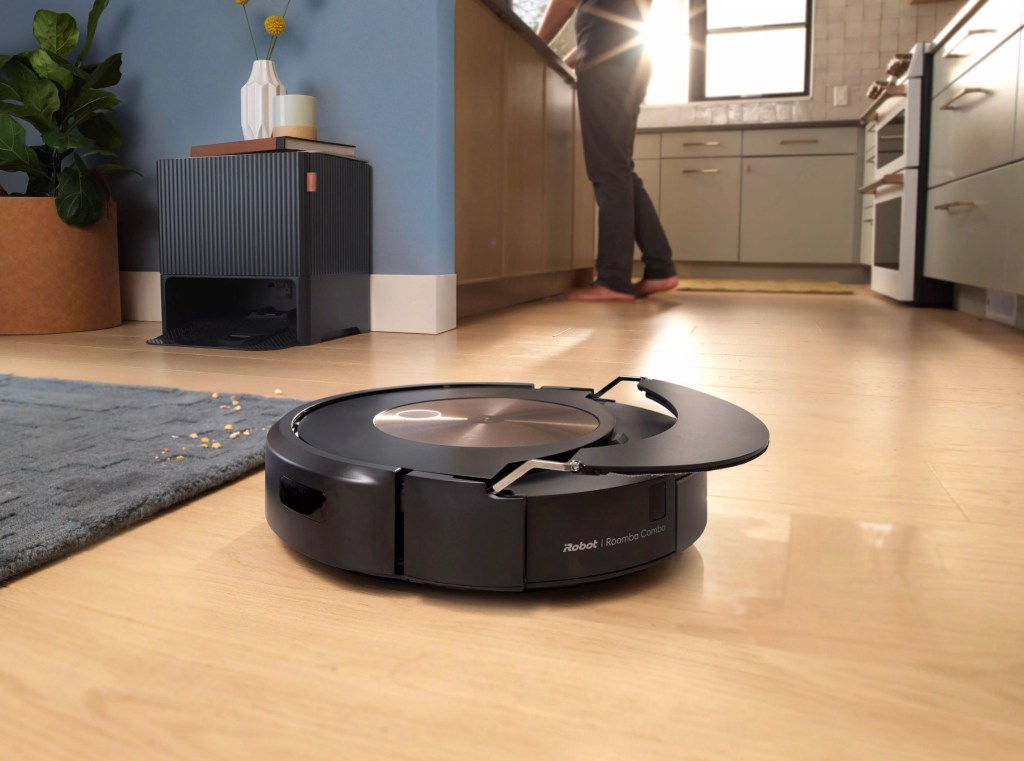
There’s something painfully American about the arc of iRobot, the company that taught your vacuum to navigate around the furniture. Founded in 1990 in Bedford, Massachusetts by MIT roboticist Rodney Brooks and his former students Colin Angle and Helen Greiner, the company filed for Chapter 11 bankruptcy on Sunday, ending a 35-year run that took it from the dreams of AI researchers to your kitchen floor and, finally, to the tender mercies of its Chinese supplier.
Brooks, the founding director of MIT’s Computer Science and Artificial Intelligence Lab and the robotics field’s resident provocateur, spent the eighties watching insects and having epiphanies about how simple systems could produce complex behaviors. By 1990, he’d translated those insights into a company that would eventually sell over 50 million robots. The Roomba, launched in 2002, became the rare gadget that transcended its category to become a verb, a meme, and, to the amusement of many, a cat-transportation device.
The money soon followed, with the company raising $38 million altogether, including from The Carlyle Group, before going public in a 2005 IPO that raised $103.2 million. By 2015, iRobot was flush enough to launch its own venture arm, prompting TechCrunch to wryly declare that “robot domination may have just taken another step forward.” The plan at the time was to invest $100,000 to $2 million in up to 10 seed and Series A robotics startups each year. It was the kind of move that marks a company’s arrival, the moment when you’re successful enough to fund the next generation’s dreams.
Then came what looked like salvation. In 2022, Amazon agreed to acquire iRobot for $1.7 billion in what would have been Amazon’s fourth-largest acquisition ever. In a press release announcing the news, Angle, who’d been CEO since the company’s inception, spoke about “creating innovative, practical products” and finding “a better place for our team to continue our mission.” It seemed like a fairy tale ending — the scrappy MIT spinoff absorbed into the Everything Store’s sprawling empire.
Except European regulators had other ideas. Indeed, amid threats they would block the deal — they believed that Amazon could foreclose rivals by restricting or degrading access to its marketplace — Amazon and iRobot agreed to kill the deal in January 2024, with Amazon paying a $94 million breakup fee and walking away. Angle resigned. The company’s shares nosedived. It shed 31% of its workforce.
What followed afterward was a slow-motion collapse. Earnings had been declining since 2021 thanks to supply chain chaos and Chinese competitors flooding the market with cheaper robot vacuums. The Carlyle Group, which provided a $200 million lifeline back in 2023, ultimately just prolonged the inevitable. (It finally sold that loan last month — presumably at a discount, though it didn’t say either way.)
Now it’s over, at least, the version of the company that existed previously. Shenzhen PICEA Robotics, iRobot’s main supplier and lender, will take control of the reorganized company. According to a release issued by iRobot on Sunday, the restructuring plan allows iRobot to remain as a going concern and “continue operating in the ordinary course with no anticipated disruption to its app functionality, customer programs, global partners, supply chain relationships, or ongoing product support.”
Join the Disrupt 2026 Waitlist
Add yourself to the Disrupt 2026 waitlist to be first in line when Early Bird tickets drop. Past Disrupts have brought Google Cloud, Netflix, Microsoft, Box, Phia, a16z, ElevenLabs, Wayve, Hugging Face, Elad Gil, and Vinod Khosla to the stages — part of 250+ industry leaders driving 200+ sessions built to fuel your growth and sharpen your edge. Plus, meet the hundreds of startups innovating across every sector.
Join the Disrupt 2026 Waitlist
Add yourself to the Disrupt 2026 waitlist to be first in line when Early Bird tickets drop. Past Disrupts have brought Google Cloud, Netflix, Microsoft, Box, Phia, a16z, ElevenLabs, Wayve, Hugging Face, Elad Gil, and Vinod Khosla to the stages — part of 250+ industry leaders driving 200+ sessions built to fuel your growth and sharpen your edge. Plus, meet the hundreds of startups innovating across every sector.
|
October 13-15, 2026
It also vowed to “meet its commitments to employees and make timely payments in full to vendors and other creditors for amounts owed throughout the court-supervised process.”
What this means for customers longer term is another question, one we’ve reached out to iRobot to ask. In its release, iRobot promises to keep supporting existing products during restructuring; at the same time, its legal disclosures acknowledge the inherent uncertainties of bankruptcy — whether suppliers stick around, whether the process goes as planned, whether the company survives at all.
As The Verge noted in a story about iRobot’s struggles last month, even if iRobot eventually collapses and takes its cloud services down with it, customers’ Roomba vacuums won’t become useless pucks. The physical controls should keep working — a Roomba owner could still jab the button to send it off to vacuum or tell it to head home.
What Roomba owners would lose is everything that make the devices feel futuristic, including app-based scheduling, the ability to tell it which rooms to clean, and voice commands barked at Alexa while sprawled on the couch.
Ref link: How iRobot lost its way home

WhatsApp, Meta’s messaging app that millions of Indians rely on daily, is facing a critical moment in India as recent government directions threaten to disrupt how the platform works for everyday users and businesses.
Issued late last month and made public earlier this month, the directions ask certain app-based communication services to keep accounts continuously linked to an active SIM card and impose stricter controls on how the apps function across devices.
New Delhi says the measures are aimed at curbing rising cyber fraud in India, the world’s most populous nation. Digital advocacy groups, policy experts, and industry groups representing major digital platforms — including Meta — have warned, however, that the approach risks regulatory overreach and could disrupt legitimate use, especially in a country where WhatsApp has evolved into everyday infrastructure for personal communication and small-business commerce.
The directions, which app providers including Meta, Telegram, and Signal must comply with within 90 days of their issuance on November 28, require messaging apps to remain tied to the SIM card used at sign-up. The web and desktop versions of these apps also require users to log out every six hours and re-link their devices via a QR code to regain access.
“Mandatory continuous SIM–device binding and periodic logout ensure that every active account and web session is anchored to a live, KYC-verified SIM, restoring traceability of numbers used in phishing, investment, digital arrest, and loan scams,” the telecom ministry said in a press release earlier this month, adding that India suffered cyber-fraud losses exceeding ₹228 billion (about $2.5 billion) in 2024 alone.
The Indian government has clarified that the rules do not apply when the SIM remains in the device, and the user is roaming.
While the directions apply broadly to major instant messaging apps, their impact is likely to be felt most acutely by WhatsApp, which is used by more than 500 million people in India. The app’s adoption in India is also unusually deep. As much as 94% of WhatsApp’s Indian monthly user base opened the app daily in November, while 67% of WhatsApp Business users in the country did the same, according to Sensor Tower data shared with TechCrunch. By comparison, 59% of WhatsApp monthly users in the U.S. opened the app daily, alongside 57% for WhatsApp Business.
Join the Disrupt 2026 Waitlist
Add yourself to the Disrupt 2026 waitlist to be first in line when Early Bird tickets drop. Past Disrupts have brought Google Cloud, Netflix, Microsoft, Box, Phia, a16z, ElevenLabs, Wayve, Hugging Face, Elad Gil, and Vinod Khosla to the stages — part of 250+ industry leaders driving 200+ sessions built to fuel your growth and sharpen your edge. Plus, meet the hundreds of startups innovating across every sector.
Join the Disrupt 2026 Waitlist
Add yourself to the Disrupt 2026 waitlist to be first in line when Early Bird tickets drop. Past Disrupts have brought Google Cloud, Netflix, Microsoft, Box, Phia, a16z, ElevenLabs, Wayve, Hugging Face, Elad Gil, and Vinod Khosla to the stages — part of 250+ industry leaders driving 200+ sessions built to fuel your growth and sharpen your edge. Plus, meet the hundreds of startups innovating across every sector.
|
October 13-15, 2026
Many merchants in India rely on the WhatsApp Business app — a smartphone-based version of the service tailored for small enterprises — typically registering the account on a SIM-linked phone while handling customer conversations through WhatsApp’s web or desktop client on another device. Unlike larger companies that use WhatsApp’s Business APIs for automated, CRM-linked communication, these small businesses access their customers through WhatsApp Business and its companion web interface, meaning mandatory SIM binding and frequent forced logouts could break workflows for order-taking, support, and customer engagement.
The potential disruption in India comes as WhatsApp has been steadily expanding its multi-device and companion-device capabilities, allowing users and businesses to stay logged in across phones, browsers, and devices without relying on a single active smartphone.
Rapid expansion to deep entrenchment
The directions come as WhatsApp is undergoing a significant shift in India, its biggest market, with growth increasingly driven by retaining existing users rather than rapidly expanding its new user base.
WhatsApp’s monthly active users in India on mobile devices are up 6% year-over-year in the fourth quarter to date, even as downloads have fallen nearly 49%, per Sensor Tower data shared with TechCrunch. Compared with late 2022, WhatsApp’s monthly active users in India are up 24%, while downloads are down 14% over the same period, the market intelligence firm said.
“It could be fair to say that user (MAU) growth for WhatsApp in India across the past few years has been driven more by retention (successfully re-engaging existing or previous users) than acquiring new users,” said Abraham Yousef, senior insights analyst at Sensor Tower.
Data from Appfigures shows WhatsApp Business has consistently recorded more estimated first-time installs than WhatsApp Messenger in India since early 2024, reflecting how growth has increasingly been driven by merchant adoption rather than broad-based consumer expansion.

Part of that pattern reflects how WhatsApp is used in India, said Randy Nelson, head of insights at Appfigures. It is common for merchants to maintain separate WhatsApp identities for personal and customer communication, often enabled by dual-SIM phones, while a single business can generate multiple installs across staff and shop devices.
Sensor Tower data points in the same direction. WhatsApp Business monthly active users in India were still growing year over year in late 2025 and are up more than 130% compared with 2021, far outpacing WhatsApp Messenger’s roughly 34% growth over the same period, the market intelligence firm’s data estimates.
While overall engagement remains higher on WhatsApp — with Indian users opening the app daily and spending an average of 38 minutes a day in November, compared with 27 minutes on WhatsApp Business — the gap looks different in the U.S., where users spent about 23 minutes a day on WhatsApp and 27 minutes on WhatsApp Business, Sensor Tower estimates show.
India’s directions raise “serious questions of technical feasibility”
In a statement last week, industry body Broadband India Forum (BIF), whose members include Meta, said the measures could result in “material inconvenience and service disruption on ordinary users,” adding that they raise “serious questions of technical feasibility.”
The directions hinge on a new and still-contested classification of Telecommunication Identifier User Entities (TIUEs) under India’s telecom cybersecurity rules, said Kazim Rizvi, founding director of New Delhi-based public policy think tank The Dialogue, effectively placing messaging apps within a telecom framework — a shift from their traditional regulation under the country’s IT Act — through executive directions rather than formal legislation.
“The directions derive their power not from statute but from delegated legislation,” Rizvi told TechCrunch. “Moreover, the lack of public consultations or technical working groups risks creating compliance friction without addressing the underlying fraud vectors.”
India’s telecom ministry did not respond to a request for comments.
For now, companies including Meta have limited room to challenge the directions in court, according to tech policy experts.
Challenging the directions would typically require showing either that they exceed the scope of the underlying law or that they violate constitutional protections, said Dhruv Garg, a tech policy advisor and partner at the Indian Governance and Policy Project — a high bar that may be difficult to meet in this case.
Meta declined to comment on this article.
Ref link: WhatsApp’s biggest market is becoming its toughest test
Grok, the chatbot built by Elon Musk’s xAI and popularized on his social media platform X, appears to have repeatedly spread misinformation about today’s mass shooting at Bondi Beach in Australia.
Gizmodo pointed to a number of posts where Grok misidentified the bystander — 43-year-old Ahmed al Ahmed — who disarmed one of the gunmen, and where it questioned the authenticity of videos and photos capturing al Ahmed’s actions.
In one post, the chatbot misidentified the man in a photo as an Israeli hostage, and in another post brought up irrelevant information about the Israeli army’s treatment of Palestinians. In another post, it claimed a “43-year-old IT professional and senior solutions architect” named Edward Crabtree was the one who actually disarmed a gunman.
Grok does appear to be fixing some of its mistakes. At least one post that reportedly claimed a video of the shooting actually showed Cyclone Alfred has been corrected “upon reevaluation.”
And the chatbot subsequently acknowledged al Ahmed’s identity, writing that the “misunderstanding arises from viral posts that mistakenly identified him as Edward Crabtree, possibly due to a reporting error or a joke referencing a fictional character.” (The article in question appeared on a largely non-functional news site that may be AI-generated.)
Ref link: Grok got crucial facts wrong about Bondi Beach shooting

Fintech startup Mesa has shut down its Homeowners Card, which awarded points to cardholders for paying their mortgages.
A message on the Mesa website states that as of December 12, “all Mesa Homeowners Card accounts are closed,” adding, “All credit cards have been deactivated and you are no longer able to make any new purchases or earn Mesa Points.”
A Mesa FAQ about the shutdown described this as “a business decision to close the Mesa Homeowners Card Program entirely.” TechCrunch has reached out to Mesa for additional comment on its future plans.
The startup launched just over a year ago, in November 2024, with $9.2 million in funding ($7.2 million in equity funding and $2 million in debt). It offered two products — mortgage loans with 1% cash back, as well as the credit card with rewards including cash back, travel, and offset mortgage payments.
At the time, CEO Kelley Halpin told TechCrunch that the startup had “taken what everybody loves about travel and dining cards to re-contextualize that for the homeowner/parent.”
In theory, you could earn points for home expenses by using any credit card with rewards, but Mesa said it structured its points program to incentivize spending related to home ownership.
“So it’s not rewarding you on travel and dining spend; it’s rewarding you on gas, groceries, your HOA, utilities, home goods as well as your mortgage payment,” Halpin said.
Join the Disrupt 2026 Waitlist
Add yourself to the Disrupt 2026 waitlist to be first in line when Early Bird tickets drop. Past Disrupts have brought Google Cloud, Netflix, Microsoft, Box, Phia, a16z, ElevenLabs, Wayve, Hugging Face, Elad Gil, and Vinod Khosla to the stages — part of 250+ industry leaders driving 200+ sessions built to fuel your growth and sharpen your edge. Plus, meet the hundreds of startups innovating across every sector.
Join the Disrupt 2026 Waitlist
Add yourself to the Disrupt 2026 waitlist to be first in line when Early Bird tickets drop. Past Disrupts have brought Google Cloud, Netflix, Microsoft, Box, Phia, a16z, ElevenLabs, Wayve, Hugging Face, Elad Gil, and Vinod Khosla to the stages — part of 250+ industry leaders driving 200+ sessions built to fuel your growth and sharpen your edge. Plus, meet the hundreds of startups innovating across every sector.
|
October 13-15, 2026
Bilt, which has a rewards card that allows customers to earn points on rent payments, says it will expand with points for mortgage payments when it launches a revamped card next year.
Mesa’s card shutdown has been covered by travel deals websites like One Mile at a Time and Upgraded Points, which say that Mesa cardmembers have been complaining about declined transactions for the past week, with the company initially claiming this was only a temporary outage.
Now, it seems the only remaining way to redeem points earned on the Mesa card is through a statement credit at a rate of 0.6%.
Ref link: Mesa shuts down credit card that rewarded cardholders for paying their mortgages
Whether or not Netflix’s $82.6 billion acquisition of Warner Bros. goes through, the deal encapsulates a fraught moment for Hollywood, as the entertainment business is increasingly overshadowed by tech giants.
On the latest episode of the Equity podcast, Kirsten Korosec and I discussed the deal’s implications, both for Netflix and the larger Hollywood ecosystem. Kirsten noted that it’s just the latest move bringing more consolidation to the media business, and she wondered whether it’s “too big a risk” for Netflix.
Meanwhile, I discussed a call with Netflix executives where Wall Street analysts also seemed to be struggling to wrap their heads around the deal. And then of course there’s Paramount’s competing hostile bid — whatever happens, Warner Bros.’ days as a standalone company seem to be numbered.
You can read an edited preview of our conversation below.
Kirsten: I remember when Netflix was just a little baby startup and I got their [DVDs] in the mail. Here they are, all grown up, bidding for a legacy company. Did that run through your head when you saw the news?
Anthony: Certainly symbolically, it’s this moment where the upstart has eaten Hollywood. There’ve been all these articles, even before this deal, saying, “Netflix is eating Hollywood, Netflix is transforming Hollywood.” Regardless of whether or not this deal ends up going through, Netflix will have transformed Hollywood, but this seems like the biggest — both symbolically but also substantively — one of the most dramatic things that can happen.
Then there are all these other questions about: Will Netflix get regulatory approval? Will Paramount’s hostile bid succeed?
Join the Disrupt 2026 Waitlist
Add yourself to the Disrupt 2026 waitlist to be first in line when Early Bird tickets drop. Past Disrupts have brought Google Cloud, Netflix, Microsoft, Box, Phia, a16z, ElevenLabs, Wayve, Hugging Face, Elad Gil, and Vinod Khosla to the stages — part of 250+ industry leaders driving 200+ sessions built to fuel your growth and sharpen your edge. Plus, meet the hundreds of startups innovating across every sector.
Join the Disrupt 2026 Waitlist
Add yourself to the Disrupt 2026 waitlist to be first in line when Early Bird tickets drop. Past Disrupts have brought Google Cloud, Netflix, Microsoft, Box, Phia, a16z, ElevenLabs, Wayve, Hugging Face, Elad Gil, and Vinod Khosla to the stages — part of 250+ industry leaders driving 200+ sessions built to fuel your growth and sharpen your edge. Plus, meet the hundreds of startups innovating across every sector.
|
October 13-15, 2026
What jumped out to you is you were catching up on it, Kirsten?
Kirsten: Well, the first thing was I was like, can there be any more consolidation in this market? I mean, that was the big one for me, because if memory serves, Warner Bros. already went through like this consolidation with Discovery, right? So here we are again. There’s been so much consolidation that I have lost track of all of that.
But the second thought was what I immediately thought, what I kicked [off our discussion] with, which is really thinking about how Netflix [has grown], and there have been these dips in the road along its way, where the headlines have been about how it’s struggling, and will it remain relevant, and how can it do that? If they’re successful in the actual deal, [it would] potentially reflect [that] they have made it.
But then again, they have to execute on [running] an even bigger company than ever before. And so I guess my third thought on this is: Should they be buying this? Is this what it takes for them to expand? Is it a risk for them to take on so much? Why not just stay as they are? And I don’t know if you agree with me on that one. Is it too big of a risk?
Anthony: I can see how it makes sense for Netflix. It’s a way to take a [content] library that is already quite large, and they’ve obviously had some very successful TV shows — less so on the movie side — [but] potentially, they just become so much stronger on the content side.
[And] they’re suddenly now involved in all these other businesses, although the question is to what extent are they going to invest in things like the theatrical business, theme parks, making TV shows for other streaming services and networks, which are all businesses that Warner Bros is in, and Netflix says it will continue to support. But we’ll see to what extent that’s true.
So it seems like something that can really benefit Netflix in some ways, but, at the same time, it does seem like this is a huge risk. If you go and look at the analyst call that Netflix’s executives did after announcing the deal, you can see that the analysts are wrestling with it and wondering “Okay, I can see that this grows your business, but does it grow your business [so much that it’s] worth an $82 billion deal?”
And then of course, beyond the Netflix perspective, you have everybody else in Hollywood. There are all these maybe accurately hyperbolic headlines about: Is this the end of Hollywood? Is this the end of the movie theater business? All the unions are basically saying either, “This deal should be blocked” or “We’re very, very, very worried about this deal.” The theater owners are saying that
And so I think there’s A) Is this a good deal for Netflix? And B) is this a good deal for the entertainment business? I don’t have a good answer for either, [but] I think it’s more likely to be a good deal for Netflix than it is to be a good deal for the entertainment business.
Though again, part of what to keep in mind as people weigh those options or think about possible outcomes here, is that because of the way that Paramount has forced Warner Bros. to consider these acquisition offers, it seems unlikely that Warner Bros. is going to be able to continue as an independent company — which, if you’re not a fan of media consolidation, that is disappointing.
Ref link: Making sense of the risky Netflix-Warner Bros. deal
Pro: Horizontal-Post Tab
By now, the Forbes 30 Under 30 list has become more than a little notorious for the amount of entrants who go on to be charged with fraud. Notable alumni include FTX founder Sam Bankman-Fried, Frank CEO Charlie Javice, Joanna Smith-Griffin, founder of the AI startup AllHere Education, and “pharma bro” Martin Shkreli, among others. Now, another member of the list has been hit with federal charges.
Gökçe Güven, a 26-year-old Turkish national and the founder and CEO of fintech startup Kalder, was charged last week with alleged securities fraud, wire fraud, visa fraud, and aggravated identity theft.
The New York-based fintech startup — which uses the “Turn Your Rewards into [a] Revenue Engine” tagline — says it can help companies create and monetize individual rewards programs. The company was founded in 2022, and offers participating firms the opportunity to earn ongoing revenue streams via partner affiliate sales, Axios previously reported.
Güven was featured in last year’s Forbes 30 Under 30 list. The magazine notes in the writeup that Güven’s clients included major chocolatier Godiva and the International Air Transport Association, the trade organization that represents a majority of the world’s airlines. Kalder also claims to have enjoyed the backing of a number of prominent VC firms.
The U.S. Department of Justice alleges that, during Kalder’s seed round in April of 2024, Güven managed to raise $7 million from more than a dozen investors after presenting a pitch deck that was rife with false information.
According to the government, Kalder’s pitch deck claimed that there were 26 brands “using Kalder” and another 53 brands in “live freemium.” However, officials say that, in reality, Kalder had, in many cases, only been offering heavily discounted pilot programs to many of those companies. Other brands “had no agreement with Kalder whatsoever—not even for free services,” officials said in a press release announcing the indictment. The pitch deck also “falsely reported that Kalder’s recurring revenue had steadily grown month over month since February 2023 and that by March 2024, Kalder had reached $1.2 million in annual recurring revenue.”
The government also accuses Güven of having kept two separate sets of financial books. One of those sets included “false and inflated numbers,” and was presented to investors or potential investors to hide the “true financial condition of the company,” the government claims. The DOJ also alleges that Güven used lies about Kalder as well as forged documents to obtain a category of visa reserved for individuals of “extraordinary ability,” that would allow her to live and work in the United States.
TechCrunch Founder Summit 2026: Tickets Live
On June 23 in Boston, more than 1,100 founders come together at TechCrunch Founder Summit 2026 for a full day focused on growth, execution, and real-world scaling. Learn from founders and investors who have shaped the industry. Connect with peers navigating similar growth stages. Walk away with tactics you can apply immediately
Save up to $300 on your pass or save up to 30% with group tickets for teams of four or more.
TechCrunch Founder Summit: Tickets Live
On June 23 in Boston, more than 1,100 founders come together at TechCrunch Founder Summit 2026 for a full day focused on growth, execution, and real-world scaling. Learn from founders and investors who have shaped the industry. Connect with peers navigating similar growth stages. Walk away with tactics you can apply immediately
Save up to $300 on your pass or save up to 30% with group tickets for teams of four or more.
|
June 23, 2026
TechCrunch reached out to Güven through her personal website. The CEO said that she would be sharing a statement about the charges on Tuesday.
Ref link: Fintech CEO and Forbes 30 Under 30 alum has been charged for alleged fraud
Waymo, the Alphabet-owned autonomous vehicle company, has raised $16 billion as it plans to grow its fleet of driverless taxicabs this year to more than a dozen new cities internationally, including London and Tokyo.
Dragoneer Investment Group, DST Global, and Sequoia Capital led the funding round, which now values Waymo at $126 billion, the company said in a blog post Monday. Parent company Alphabet supported the round and maintained its position as majority investor.
The round also included significant investments from Andreessen Horowitz and Mubadala Capital, as well as Bessemer Venture Partners, Silver Lake, Tiger Global, and T. Rowe Price. Additional investors included BDT & MSD Partners, CapitalG, Fidelity Management & Research Company, GV, Kleiner Perkins, Perry Creek Capital, and Temasek.
Waymo said the funds will be used to fuel its growth, which has accelerated over the past year and doesn’t appear to be slowing. The company recently secured rides to and from San Francisco International Airport and has expanded its robotaxi service throughout Northern California and several major metropolitan areas in the U.S., including Los Angeles, Austin, and Miami.
For years, the former Google self-driving project slowly progressed forward, testing its autonomous vehicle tech on public roads in Silicon Valley and the Bay Area and providing the occasional public or media demo. In 2016, it made its first geographic leap forward and began testing in Phoenix, where it eventually pulled its human safety driver out of the vehicles. Phoenix became Waymo’s first robotaxi market, in which the public could hail driverless Chrysler Pacifica minivans.
Waymo pushed down the accelerator in August 2023 after receiving the final necessary permit to operate a robotaxi service — and charge for rides — in California. It launched a limited service in San Francisco, later expanding to much of the greater Bay Area, Silicon Valley, and more recently to the freeways that connect the dozens of towns in the area. It also expanded to Los Angeles. The company launched in Austin and Atlanta in 2025 through a partnership with Uber. It kicked off the year by expanding to Miami.
The geographic expansion has translated to 400,000 rides provided every week across six major U.S. metropolitan areas. The company said that in 2025 alone, it more than tripled its annual volume to 15 million rides, surpassing 20 million lifetime rides to date.
TechCrunch Founder Summit 2026: Tickets Live
On June 23 in Boston, more than 1,100 founders come together at TechCrunch Founder Summit 2026 for a full day focused on growth, execution, and real-world scaling. Learn from founders and investors who have shaped the industry. Connect with peers navigating similar growth stages. Walk away with tactics you can apply immediately
Save up to $300 on your pass or save up to 30% with group tickets for teams of four or more.
TechCrunch Founder Summit: Tickets Live
On June 23 in Boston, more than 1,100 founders come together at TechCrunch Founder Summit 2026 for a full day focused on growth, execution, and real-world scaling. Learn from founders and investors who have shaped the industry. Connect with peers navigating similar growth stages. Walk away with tactics you can apply immediately
Save up to $300 on your pass or save up to 30% with group tickets for teams of four or more.
|
June 23, 2026
“We are no longer proving a concept,” the company wrote in its blog post. “We are scaling a commercial reality, laying the groundwork for ride-hailing operations in over 20 additional cities in 2026, including Tokyo and London.”
The rapid expansion has also led to increased scrutiny and criticism as Waymo’s robotaxis have made missteps and the technology creates problems for some residents.
Some robotaxis have exhibited dangerous behaviors particularly in school zones. The National Highway Traffic Safety Administration’s Office of Defects Investigation as well as the National Transportation Safety Board (NTSB) have opened investigations into the illegal behavior of Waymo robotaxis around school buses. The NHTSA also launched another investigation last week after a Waymo robotaxi hit a child near a school. The child, who sustained minor injuries, was struck at about 6 mph.
Ref link: Waymo raises $16B to scale robotaxi fleet internationally
SpaceX has acquired Elon Musk’s artificial intelligence startup, xAI, creating the world’s most valuable private company, the spaceflight company announced Monday.
Musk, who is also the CEO of SpaceX, wrote in a memo posted to the rocket company’s website that the merger is largely about creating space-based data centers — an idea he has become fixated on over the last few months.
“Current advances in AI are dependent on large terrestrial data centers, which require immense amounts of power and cooling. Global electricity demand for AI simply cannot be met with terrestrial solutions, even in the near term, without imposing hardship on communities and the environment,” he wrote. (xAI has been accused of imposing some of that hardship on the communities near its data centers in Memphis, Tennessee.)
The tie-up values the combined company at $1.25 trillion, according to Bloomberg News, which was first to report the completed deal. SpaceX has been reportedly preparing an IPO for as early as June of this year. It’s unclear whether the merger will affect that timeline. Musk did not address the IPO in his public memo.
The merger brings together two of Musk’s companies, each with its own financial challenges. xAI is currently burning around $1 billion per month, according to Bloomberg. SpaceX, meanwhile, generates as much as 80% of its revenue from launching its own Starlink satellites, according to Reuters. Last year, xAI acquired X, the social media company also owned by Musk, with Musk claiming a combined company valuation of $113 billion.
Musk wrote in his memo that it will take a constant stream of many — although he did not specify how many — satellites to create these space-based data centers, ensuring that SpaceX will have an even-larger constant stream of revenue for the foreseeable future. (That revenue loop likely looks even more attractive when you consider that satellites are required to be de-orbited every five years by the Federal Communications Commission.)
While space data centers may be the stated goal, SpaceX and xAI have very different near-term objectives.
TechCrunch Founder Summit 2026: Tickets Live
On June 23 in Boston, more than 1,100 founders come together at TechCrunch Founder Summit 2026 for a full day focused on growth, execution, and real-world scaling. Learn from founders and investors who have shaped the industry. Connect with peers navigating similar growth stages. Walk away with tactics you can apply immediately
Save up to $300 on your pass or save up to 30% with group tickets for teams of four or more.
TechCrunch Founder Summit: Tickets Live
On June 23 in Boston, more than 1,100 founders come together at TechCrunch Founder Summit 2026 for a full day focused on growth, execution, and real-world scaling. Learn from founders and investors who have shaped the industry. Connect with peers navigating similar growth stages. Walk away with tactics you can apply immediately
Save up to $300 on your pass or save up to 30% with group tickets for teams of four or more.
|
June 23, 2026
SpaceX is currently trying to prove that its Starship rocket is capable of bringing astronauts to the moon and Mars, while xAI is competing with leading artificial intelligence companies like Google and OpenAI. The pressure on xAI is so great, the Washington Post reported Monday, that Musk loosened restrictions on the company’s chatbot Grok — which contributed to it becoming a tool for making AI-generated nonconsensual sexual imagery of adults and children.
Musk is also the head of Tesla, The Boring Company, and Neuralink. Tesla and SpaceX previously invested $2 billion each in xAI.
Ref link: Elon Musk’s SpaceX officially acquires Elon Musk’s xAI, with plan to build data centers in space
One of the design features that became synonymous with Tesla has been banned in China.
Under new safety rules published Monday by China’s Ministry of Industry and Information Technology, cars sold in the country must have mechanical releases on their door handles. The new rules, which go in effect January 1, 2027, will prohibit the hidden, electronically actuated door handles popularized by Tesla — and now found on numerous other electric vehicles in China.
The new rule dictates that each door (excluding the tailgate) should be equipped with a mechanically released external door handle. Vehicles must also have a mechanical release on the interior of the vehicle. Bloomberg previously reported on the new safety policy.
Numerous high-profile fatal incidents, in which occupants have become trapped in their vehicles, have raised concerns among safety regulators and advocates globally. China is the first country to issue a ban.
An investigation by Bloomberg last September uncovered problems with the concealed door handles on Tesla vehicles, citing several crashes in which first responders or occupants were unable to open the doors because the electronic door locks weren’t getting enough power from the vehicle’s battery system to work properly. The U.S. National Highway Traffic Safety Administration then opened a defect investigation into certain Tesla Model Y and Model 3 door handles. While Tesla does have manual releases inside its vehicles, federal investigators noted that the releases can be hard for children to access, and many owners are unaware of their existence. Some U.S. lawmakers have proposed regulation requiring manual door releases in all new vehicles.
Fatal incidents in China, including a crash involving a Xiaomi SU7 electric sedan, prompted regulators there to propose changes to EV door handles last year.
The Chinese government began the process in May 2025 with more than 40 domestic vehicle manufacturers, parts suppliers, and testing institutions participating in the initial research. More than 100 industry experts held multiple rounds of discussions to determine the standard framework and form a draft standard of what would become the Safety Technical Requirements for Automobile Door Handles rule, according to the Chinese government’s standards agency.
TechCrunch Founder Summit 2026: Tickets Live
On June 23 in Boston, more than 1,100 founders come together at TechCrunch Founder Summit 2026 for a full day focused on growth, execution, and real-world scaling. Learn from founders and investors who have shaped the industry. Connect with peers navigating similar growth stages. Walk away with tactics you can apply immediately
Save up to $300 on your pass or save up to 30% with group tickets for teams of four or more.
TechCrunch Founder Summit: Tickets Live
On June 23 in Boston, more than 1,100 founders come together at TechCrunch Founder Summit 2026 for a full day focused on growth, execution, and real-world scaling. Learn from founders and investors who have shaped the industry. Connect with peers navigating similar growth stages. Walk away with tactics you can apply immediately
Save up to $300 on your pass or save up to 30% with group tickets for teams of four or more.
|
June 23, 2026
That included dozens of automakers, including Chinese companies such as BYD, Geely Holdings, SAIC, and Xiaomi, as well as foreign automakers, including General Motors, Ford, Hyundai, Nissan, Porsche, Toyota, and Volkswagen. Tesla, however, was not listed as an official “drafter,” according to information posted on the standards agency’s website.
Ref link: China is leading the fight against hidden car door handles
As Adobe ramps up its investments in AI, the company has decided to shut down its 2D animation software, Adobe Animate. On Monday, Adobe issued an update to the company’s support site and sent emails to existing customers announcing Adobe Animate will be discontinued on March 1, 2026.
Enterprise customers can continue to receive technical support through March 1, 2029, to ease the transition. Other customers will have support through March of next year, the company said.
The decision has been met with incredulity, disappointment, and anger among Adobe Animate users, who are concerned about the lack of alternatives that mirror Animate’s functionality.
One customer, posting on X, pleaded with Adobe to at least open source the software rather than abandon it. Commenters on the thread responded with angst, saying things like “this is legit gonna ruin my life,” and “literally what the hell are they doing? animate is the reason a good chunk of adobe users even subscribe in the first place.
Adobe explained its decision to discontinue the program in an FAQ, saying, “Animate has been a product that has existed for over 25 years and has served its purpose well for creating, nurturing, and developing the animation ecosystem. As technologies evolve, new platforms and paradigms emerge that better serve the needs of the users. Acknowledging this change, we are planning to discontinue supporting Animate.”
Reading between the lines, it sounds as if Adobe is saying that Animate no longer represents the current direction of the company, which is now more focused on products that incorporate AI technologies.
What’s surprising is that Adobe can’t even recommend software that will fully replace what customers are losing with Animate. Instead, it says customers with a Creative Cloud Pro plan can use other Adobe apps to “replace portions of Animate functionality.”
For instance, it suggests that Adobe After Effects can support complex keyframe animation using the Puppet tool, and Adobe Express can be used for animation effects that can be applied to photos, videos, text, shapes, and other design elements.
There were hints that Adobe was headed in this direction after Animate was ignored at the company’s annual Adobe Max conference. Plus, no 2025 version of the software was released.
The software will continue to work for those who have it downloaded, Adobe noted. Typically, Adobe charged $34.49 per month for the software, which dropped to $22.99 with a 12-month commitment. The annual prepaid plan was available for $263.88.
Some users are recommending other animation programs to use instead, including Moho Animation and Toon Boom Harmony.
TechCrunch has reached out to Adobe for comment. This article will be updated if the company responds.
Ref link: Adobe Animate is shutting down as company focuses on AI
There’s something painfully American about the arc of iRobot, the company that taught your vacuum to navigate around the furniture. Founded in 1990 in Bedford, Massachusetts by MIT roboticist Rodney Brooks and his former students Colin Angle and Helen Greiner, the company filed for Chapter 11 bankruptcy on Sunday, ending a 35-year run that took it from the dreams of AI researchers to your kitchen floor and, finally, to the tender mercies of its Chinese supplier.
Brooks, the founding director of MIT’s Computer Science and Artificial Intelligence Lab and the robotics field’s resident provocateur, spent the eighties watching insects and having epiphanies about how simple systems could produce complex behaviors. By 1990, he’d translated those insights into a company that would eventually sell over 50 million robots. The Roomba, launched in 2002, became the rare gadget that transcended its category to become a verb, a meme, and, to the amusement of many, a cat-transportation device.
The money soon followed, with the company raising $38 million altogether, including from The Carlyle Group, before going public in a 2005 IPO that raised $103.2 million. By 2015, iRobot was flush enough to launch its own venture arm, prompting TechCrunch to wryly declare that “robot domination may have just taken another step forward.” The plan at the time was to invest $100,000 to $2 million in up to 10 seed and Series A robotics startups each year. It was the kind of move that marks a company’s arrival, the moment when you’re successful enough to fund the next generation’s dreams.
Then came what looked like salvation. In 2022, Amazon agreed to acquire iRobot for $1.7 billion in what would have been Amazon’s fourth-largest acquisition ever. In a press release announcing the news, Angle, who’d been CEO since the company’s inception, spoke about “creating innovative, practical products” and finding “a better place for our team to continue our mission.” It seemed like a fairy tale ending — the scrappy MIT spinoff absorbed into the Everything Store’s sprawling empire.
Except European regulators had other ideas. Indeed, amid threats they would block the deal — they believed that Amazon could foreclose rivals by restricting or degrading access to its marketplace — Amazon and iRobot agreed to kill the deal in January 2024, with Amazon paying a $94 million breakup fee and walking away. Angle resigned. The company’s shares nosedived. It shed 31% of its workforce.
What followed afterward was a slow-motion collapse. Earnings had been declining since 2021 thanks to supply chain chaos and Chinese competitors flooding the market with cheaper robot vacuums. The Carlyle Group, which provided a $200 million lifeline back in 2023, ultimately just prolonged the inevitable. (It finally sold that loan last month — presumably at a discount, though it didn’t say either way.)
Now it’s over, at least, the version of the company that existed previously. Shenzhen PICEA Robotics, iRobot’s main supplier and lender, will take control of the reorganized company. According to a release issued by iRobot on Sunday, the restructuring plan allows iRobot to remain as a going concern and “continue operating in the ordinary course with no anticipated disruption to its app functionality, customer programs, global partners, supply chain relationships, or ongoing product support.”
Join the Disrupt 2026 Waitlist
Add yourself to the Disrupt 2026 waitlist to be first in line when Early Bird tickets drop. Past Disrupts have brought Google Cloud, Netflix, Microsoft, Box, Phia, a16z, ElevenLabs, Wayve, Hugging Face, Elad Gil, and Vinod Khosla to the stages — part of 250+ industry leaders driving 200+ sessions built to fuel your growth and sharpen your edge. Plus, meet the hundreds of startups innovating across every sector.
Join the Disrupt 2026 Waitlist
Add yourself to the Disrupt 2026 waitlist to be first in line when Early Bird tickets drop. Past Disrupts have brought Google Cloud, Netflix, Microsoft, Box, Phia, a16z, ElevenLabs, Wayve, Hugging Face, Elad Gil, and Vinod Khosla to the stages — part of 250+ industry leaders driving 200+ sessions built to fuel your growth and sharpen your edge. Plus, meet the hundreds of startups innovating across every sector.
|
October 13-15, 2026
It also vowed to “meet its commitments to employees and make timely payments in full to vendors and other creditors for amounts owed throughout the court-supervised process.”
What this means for customers longer term is another question, one we’ve reached out to iRobot to ask. In its release, iRobot promises to keep supporting existing products during restructuring; at the same time, its legal disclosures acknowledge the inherent uncertainties of bankruptcy — whether suppliers stick around, whether the process goes as planned, whether the company survives at all.
As The Verge noted in a story about iRobot’s struggles last month, even if iRobot eventually collapses and takes its cloud services down with it, customers’ Roomba vacuums won’t become useless pucks. The physical controls should keep working — a Roomba owner could still jab the button to send it off to vacuum or tell it to head home.
What Roomba owners would lose is everything that make the devices feel futuristic, including app-based scheduling, the ability to tell it which rooms to clean, and voice commands barked at Alexa while sprawled on the couch.
Ref link: How iRobot lost its way home
WhatsApp, Meta’s messaging app that millions of Indians rely on daily, is facing a critical moment in India as recent government directions threaten to disrupt how the platform works for everyday users and businesses.
Issued late last month and made public earlier this month, the directions ask certain app-based communication services to keep accounts continuously linked to an active SIM card and impose stricter controls on how the apps function across devices.
New Delhi says the measures are aimed at curbing rising cyber fraud in India, the world’s most populous nation. Digital advocacy groups, policy experts, and industry groups representing major digital platforms — including Meta — have warned, however, that the approach risks regulatory overreach and could disrupt legitimate use, especially in a country where WhatsApp has evolved into everyday infrastructure for personal communication and small-business commerce.
The directions, which app providers including Meta, Telegram, and Signal must comply with within 90 days of their issuance on November 28, require messaging apps to remain tied to the SIM card used at sign-up. The web and desktop versions of these apps also require users to log out every six hours and re-link their devices via a QR code to regain access.
“Mandatory continuous SIM–device binding and periodic logout ensure that every active account and web session is anchored to a live, KYC-verified SIM, restoring traceability of numbers used in phishing, investment, digital arrest, and loan scams,” the telecom ministry said in a press release earlier this month, adding that India suffered cyber-fraud losses exceeding ₹228 billion (about $2.5 billion) in 2024 alone.
The Indian government has clarified that the rules do not apply when the SIM remains in the device, and the user is roaming.
While the directions apply broadly to major instant messaging apps, their impact is likely to be felt most acutely by WhatsApp, which is used by more than 500 million people in India. The app’s adoption in India is also unusually deep. As much as 94% of WhatsApp’s Indian monthly user base opened the app daily in November, while 67% of WhatsApp Business users in the country did the same, according to Sensor Tower data shared with TechCrunch. By comparison, 59% of WhatsApp monthly users in the U.S. opened the app daily, alongside 57% for WhatsApp Business.
Join the Disrupt 2026 Waitlist
Add yourself to the Disrupt 2026 waitlist to be first in line when Early Bird tickets drop. Past Disrupts have brought Google Cloud, Netflix, Microsoft, Box, Phia, a16z, ElevenLabs, Wayve, Hugging Face, Elad Gil, and Vinod Khosla to the stages — part of 250+ industry leaders driving 200+ sessions built to fuel your growth and sharpen your edge. Plus, meet the hundreds of startups innovating across every sector.
Join the Disrupt 2026 Waitlist
Add yourself to the Disrupt 2026 waitlist to be first in line when Early Bird tickets drop. Past Disrupts have brought Google Cloud, Netflix, Microsoft, Box, Phia, a16z, ElevenLabs, Wayve, Hugging Face, Elad Gil, and Vinod Khosla to the stages — part of 250+ industry leaders driving 200+ sessions built to fuel your growth and sharpen your edge. Plus, meet the hundreds of startups innovating across every sector.
|
October 13-15, 2026
Many merchants in India rely on the WhatsApp Business app — a smartphone-based version of the service tailored for small enterprises — typically registering the account on a SIM-linked phone while handling customer conversations through WhatsApp’s web or desktop client on another device. Unlike larger companies that use WhatsApp’s Business APIs for automated, CRM-linked communication, these small businesses access their customers through WhatsApp Business and its companion web interface, meaning mandatory SIM binding and frequent forced logouts could break workflows for order-taking, support, and customer engagement.
The potential disruption in India comes as WhatsApp has been steadily expanding its multi-device and companion-device capabilities, allowing users and businesses to stay logged in across phones, browsers, and devices without relying on a single active smartphone.
Rapid expansion to deep entrenchment
The directions come as WhatsApp is undergoing a significant shift in India, its biggest market, with growth increasingly driven by retaining existing users rather than rapidly expanding its new user base.
WhatsApp’s monthly active users in India on mobile devices are up 6% year-over-year in the fourth quarter to date, even as downloads have fallen nearly 49%, per Sensor Tower data shared with TechCrunch. Compared with late 2022, WhatsApp’s monthly active users in India are up 24%, while downloads are down 14% over the same period, the market intelligence firm said.
“It could be fair to say that user (MAU) growth for WhatsApp in India across the past few years has been driven more by retention (successfully re-engaging existing or previous users) than acquiring new users,” said Abraham Yousef, senior insights analyst at Sensor Tower.
Data from Appfigures shows WhatsApp Business has consistently recorded more estimated first-time installs than WhatsApp Messenger in India since early 2024, reflecting how growth has increasingly been driven by merchant adoption rather than broad-based consumer expansion.
Part of that pattern reflects how WhatsApp is used in India, said Randy Nelson, head of insights at Appfigures. It is common for merchants to maintain separate WhatsApp identities for personal and customer communication, often enabled by dual-SIM phones, while a single business can generate multiple installs across staff and shop devices.
Sensor Tower data points in the same direction. WhatsApp Business monthly active users in India were still growing year over year in late 2025 and are up more than 130% compared with 2021, far outpacing WhatsApp Messenger’s roughly 34% growth over the same period, the market intelligence firm’s data estimates.
While overall engagement remains higher on WhatsApp — with Indian users opening the app daily and spending an average of 38 minutes a day in November, compared with 27 minutes on WhatsApp Business — the gap looks different in the U.S., where users spent about 23 minutes a day on WhatsApp and 27 minutes on WhatsApp Business, Sensor Tower estimates show.
India’s directions raise “serious questions of technical feasibility”
In a statement last week, industry body Broadband India Forum (BIF), whose members include Meta, said the measures could result in “material inconvenience and service disruption on ordinary users,” adding that they raise “serious questions of technical feasibility.”
The directions hinge on a new and still-contested classification of Telecommunication Identifier User Entities (TIUEs) under India’s telecom cybersecurity rules, said Kazim Rizvi, founding director of New Delhi-based public policy think tank The Dialogue, effectively placing messaging apps within a telecom framework — a shift from their traditional regulation under the country’s IT Act — through executive directions rather than formal legislation.
“The directions derive their power not from statute but from delegated legislation,” Rizvi told TechCrunch. “Moreover, the lack of public consultations or technical working groups risks creating compliance friction without addressing the underlying fraud vectors.”
India’s telecom ministry did not respond to a request for comments.
For now, companies including Meta have limited room to challenge the directions in court, according to tech policy experts.
Challenging the directions would typically require showing either that they exceed the scope of the underlying law or that they violate constitutional protections, said Dhruv Garg, a tech policy advisor and partner at the Indian Governance and Policy Project — a high bar that may be difficult to meet in this case.
Meta declined to comment on this article.
Ref link: WhatsApp’s biggest market is becoming its toughest test
Grok, the chatbot built by Elon Musk’s xAI and popularized on his social media platform X, appears to have repeatedly spread misinformation about today’s mass shooting at Bondi Beach in Australia.
Gizmodo pointed to a number of posts where Grok misidentified the bystander — 43-year-old Ahmed al Ahmed — who disarmed one of the gunmen, and where it questioned the authenticity of videos and photos capturing al Ahmed’s actions.
In one post, the chatbot misidentified the man in a photo as an Israeli hostage, and in another post brought up irrelevant information about the Israeli army’s treatment of Palestinians. In another post, it claimed a “43-year-old IT professional and senior solutions architect” named Edward Crabtree was the one who actually disarmed a gunman.
Grok does appear to be fixing some of its mistakes. At least one post that reportedly claimed a video of the shooting actually showed Cyclone Alfred has been corrected “upon reevaluation.”
And the chatbot subsequently acknowledged al Ahmed’s identity, writing that the “misunderstanding arises from viral posts that mistakenly identified him as Edward Crabtree, possibly due to a reporting error or a joke referencing a fictional character.” (The article in question appeared on a largely non-functional news site that may be AI-generated.)
Ref link: Grok got crucial facts wrong about Bondi Beach shooting
Fintech startup Mesa has shut down its Homeowners Card, which awarded points to cardholders for paying their mortgages.
A message on the Mesa website states that as of December 12, “all Mesa Homeowners Card accounts are closed,” adding, “All credit cards have been deactivated and you are no longer able to make any new purchases or earn Mesa Points.”
A Mesa FAQ about the shutdown described this as “a business decision to close the Mesa Homeowners Card Program entirely.” TechCrunch has reached out to Mesa for additional comment on its future plans.
The startup launched just over a year ago, in November 2024, with $9.2 million in funding ($7.2 million in equity funding and $2 million in debt). It offered two products — mortgage loans with 1% cash back, as well as the credit card with rewards including cash back, travel, and offset mortgage payments.
At the time, CEO Kelley Halpin told TechCrunch that the startup had “taken what everybody loves about travel and dining cards to re-contextualize that for the homeowner/parent.”
In theory, you could earn points for home expenses by using any credit card with rewards, but Mesa said it structured its points program to incentivize spending related to home ownership.
“So it’s not rewarding you on travel and dining spend; it’s rewarding you on gas, groceries, your HOA, utilities, home goods as well as your mortgage payment,” Halpin said.
Join the Disrupt 2026 Waitlist
Add yourself to the Disrupt 2026 waitlist to be first in line when Early Bird tickets drop. Past Disrupts have brought Google Cloud, Netflix, Microsoft, Box, Phia, a16z, ElevenLabs, Wayve, Hugging Face, Elad Gil, and Vinod Khosla to the stages — part of 250+ industry leaders driving 200+ sessions built to fuel your growth and sharpen your edge. Plus, meet the hundreds of startups innovating across every sector.
Join the Disrupt 2026 Waitlist
Add yourself to the Disrupt 2026 waitlist to be first in line when Early Bird tickets drop. Past Disrupts have brought Google Cloud, Netflix, Microsoft, Box, Phia, a16z, ElevenLabs, Wayve, Hugging Face, Elad Gil, and Vinod Khosla to the stages — part of 250+ industry leaders driving 200+ sessions built to fuel your growth and sharpen your edge. Plus, meet the hundreds of startups innovating across every sector.
|
October 13-15, 2026
Bilt, which has a rewards card that allows customers to earn points on rent payments, says it will expand with points for mortgage payments when it launches a revamped card next year.
Mesa’s card shutdown has been covered by travel deals websites like One Mile at a Time and Upgraded Points, which say that Mesa cardmembers have been complaining about declined transactions for the past week, with the company initially claiming this was only a temporary outage.
Now, it seems the only remaining way to redeem points earned on the Mesa card is through a statement credit at a rate of 0.6%.
Ref link: Mesa shuts down credit card that rewarded cardholders for paying their mortgages
Whether or not Netflix’s $82.6 billion acquisition of Warner Bros. goes through, the deal encapsulates a fraught moment for Hollywood, as the entertainment business is increasingly overshadowed by tech giants.
On the latest episode of the Equity podcast, Kirsten Korosec and I discussed the deal’s implications, both for Netflix and the larger Hollywood ecosystem. Kirsten noted that it’s just the latest move bringing more consolidation to the media business, and she wondered whether it’s “too big a risk” for Netflix.
Meanwhile, I discussed a call with Netflix executives where Wall Street analysts also seemed to be struggling to wrap their heads around the deal. And then of course there’s Paramount’s competing hostile bid — whatever happens, Warner Bros.’ days as a standalone company seem to be numbered.
You can read an edited preview of our conversation below.
Kirsten: I remember when Netflix was just a little baby startup and I got their [DVDs] in the mail. Here they are, all grown up, bidding for a legacy company. Did that run through your head when you saw the news?
Anthony: Certainly symbolically, it’s this moment where the upstart has eaten Hollywood. There’ve been all these articles, even before this deal, saying, “Netflix is eating Hollywood, Netflix is transforming Hollywood.” Regardless of whether or not this deal ends up going through, Netflix will have transformed Hollywood, but this seems like the biggest — both symbolically but also substantively — one of the most dramatic things that can happen.
Then there are all these other questions about: Will Netflix get regulatory approval? Will Paramount’s hostile bid succeed?
Join the Disrupt 2026 Waitlist
Add yourself to the Disrupt 2026 waitlist to be first in line when Early Bird tickets drop. Past Disrupts have brought Google Cloud, Netflix, Microsoft, Box, Phia, a16z, ElevenLabs, Wayve, Hugging Face, Elad Gil, and Vinod Khosla to the stages — part of 250+ industry leaders driving 200+ sessions built to fuel your growth and sharpen your edge. Plus, meet the hundreds of startups innovating across every sector.
Join the Disrupt 2026 Waitlist
Add yourself to the Disrupt 2026 waitlist to be first in line when Early Bird tickets drop. Past Disrupts have brought Google Cloud, Netflix, Microsoft, Box, Phia, a16z, ElevenLabs, Wayve, Hugging Face, Elad Gil, and Vinod Khosla to the stages — part of 250+ industry leaders driving 200+ sessions built to fuel your growth and sharpen your edge. Plus, meet the hundreds of startups innovating across every sector.
|
October 13-15, 2026
What jumped out to you is you were catching up on it, Kirsten?
Kirsten: Well, the first thing was I was like, can there be any more consolidation in this market? I mean, that was the big one for me, because if memory serves, Warner Bros. already went through like this consolidation with Discovery, right? So here we are again. There’s been so much consolidation that I have lost track of all of that.
But the second thought was what I immediately thought, what I kicked [off our discussion] with, which is really thinking about how Netflix [has grown], and there have been these dips in the road along its way, where the headlines have been about how it’s struggling, and will it remain relevant, and how can it do that? If they’re successful in the actual deal, [it would] potentially reflect [that] they have made it.
But then again, they have to execute on [running] an even bigger company than ever before. And so I guess my third thought on this is: Should they be buying this? Is this what it takes for them to expand? Is it a risk for them to take on so much? Why not just stay as they are? And I don’t know if you agree with me on that one. Is it too big of a risk?
Anthony: I can see how it makes sense for Netflix. It’s a way to take a [content] library that is already quite large, and they’ve obviously had some very successful TV shows — less so on the movie side — [but] potentially, they just become so much stronger on the content side.
[And] they’re suddenly now involved in all these other businesses, although the question is to what extent are they going to invest in things like the theatrical business, theme parks, making TV shows for other streaming services and networks, which are all businesses that Warner Bros is in, and Netflix says it will continue to support. But we’ll see to what extent that’s true.
So it seems like something that can really benefit Netflix in some ways, but, at the same time, it does seem like this is a huge risk. If you go and look at the analyst call that Netflix’s executives did after announcing the deal, you can see that the analysts are wrestling with it and wondering “Okay, I can see that this grows your business, but does it grow your business [so much that it’s] worth an $82 billion deal?”
And then of course, beyond the Netflix perspective, you have everybody else in Hollywood. There are all these maybe accurately hyperbolic headlines about: Is this the end of Hollywood? Is this the end of the movie theater business? All the unions are basically saying either, “This deal should be blocked” or “We’re very, very, very worried about this deal.” The theater owners are saying that
And so I think there’s A) Is this a good deal for Netflix? And B) is this a good deal for the entertainment business? I don’t have a good answer for either, [but] I think it’s more likely to be a good deal for Netflix than it is to be a good deal for the entertainment business.
Though again, part of what to keep in mind as people weigh those options or think about possible outcomes here, is that because of the way that Paramount has forced Warner Bros. to consider these acquisition offers, it seems unlikely that Warner Bros. is going to be able to continue as an independent company — which, if you’re not a fan of media consolidation, that is disappointing.
Ref link: Making sense of the risky Netflix-Warner Bros. deal
Pro: Horizontal-Post-Accordion Tab
By now, the Forbes 30 Under 30 list has become more than a little notorious for the amount of entrants who go on to be charged with fraud. Notable alumni include FTX founder Sam Bankman-Fried, Frank CEO Charlie Javice, Joanna Smith-Griffin, founder of the AI startup AllHere Education, and “pharma bro” Martin Shkreli, among others. Now, another member of the list has been hit with federal charges.
Gökçe Güven, a 26-year-old Turkish national and the founder and CEO of fintech startup Kalder, was charged last week with alleged securities fraud, wire fraud, visa fraud, and aggravated identity theft.
The New York-based fintech startup — which uses the “Turn Your Rewards into [a] Revenue Engine” tagline — says it can help companies create and monetize individual rewards programs. The company was founded in 2022, and offers participating firms the opportunity to earn ongoing revenue streams via partner affiliate sales, Axios previously reported.
Güven was featured in last year’s Forbes 30 Under 30 list. The magazine notes in the writeup that Güven’s clients included major chocolatier Godiva and the International Air Transport Association, the trade organization that represents a majority of the world’s airlines. Kalder also claims to have enjoyed the backing of a number of prominent VC firms.
The U.S. Department of Justice alleges that, during Kalder’s seed round in April of 2024, Güven managed to raise $7 million from more than a dozen investors after presenting a pitch deck that was rife with false information.
According to the government, Kalder’s pitch deck claimed that there were 26 brands “using Kalder” and another 53 brands in “live freemium.” However, officials say that, in reality, Kalder had, in many cases, only been offering heavily discounted pilot programs to many of those companies. Other brands “had no agreement with Kalder whatsoever—not even for free services,” officials said in a press release announcing the indictment. The pitch deck also “falsely reported that Kalder’s recurring revenue had steadily grown month over month since February 2023 and that by March 2024, Kalder had reached $1.2 million in annual recurring revenue.”
The government also accuses Güven of having kept two separate sets of financial books. One of those sets included “false and inflated numbers,” and was presented to investors or potential investors to hide the “true financial condition of the company,” the government claims. The DOJ also alleges that Güven used lies about Kalder as well as forged documents to obtain a category of visa reserved for individuals of “extraordinary ability,” that would allow her to live and work in the United States.
TechCrunch Founder Summit 2026: Tickets Live
On June 23 in Boston, more than 1,100 founders come together at TechCrunch Founder Summit 2026 for a full day focused on growth, execution, and real-world scaling. Learn from founders and investors who have shaped the industry. Connect with peers navigating similar growth stages. Walk away with tactics you can apply immediately
Save up to $300 on your pass or save up to 30% with group tickets for teams of four or more.
TechCrunch Founder Summit: Tickets Live
On June 23 in Boston, more than 1,100 founders come together at TechCrunch Founder Summit 2026 for a full day focused on growth, execution, and real-world scaling. Learn from founders and investors who have shaped the industry. Connect with peers navigating similar growth stages. Walk away with tactics you can apply immediately
Save up to $300 on your pass or save up to 30% with group tickets for teams of four or more.
|
June 23, 2026
TechCrunch reached out to Güven through her personal website. The CEO said that she would be sharing a statement about the charges on Tuesday.
Ref link: Fintech CEO and Forbes 30 Under 30 alum has been charged for alleged fraud
Waymo, the Alphabet-owned autonomous vehicle company, has raised $16 billion as it plans to grow its fleet of driverless taxicabs this year to more than a dozen new cities internationally, including London and Tokyo.
Dragoneer Investment Group, DST Global, and Sequoia Capital led the funding round, which now values Waymo at $126 billion, the company said in a blog post Monday. Parent company Alphabet supported the round and maintained its position as majority investor.
The round also included significant investments from Andreessen Horowitz and Mubadala Capital, as well as Bessemer Venture Partners, Silver Lake, Tiger Global, and T. Rowe Price. Additional investors included BDT & MSD Partners, CapitalG, Fidelity Management & Research Company, GV, Kleiner Perkins, Perry Creek Capital, and Temasek.
Waymo said the funds will be used to fuel its growth, which has accelerated over the past year and doesn’t appear to be slowing. The company recently secured rides to and from San Francisco International Airport and has expanded its robotaxi service throughout Northern California and several major metropolitan areas in the U.S., including Los Angeles, Austin, and Miami.
For years, the former Google self-driving project slowly progressed forward, testing its autonomous vehicle tech on public roads in Silicon Valley and the Bay Area and providing the occasional public or media demo. In 2016, it made its first geographic leap forward and began testing in Phoenix, where it eventually pulled its human safety driver out of the vehicles. Phoenix became Waymo’s first robotaxi market, in which the public could hail driverless Chrysler Pacifica minivans.
Waymo pushed down the accelerator in August 2023 after receiving the final necessary permit to operate a robotaxi service — and charge for rides — in California. It launched a limited service in San Francisco, later expanding to much of the greater Bay Area, Silicon Valley, and more recently to the freeways that connect the dozens of towns in the area. It also expanded to Los Angeles. The company launched in Austin and Atlanta in 2025 through a partnership with Uber. It kicked off the year by expanding to Miami.
The geographic expansion has translated to 400,000 rides provided every week across six major U.S. metropolitan areas. The company said that in 2025 alone, it more than tripled its annual volume to 15 million rides, surpassing 20 million lifetime rides to date.
TechCrunch Founder Summit 2026: Tickets Live
On June 23 in Boston, more than 1,100 founders come together at TechCrunch Founder Summit 2026 for a full day focused on growth, execution, and real-world scaling. Learn from founders and investors who have shaped the industry. Connect with peers navigating similar growth stages. Walk away with tactics you can apply immediately
Save up to $300 on your pass or save up to 30% with group tickets for teams of four or more.
TechCrunch Founder Summit: Tickets Live
On June 23 in Boston, more than 1,100 founders come together at TechCrunch Founder Summit 2026 for a full day focused on growth, execution, and real-world scaling. Learn from founders and investors who have shaped the industry. Connect with peers navigating similar growth stages. Walk away with tactics you can apply immediately
Save up to $300 on your pass or save up to 30% with group tickets for teams of four or more.
|
June 23, 2026
“We are no longer proving a concept,” the company wrote in its blog post. “We are scaling a commercial reality, laying the groundwork for ride-hailing operations in over 20 additional cities in 2026, including Tokyo and London.”
The rapid expansion has also led to increased scrutiny and criticism as Waymo’s robotaxis have made missteps and the technology creates problems for some residents.
Some robotaxis have exhibited dangerous behaviors particularly in school zones. The National Highway Traffic Safety Administration’s Office of Defects Investigation as well as the National Transportation Safety Board (NTSB) have opened investigations into the illegal behavior of Waymo robotaxis around school buses. The NHTSA also launched another investigation last week after a Waymo robotaxi hit a child near a school. The child, who sustained minor injuries, was struck at about 6 mph.
Ref link: Waymo raises $16B to scale robotaxi fleet internationally
SpaceX has acquired Elon Musk’s artificial intelligence startup, xAI, creating the world’s most valuable private company, the spaceflight company announced Monday.
Musk, who is also the CEO of SpaceX, wrote in a memo posted to the rocket company’s website that the merger is largely about creating space-based data centers — an idea he has become fixated on over the last few months.
“Current advances in AI are dependent on large terrestrial data centers, which require immense amounts of power and cooling. Global electricity demand for AI simply cannot be met with terrestrial solutions, even in the near term, without imposing hardship on communities and the environment,” he wrote. (xAI has been accused of imposing some of that hardship on the communities near its data centers in Memphis, Tennessee.)
The tie-up values the combined company at $1.25 trillion, according to Bloomberg News, which was first to report the completed deal. SpaceX has been reportedly preparing an IPO for as early as June of this year. It’s unclear whether the merger will affect that timeline. Musk did not address the IPO in his public memo.
The merger brings together two of Musk’s companies, each with its own financial challenges. xAI is currently burning around $1 billion per month, according to Bloomberg. SpaceX, meanwhile, generates as much as 80% of its revenue from launching its own Starlink satellites, according to Reuters. Last year, xAI acquired X, the social media company also owned by Musk, with Musk claiming a combined company valuation of $113 billion.
Musk wrote in his memo that it will take a constant stream of many — although he did not specify how many — satellites to create these space-based data centers, ensuring that SpaceX will have an even-larger constant stream of revenue for the foreseeable future. (That revenue loop likely looks even more attractive when you consider that satellites are required to be de-orbited every five years by the Federal Communications Commission.)
While space data centers may be the stated goal, SpaceX and xAI have very different near-term objectives.
TechCrunch Founder Summit 2026: Tickets Live
On June 23 in Boston, more than 1,100 founders come together at TechCrunch Founder Summit 2026 for a full day focused on growth, execution, and real-world scaling. Learn from founders and investors who have shaped the industry. Connect with peers navigating similar growth stages. Walk away with tactics you can apply immediately
Save up to $300 on your pass or save up to 30% with group tickets for teams of four or more.
TechCrunch Founder Summit: Tickets Live
On June 23 in Boston, more than 1,100 founders come together at TechCrunch Founder Summit 2026 for a full day focused on growth, execution, and real-world scaling. Learn from founders and investors who have shaped the industry. Connect with peers navigating similar growth stages. Walk away with tactics you can apply immediately
Save up to $300 on your pass or save up to 30% with group tickets for teams of four or more.
|
June 23, 2026
SpaceX is currently trying to prove that its Starship rocket is capable of bringing astronauts to the moon and Mars, while xAI is competing with leading artificial intelligence companies like Google and OpenAI. The pressure on xAI is so great, the Washington Post reported Monday, that Musk loosened restrictions on the company’s chatbot Grok — which contributed to it becoming a tool for making AI-generated nonconsensual sexual imagery of adults and children.
Musk is also the head of Tesla, The Boring Company, and Neuralink. Tesla and SpaceX previously invested $2 billion each in xAI.
Ref link: Elon Musk’s SpaceX officially acquires Elon Musk’s xAI, with plan to build data centers in space
One of the design features that became synonymous with Tesla has been banned in China.
Under new safety rules published Monday by China’s Ministry of Industry and Information Technology, cars sold in the country must have mechanical releases on their door handles. The new rules, which go in effect January 1, 2027, will prohibit the hidden, electronically actuated door handles popularized by Tesla — and now found on numerous other electric vehicles in China.
The new rule dictates that each door (excluding the tailgate) should be equipped with a mechanically released external door handle. Vehicles must also have a mechanical release on the interior of the vehicle. Bloomberg previously reported on the new safety policy.
Numerous high-profile fatal incidents, in which occupants have become trapped in their vehicles, have raised concerns among safety regulators and advocates globally. China is the first country to issue a ban.
An investigation by Bloomberg last September uncovered problems with the concealed door handles on Tesla vehicles, citing several crashes in which first responders or occupants were unable to open the doors because the electronic door locks weren’t getting enough power from the vehicle’s battery system to work properly. The U.S. National Highway Traffic Safety Administration then opened a defect investigation into certain Tesla Model Y and Model 3 door handles. While Tesla does have manual releases inside its vehicles, federal investigators noted that the releases can be hard for children to access, and many owners are unaware of their existence. Some U.S. lawmakers have proposed regulation requiring manual door releases in all new vehicles.
Fatal incidents in China, including a crash involving a Xiaomi SU7 electric sedan, prompted regulators there to propose changes to EV door handles last year.
The Chinese government began the process in May 2025 with more than 40 domestic vehicle manufacturers, parts suppliers, and testing institutions participating in the initial research. More than 100 industry experts held multiple rounds of discussions to determine the standard framework and form a draft standard of what would become the Safety Technical Requirements for Automobile Door Handles rule, according to the Chinese government’s standards agency.
TechCrunch Founder Summit 2026: Tickets Live
On June 23 in Boston, more than 1,100 founders come together at TechCrunch Founder Summit 2026 for a full day focused on growth, execution, and real-world scaling. Learn from founders and investors who have shaped the industry. Connect with peers navigating similar growth stages. Walk away with tactics you can apply immediately
Save up to $300 on your pass or save up to 30% with group tickets for teams of four or more.
TechCrunch Founder Summit: Tickets Live
On June 23 in Boston, more than 1,100 founders come together at TechCrunch Founder Summit 2026 for a full day focused on growth, execution, and real-world scaling. Learn from founders and investors who have shaped the industry. Connect with peers navigating similar growth stages. Walk away with tactics you can apply immediately
Save up to $300 on your pass or save up to 30% with group tickets for teams of four or more.
|
June 23, 2026
That included dozens of automakers, including Chinese companies such as BYD, Geely Holdings, SAIC, and Xiaomi, as well as foreign automakers, including General Motors, Ford, Hyundai, Nissan, Porsche, Toyota, and Volkswagen. Tesla, however, was not listed as an official “drafter,” according to information posted on the standards agency’s website.
Ref link: China is leading the fight against hidden car door handles
As Adobe ramps up its investments in AI, the company has decided to shut down its 2D animation software, Adobe Animate. On Monday, Adobe issued an update to the company’s support site and sent emails to existing customers announcing Adobe Animate will be discontinued on March 1, 2026.
Enterprise customers can continue to receive technical support through March 1, 2029, to ease the transition. Other customers will have support through March of next year, the company said.
The decision has been met with incredulity, disappointment, and anger among Adobe Animate users, who are concerned about the lack of alternatives that mirror Animate’s functionality.
One customer, posting on X, pleaded with Adobe to at least open source the software rather than abandon it. Commenters on the thread responded with angst, saying things like “this is legit gonna ruin my life,” and “literally what the hell are they doing? animate is the reason a good chunk of adobe users even subscribe in the first place.
Adobe explained its decision to discontinue the program in an FAQ, saying, “Animate has been a product that has existed for over 25 years and has served its purpose well for creating, nurturing, and developing the animation ecosystem. As technologies evolve, new platforms and paradigms emerge that better serve the needs of the users. Acknowledging this change, we are planning to discontinue supporting Animate.”
Reading between the lines, it sounds as if Adobe is saying that Animate no longer represents the current direction of the company, which is now more focused on products that incorporate AI technologies.
What’s surprising is that Adobe can’t even recommend software that will fully replace what customers are losing with Animate. Instead, it says customers with a Creative Cloud Pro plan can use other Adobe apps to “replace portions of Animate functionality.”
For instance, it suggests that Adobe After Effects can support complex keyframe animation using the Puppet tool, and Adobe Express can be used for animation effects that can be applied to photos, videos, text, shapes, and other design elements.
There were hints that Adobe was headed in this direction after Animate was ignored at the company’s annual Adobe Max conference. Plus, no 2025 version of the software was released.
The software will continue to work for those who have it downloaded, Adobe noted. Typically, Adobe charged $34.49 per month for the software, which dropped to $22.99 with a 12-month commitment. The annual prepaid plan was available for $263.88.
Some users are recommending other animation programs to use instead, including Moho Animation and Toon Boom Harmony.
TechCrunch has reached out to Adobe for comment. This article will be updated if the company responds.
Ref link: Adobe Animate is shutting down as company focuses on AI
There’s something painfully American about the arc of iRobot, the company that taught your vacuum to navigate around the furniture. Founded in 1990 in Bedford, Massachusetts by MIT roboticist Rodney Brooks and his former students Colin Angle and Helen Greiner, the company filed for Chapter 11 bankruptcy on Sunday, ending a 35-year run that took it from the dreams of AI researchers to your kitchen floor and, finally, to the tender mercies of its Chinese supplier.
Brooks, the founding director of MIT’s Computer Science and Artificial Intelligence Lab and the robotics field’s resident provocateur, spent the eighties watching insects and having epiphanies about how simple systems could produce complex behaviors. By 1990, he’d translated those insights into a company that would eventually sell over 50 million robots. The Roomba, launched in 2002, became the rare gadget that transcended its category to become a verb, a meme, and, to the amusement of many, a cat-transportation device.
The money soon followed, with the company raising $38 million altogether, including from The Carlyle Group, before going public in a 2005 IPO that raised $103.2 million. By 2015, iRobot was flush enough to launch its own venture arm, prompting TechCrunch to wryly declare that “robot domination may have just taken another step forward.” The plan at the time was to invest $100,000 to $2 million in up to 10 seed and Series A robotics startups each year. It was the kind of move that marks a company’s arrival, the moment when you’re successful enough to fund the next generation’s dreams.
Then came what looked like salvation. In 2022, Amazon agreed to acquire iRobot for $1.7 billion in what would have been Amazon’s fourth-largest acquisition ever. In a press release announcing the news, Angle, who’d been CEO since the company’s inception, spoke about “creating innovative, practical products” and finding “a better place for our team to continue our mission.” It seemed like a fairy tale ending — the scrappy MIT spinoff absorbed into the Everything Store’s sprawling empire.
Except European regulators had other ideas. Indeed, amid threats they would block the deal — they believed that Amazon could foreclose rivals by restricting or degrading access to its marketplace — Amazon and iRobot agreed to kill the deal in January 2024, with Amazon paying a $94 million breakup fee and walking away. Angle resigned. The company’s shares nosedived. It shed 31% of its workforce.
What followed afterward was a slow-motion collapse. Earnings had been declining since 2021 thanks to supply chain chaos and Chinese competitors flooding the market with cheaper robot vacuums. The Carlyle Group, which provided a $200 million lifeline back in 2023, ultimately just prolonged the inevitable. (It finally sold that loan last month — presumably at a discount, though it didn’t say either way.)
Now it’s over, at least, the version of the company that existed previously. Shenzhen PICEA Robotics, iRobot’s main supplier and lender, will take control of the reorganized company. According to a release issued by iRobot on Sunday, the restructuring plan allows iRobot to remain as a going concern and “continue operating in the ordinary course with no anticipated disruption to its app functionality, customer programs, global partners, supply chain relationships, or ongoing product support.”
Join the Disrupt 2026 Waitlist
Add yourself to the Disrupt 2026 waitlist to be first in line when Early Bird tickets drop. Past Disrupts have brought Google Cloud, Netflix, Microsoft, Box, Phia, a16z, ElevenLabs, Wayve, Hugging Face, Elad Gil, and Vinod Khosla to the stages — part of 250+ industry leaders driving 200+ sessions built to fuel your growth and sharpen your edge. Plus, meet the hundreds of startups innovating across every sector.
Join the Disrupt 2026 Waitlist
Add yourself to the Disrupt 2026 waitlist to be first in line when Early Bird tickets drop. Past Disrupts have brought Google Cloud, Netflix, Microsoft, Box, Phia, a16z, ElevenLabs, Wayve, Hugging Face, Elad Gil, and Vinod Khosla to the stages — part of 250+ industry leaders driving 200+ sessions built to fuel your growth and sharpen your edge. Plus, meet the hundreds of startups innovating across every sector.
|
October 13-15, 2026
It also vowed to “meet its commitments to employees and make timely payments in full to vendors and other creditors for amounts owed throughout the court-supervised process.”
What this means for customers longer term is another question, one we’ve reached out to iRobot to ask. In its release, iRobot promises to keep supporting existing products during restructuring; at the same time, its legal disclosures acknowledge the inherent uncertainties of bankruptcy — whether suppliers stick around, whether the process goes as planned, whether the company survives at all.
As The Verge noted in a story about iRobot’s struggles last month, even if iRobot eventually collapses and takes its cloud services down with it, customers’ Roomba vacuums won’t become useless pucks. The physical controls should keep working — a Roomba owner could still jab the button to send it off to vacuum or tell it to head home.
What Roomba owners would lose is everything that make the devices feel futuristic, including app-based scheduling, the ability to tell it which rooms to clean, and voice commands barked at Alexa while sprawled on the couch.
Ref link: How iRobot lost its way home
WhatsApp, Meta’s messaging app that millions of Indians rely on daily, is facing a critical moment in India as recent government directions threaten to disrupt how the platform works for everyday users and businesses.
Issued late last month and made public earlier this month, the directions ask certain app-based communication services to keep accounts continuously linked to an active SIM card and impose stricter controls on how the apps function across devices.
New Delhi says the measures are aimed at curbing rising cyber fraud in India, the world’s most populous nation. Digital advocacy groups, policy experts, and industry groups representing major digital platforms — including Meta — have warned, however, that the approach risks regulatory overreach and could disrupt legitimate use, especially in a country where WhatsApp has evolved into everyday infrastructure for personal communication and small-business commerce.
The directions, which app providers including Meta, Telegram, and Signal must comply with within 90 days of their issuance on November 28, require messaging apps to remain tied to the SIM card used at sign-up. The web and desktop versions of these apps also require users to log out every six hours and re-link their devices via a QR code to regain access.
“Mandatory continuous SIM–device binding and periodic logout ensure that every active account and web session is anchored to a live, KYC-verified SIM, restoring traceability of numbers used in phishing, investment, digital arrest, and loan scams,” the telecom ministry said in a press release earlier this month, adding that India suffered cyber-fraud losses exceeding ₹228 billion (about $2.5 billion) in 2024 alone.
The Indian government has clarified that the rules do not apply when the SIM remains in the device, and the user is roaming.
While the directions apply broadly to major instant messaging apps, their impact is likely to be felt most acutely by WhatsApp, which is used by more than 500 million people in India. The app’s adoption in India is also unusually deep. As much as 94% of WhatsApp’s Indian monthly user base opened the app daily in November, while 67% of WhatsApp Business users in the country did the same, according to Sensor Tower data shared with TechCrunch. By comparison, 59% of WhatsApp monthly users in the U.S. opened the app daily, alongside 57% for WhatsApp Business.
Join the Disrupt 2026 Waitlist
Add yourself to the Disrupt 2026 waitlist to be first in line when Early Bird tickets drop. Past Disrupts have brought Google Cloud, Netflix, Microsoft, Box, Phia, a16z, ElevenLabs, Wayve, Hugging Face, Elad Gil, and Vinod Khosla to the stages — part of 250+ industry leaders driving 200+ sessions built to fuel your growth and sharpen your edge. Plus, meet the hundreds of startups innovating across every sector.
Join the Disrupt 2026 Waitlist
Add yourself to the Disrupt 2026 waitlist to be first in line when Early Bird tickets drop. Past Disrupts have brought Google Cloud, Netflix, Microsoft, Box, Phia, a16z, ElevenLabs, Wayve, Hugging Face, Elad Gil, and Vinod Khosla to the stages — part of 250+ industry leaders driving 200+ sessions built to fuel your growth and sharpen your edge. Plus, meet the hundreds of startups innovating across every sector.
|
October 13-15, 2026
Many merchants in India rely on the WhatsApp Business app — a smartphone-based version of the service tailored for small enterprises — typically registering the account on a SIM-linked phone while handling customer conversations through WhatsApp’s web or desktop client on another device. Unlike larger companies that use WhatsApp’s Business APIs for automated, CRM-linked communication, these small businesses access their customers through WhatsApp Business and its companion web interface, meaning mandatory SIM binding and frequent forced logouts could break workflows for order-taking, support, and customer engagement.
The potential disruption in India comes as WhatsApp has been steadily expanding its multi-device and companion-device capabilities, allowing users and businesses to stay logged in across phones, browsers, and devices without relying on a single active smartphone.
Rapid expansion to deep entrenchment
The directions come as WhatsApp is undergoing a significant shift in India, its biggest market, with growth increasingly driven by retaining existing users rather than rapidly expanding its new user base.
WhatsApp’s monthly active users in India on mobile devices are up 6% year-over-year in the fourth quarter to date, even as downloads have fallen nearly 49%, per Sensor Tower data shared with TechCrunch. Compared with late 2022, WhatsApp’s monthly active users in India are up 24%, while downloads are down 14% over the same period, the market intelligence firm said.
“It could be fair to say that user (MAU) growth for WhatsApp in India across the past few years has been driven more by retention (successfully re-engaging existing or previous users) than acquiring new users,” said Abraham Yousef, senior insights analyst at Sensor Tower.
Data from Appfigures shows WhatsApp Business has consistently recorded more estimated first-time installs than WhatsApp Messenger in India since early 2024, reflecting how growth has increasingly been driven by merchant adoption rather than broad-based consumer expansion.
Part of that pattern reflects how WhatsApp is used in India, said Randy Nelson, head of insights at Appfigures. It is common for merchants to maintain separate WhatsApp identities for personal and customer communication, often enabled by dual-SIM phones, while a single business can generate multiple installs across staff and shop devices.
Sensor Tower data points in the same direction. WhatsApp Business monthly active users in India were still growing year over year in late 2025 and are up more than 130% compared with 2021, far outpacing WhatsApp Messenger’s roughly 34% growth over the same period, the market intelligence firm’s data estimates.
While overall engagement remains higher on WhatsApp — with Indian users opening the app daily and spending an average of 38 minutes a day in November, compared with 27 minutes on WhatsApp Business — the gap looks different in the U.S., where users spent about 23 minutes a day on WhatsApp and 27 minutes on WhatsApp Business, Sensor Tower estimates show.
India’s directions raise “serious questions of technical feasibility”
In a statement last week, industry body Broadband India Forum (BIF), whose members include Meta, said the measures could result in “material inconvenience and service disruption on ordinary users,” adding that they raise “serious questions of technical feasibility.”
The directions hinge on a new and still-contested classification of Telecommunication Identifier User Entities (TIUEs) under India’s telecom cybersecurity rules, said Kazim Rizvi, founding director of New Delhi-based public policy think tank The Dialogue, effectively placing messaging apps within a telecom framework — a shift from their traditional regulation under the country’s IT Act — through executive directions rather than formal legislation.
“The directions derive their power not from statute but from delegated legislation,” Rizvi told TechCrunch. “Moreover, the lack of public consultations or technical working groups risks creating compliance friction without addressing the underlying fraud vectors.”
India’s telecom ministry did not respond to a request for comments.
For now, companies including Meta have limited room to challenge the directions in court, according to tech policy experts.
Challenging the directions would typically require showing either that they exceed the scope of the underlying law or that they violate constitutional protections, said Dhruv Garg, a tech policy advisor and partner at the Indian Governance and Policy Project — a high bar that may be difficult to meet in this case.
Meta declined to comment on this article.
Ref link: WhatsApp’s biggest market is becoming its toughest test
Grok, the chatbot built by Elon Musk’s xAI and popularized on his social media platform X, appears to have repeatedly spread misinformation about today’s mass shooting at Bondi Beach in Australia.
Gizmodo pointed to a number of posts where Grok misidentified the bystander — 43-year-old Ahmed al Ahmed — who disarmed one of the gunmen, and where it questioned the authenticity of videos and photos capturing al Ahmed’s actions.
In one post, the chatbot misidentified the man in a photo as an Israeli hostage, and in another post brought up irrelevant information about the Israeli army’s treatment of Palestinians. In another post, it claimed a “43-year-old IT professional and senior solutions architect” named Edward Crabtree was the one who actually disarmed a gunman.
Grok does appear to be fixing some of its mistakes. At least one post that reportedly claimed a video of the shooting actually showed Cyclone Alfred has been corrected “upon reevaluation.”
And the chatbot subsequently acknowledged al Ahmed’s identity, writing that the “misunderstanding arises from viral posts that mistakenly identified him as Edward Crabtree, possibly due to a reporting error or a joke referencing a fictional character.” (The article in question appeared on a largely non-functional news site that may be AI-generated.)
Ref link: Grok got crucial facts wrong about Bondi Beach shooting
Fintech startup Mesa has shut down its Homeowners Card, which awarded points to cardholders for paying their mortgages.
A message on the Mesa website states that as of December 12, “all Mesa Homeowners Card accounts are closed,” adding, “All credit cards have been deactivated and you are no longer able to make any new purchases or earn Mesa Points.”
A Mesa FAQ about the shutdown described this as “a business decision to close the Mesa Homeowners Card Program entirely.” TechCrunch has reached out to Mesa for additional comment on its future plans.
The startup launched just over a year ago, in November 2024, with $9.2 million in funding ($7.2 million in equity funding and $2 million in debt). It offered two products — mortgage loans with 1% cash back, as well as the credit card with rewards including cash back, travel, and offset mortgage payments.
At the time, CEO Kelley Halpin told TechCrunch that the startup had “taken what everybody loves about travel and dining cards to re-contextualize that for the homeowner/parent.”
In theory, you could earn points for home expenses by using any credit card with rewards, but Mesa said it structured its points program to incentivize spending related to home ownership.
“So it’s not rewarding you on travel and dining spend; it’s rewarding you on gas, groceries, your HOA, utilities, home goods as well as your mortgage payment,” Halpin said.
Join the Disrupt 2026 Waitlist
Add yourself to the Disrupt 2026 waitlist to be first in line when Early Bird tickets drop. Past Disrupts have brought Google Cloud, Netflix, Microsoft, Box, Phia, a16z, ElevenLabs, Wayve, Hugging Face, Elad Gil, and Vinod Khosla to the stages — part of 250+ industry leaders driving 200+ sessions built to fuel your growth and sharpen your edge. Plus, meet the hundreds of startups innovating across every sector.
Join the Disrupt 2026 Waitlist
Add yourself to the Disrupt 2026 waitlist to be first in line when Early Bird tickets drop. Past Disrupts have brought Google Cloud, Netflix, Microsoft, Box, Phia, a16z, ElevenLabs, Wayve, Hugging Face, Elad Gil, and Vinod Khosla to the stages — part of 250+ industry leaders driving 200+ sessions built to fuel your growth and sharpen your edge. Plus, meet the hundreds of startups innovating across every sector.
|
October 13-15, 2026
Bilt, which has a rewards card that allows customers to earn points on rent payments, says it will expand with points for mortgage payments when it launches a revamped card next year.
Mesa’s card shutdown has been covered by travel deals websites like One Mile at a Time and Upgraded Points, which say that Mesa cardmembers have been complaining about declined transactions for the past week, with the company initially claiming this was only a temporary outage.
Now, it seems the only remaining way to redeem points earned on the Mesa card is through a statement credit at a rate of 0.6%.
Ref link: Mesa shuts down credit card that rewarded cardholders for paying their mortgages
Whether or not Netflix’s $82.6 billion acquisition of Warner Bros. goes through, the deal encapsulates a fraught moment for Hollywood, as the entertainment business is increasingly overshadowed by tech giants.
On the latest episode of the Equity podcast, Kirsten Korosec and I discussed the deal’s implications, both for Netflix and the larger Hollywood ecosystem. Kirsten noted that it’s just the latest move bringing more consolidation to the media business, and she wondered whether it’s “too big a risk” for Netflix.
Meanwhile, I discussed a call with Netflix executives where Wall Street analysts also seemed to be struggling to wrap their heads around the deal. And then of course there’s Paramount’s competing hostile bid — whatever happens, Warner Bros.’ days as a standalone company seem to be numbered.
You can read an edited preview of our conversation below.
Kirsten: I remember when Netflix was just a little baby startup and I got their [DVDs] in the mail. Here they are, all grown up, bidding for a legacy company. Did that run through your head when you saw the news?
Anthony: Certainly symbolically, it’s this moment where the upstart has eaten Hollywood. There’ve been all these articles, even before this deal, saying, “Netflix is eating Hollywood, Netflix is transforming Hollywood.” Regardless of whether or not this deal ends up going through, Netflix will have transformed Hollywood, but this seems like the biggest — both symbolically but also substantively — one of the most dramatic things that can happen.
Then there are all these other questions about: Will Netflix get regulatory approval? Will Paramount’s hostile bid succeed?
Join the Disrupt 2026 Waitlist
Add yourself to the Disrupt 2026 waitlist to be first in line when Early Bird tickets drop. Past Disrupts have brought Google Cloud, Netflix, Microsoft, Box, Phia, a16z, ElevenLabs, Wayve, Hugging Face, Elad Gil, and Vinod Khosla to the stages — part of 250+ industry leaders driving 200+ sessions built to fuel your growth and sharpen your edge. Plus, meet the hundreds of startups innovating across every sector.
Join the Disrupt 2026 Waitlist
Add yourself to the Disrupt 2026 waitlist to be first in line when Early Bird tickets drop. Past Disrupts have brought Google Cloud, Netflix, Microsoft, Box, Phia, a16z, ElevenLabs, Wayve, Hugging Face, Elad Gil, and Vinod Khosla to the stages — part of 250+ industry leaders driving 200+ sessions built to fuel your growth and sharpen your edge. Plus, meet the hundreds of startups innovating across every sector.
|
October 13-15, 2026
What jumped out to you is you were catching up on it, Kirsten?
Kirsten: Well, the first thing was I was like, can there be any more consolidation in this market? I mean, that was the big one for me, because if memory serves, Warner Bros. already went through like this consolidation with Discovery, right? So here we are again. There’s been so much consolidation that I have lost track of all of that.
But the second thought was what I immediately thought, what I kicked [off our discussion] with, which is really thinking about how Netflix [has grown], and there have been these dips in the road along its way, where the headlines have been about how it’s struggling, and will it remain relevant, and how can it do that? If they’re successful in the actual deal, [it would] potentially reflect [that] they have made it.
But then again, they have to execute on [running] an even bigger company than ever before. And so I guess my third thought on this is: Should they be buying this? Is this what it takes for them to expand? Is it a risk for them to take on so much? Why not just stay as they are? And I don’t know if you agree with me on that one. Is it too big of a risk?
Anthony: I can see how it makes sense for Netflix. It’s a way to take a [content] library that is already quite large, and they’ve obviously had some very successful TV shows — less so on the movie side — [but] potentially, they just become so much stronger on the content side.
[And] they’re suddenly now involved in all these other businesses, although the question is to what extent are they going to invest in things like the theatrical business, theme parks, making TV shows for other streaming services and networks, which are all businesses that Warner Bros is in, and Netflix says it will continue to support. But we’ll see to what extent that’s true.
So it seems like something that can really benefit Netflix in some ways, but, at the same time, it does seem like this is a huge risk. If you go and look at the analyst call that Netflix’s executives did after announcing the deal, you can see that the analysts are wrestling with it and wondering “Okay, I can see that this grows your business, but does it grow your business [so much that it’s] worth an $82 billion deal?”
And then of course, beyond the Netflix perspective, you have everybody else in Hollywood. There are all these maybe accurately hyperbolic headlines about: Is this the end of Hollywood? Is this the end of the movie theater business? All the unions are basically saying either, “This deal should be blocked” or “We’re very, very, very worried about this deal.” The theater owners are saying that
And so I think there’s A) Is this a good deal for Netflix? And B) is this a good deal for the entertainment business? I don’t have a good answer for either, [but] I think it’s more likely to be a good deal for Netflix than it is to be a good deal for the entertainment business.
Though again, part of what to keep in mind as people weigh those options or think about possible outcomes here, is that because of the way that Paramount has forced Warner Bros. to consider these acquisition offers, it seems unlikely that Warner Bros. is going to be able to continue as an independent company — which, if you’re not a fan of media consolidation, that is disappointing.
Ref link: Making sense of the risky Netflix-Warner Bros. deal
Pro: Horizontal-Post Accordion Tab with Navigation
By now, the Forbes 30 Under 30 list has become more than a little notorious for the amount of entrants who go on to be charged with fraud. Notable alumni include FTX founder Sam Bankman-Fried, Frank CEO Charlie Javice, Joanna Smith-Griffin, founder of the AI startup AllHere Education, and “pharma bro” Martin Shkreli, among others. Now, another member of the list has been hit with federal charges.
Gökçe Güven, a 26-year-old Turkish national and the founder and CEO of fintech startup Kalder, was charged last week with alleged securities fraud, wire fraud, visa fraud, and aggravated identity theft.
The New York-based fintech startup — which uses the “Turn Your Rewards into [a] Revenue Engine” tagline — says it can help companies create and monetize individual rewards programs. The company was founded in 2022, and offers participating firms the opportunity to earn ongoing revenue streams via partner affiliate sales, Axios previously reported.
Güven was featured in last year’s Forbes 30 Under 30 list. The magazine notes in the writeup that Güven’s clients included major chocolatier Godiva and the International Air Transport Association, the trade organization that represents a majority of the world’s airlines. Kalder also claims to have enjoyed the backing of a number of prominent VC firms.
The U.S. Department of Justice alleges that, during Kalder’s seed round in April of 2024, Güven managed to raise $7 million from more than a dozen investors after presenting a pitch deck that was rife with false information.
According to the government, Kalder’s pitch deck claimed that there were 26 brands “using Kalder” and another 53 brands in “live freemium.” However, officials say that, in reality, Kalder had, in many cases, only been offering heavily discounted pilot programs to many of those companies. Other brands “had no agreement with Kalder whatsoever—not even for free services,” officials said in a press release announcing the indictment. The pitch deck also “falsely reported that Kalder’s recurring revenue had steadily grown month over month since February 2023 and that by March 2024, Kalder had reached $1.2 million in annual recurring revenue.”
The government also accuses Güven of having kept two separate sets of financial books. One of those sets included “false and inflated numbers,” and was presented to investors or potential investors to hide the “true financial condition of the company,” the government claims. The DOJ also alleges that Güven used lies about Kalder as well as forged documents to obtain a category of visa reserved for individuals of “extraordinary ability,” that would allow her to live and work in the United States.
TechCrunch Founder Summit 2026: Tickets Live
On June 23 in Boston, more than 1,100 founders come together at TechCrunch Founder Summit 2026 for a full day focused on growth, execution, and real-world scaling. Learn from founders and investors who have shaped the industry. Connect with peers navigating similar growth stages. Walk away with tactics you can apply immediately
Save up to $300 on your pass or save up to 30% with group tickets for teams of four or more.
TechCrunch Founder Summit: Tickets Live
On June 23 in Boston, more than 1,100 founders come together at TechCrunch Founder Summit 2026 for a full day focused on growth, execution, and real-world scaling. Learn from founders and investors who have shaped the industry. Connect with peers navigating similar growth stages. Walk away with tactics you can apply immediately
Save up to $300 on your pass or save up to 30% with group tickets for teams of four or more.
|
June 23, 2026
TechCrunch reached out to Güven through her personal website. The CEO said that she would be sharing a statement about the charges on Tuesday.
Ref link: Fintech CEO and Forbes 30 Under 30 alum has been charged for alleged fraud
Waymo, the Alphabet-owned autonomous vehicle company, has raised $16 billion as it plans to grow its fleet of driverless taxicabs this year to more than a dozen new cities internationally, including London and Tokyo.
Dragoneer Investment Group, DST Global, and Sequoia Capital led the funding round, which now values Waymo at $126 billion, the company said in a blog post Monday. Parent company Alphabet supported the round and maintained its position as majority investor.
The round also included significant investments from Andreessen Horowitz and Mubadala Capital, as well as Bessemer Venture Partners, Silver Lake, Tiger Global, and T. Rowe Price. Additional investors included BDT & MSD Partners, CapitalG, Fidelity Management & Research Company, GV, Kleiner Perkins, Perry Creek Capital, and Temasek.
Waymo said the funds will be used to fuel its growth, which has accelerated over the past year and doesn’t appear to be slowing. The company recently secured rides to and from San Francisco International Airport and has expanded its robotaxi service throughout Northern California and several major metropolitan areas in the U.S., including Los Angeles, Austin, and Miami.
For years, the former Google self-driving project slowly progressed forward, testing its autonomous vehicle tech on public roads in Silicon Valley and the Bay Area and providing the occasional public or media demo. In 2016, it made its first geographic leap forward and began testing in Phoenix, where it eventually pulled its human safety driver out of the vehicles. Phoenix became Waymo’s first robotaxi market, in which the public could hail driverless Chrysler Pacifica minivans.
Waymo pushed down the accelerator in August 2023 after receiving the final necessary permit to operate a robotaxi service — and charge for rides — in California. It launched a limited service in San Francisco, later expanding to much of the greater Bay Area, Silicon Valley, and more recently to the freeways that connect the dozens of towns in the area. It also expanded to Los Angeles. The company launched in Austin and Atlanta in 2025 through a partnership with Uber. It kicked off the year by expanding to Miami.
The geographic expansion has translated to 400,000 rides provided every week across six major U.S. metropolitan areas. The company said that in 2025 alone, it more than tripled its annual volume to 15 million rides, surpassing 20 million lifetime rides to date.
TechCrunch Founder Summit 2026: Tickets Live
On June 23 in Boston, more than 1,100 founders come together at TechCrunch Founder Summit 2026 for a full day focused on growth, execution, and real-world scaling. Learn from founders and investors who have shaped the industry. Connect with peers navigating similar growth stages. Walk away with tactics you can apply immediately
Save up to $300 on your pass or save up to 30% with group tickets for teams of four or more.
TechCrunch Founder Summit: Tickets Live
On June 23 in Boston, more than 1,100 founders come together at TechCrunch Founder Summit 2026 for a full day focused on growth, execution, and real-world scaling. Learn from founders and investors who have shaped the industry. Connect with peers navigating similar growth stages. Walk away with tactics you can apply immediately
Save up to $300 on your pass or save up to 30% with group tickets for teams of four or more.
|
June 23, 2026
“We are no longer proving a concept,” the company wrote in its blog post. “We are scaling a commercial reality, laying the groundwork for ride-hailing operations in over 20 additional cities in 2026, including Tokyo and London.”
The rapid expansion has also led to increased scrutiny and criticism as Waymo’s robotaxis have made missteps and the technology creates problems for some residents.
Some robotaxis have exhibited dangerous behaviors particularly in school zones. The National Highway Traffic Safety Administration’s Office of Defects Investigation as well as the National Transportation Safety Board (NTSB) have opened investigations into the illegal behavior of Waymo robotaxis around school buses. The NHTSA also launched another investigation last week after a Waymo robotaxi hit a child near a school. The child, who sustained minor injuries, was struck at about 6 mph.
Ref link: Waymo raises $16B to scale robotaxi fleet internationally
SpaceX has acquired Elon Musk’s artificial intelligence startup, xAI, creating the world’s most valuable private company, the spaceflight company announced Monday.
Musk, who is also the CEO of SpaceX, wrote in a memo posted to the rocket company’s website that the merger is largely about creating space-based data centers — an idea he has become fixated on over the last few months.
“Current advances in AI are dependent on large terrestrial data centers, which require immense amounts of power and cooling. Global electricity demand for AI simply cannot be met with terrestrial solutions, even in the near term, without imposing hardship on communities and the environment,” he wrote. (xAI has been accused of imposing some of that hardship on the communities near its data centers in Memphis, Tennessee.)
The tie-up values the combined company at $1.25 trillion, according to Bloomberg News, which was first to report the completed deal. SpaceX has been reportedly preparing an IPO for as early as June of this year. It’s unclear whether the merger will affect that timeline. Musk did not address the IPO in his public memo.
The merger brings together two of Musk’s companies, each with its own financial challenges. xAI is currently burning around $1 billion per month, according to Bloomberg. SpaceX, meanwhile, generates as much as 80% of its revenue from launching its own Starlink satellites, according to Reuters. Last year, xAI acquired X, the social media company also owned by Musk, with Musk claiming a combined company valuation of $113 billion.
Musk wrote in his memo that it will take a constant stream of many — although he did not specify how many — satellites to create these space-based data centers, ensuring that SpaceX will have an even-larger constant stream of revenue for the foreseeable future. (That revenue loop likely looks even more attractive when you consider that satellites are required to be de-orbited every five years by the Federal Communications Commission.)
While space data centers may be the stated goal, SpaceX and xAI have very different near-term objectives.
TechCrunch Founder Summit 2026: Tickets Live
On June 23 in Boston, more than 1,100 founders come together at TechCrunch Founder Summit 2026 for a full day focused on growth, execution, and real-world scaling. Learn from founders and investors who have shaped the industry. Connect with peers navigating similar growth stages. Walk away with tactics you can apply immediately
Save up to $300 on your pass or save up to 30% with group tickets for teams of four or more.
TechCrunch Founder Summit: Tickets Live
On June 23 in Boston, more than 1,100 founders come together at TechCrunch Founder Summit 2026 for a full day focused on growth, execution, and real-world scaling. Learn from founders and investors who have shaped the industry. Connect with peers navigating similar growth stages. Walk away with tactics you can apply immediately
Save up to $300 on your pass or save up to 30% with group tickets for teams of four or more.
|
June 23, 2026
SpaceX is currently trying to prove that its Starship rocket is capable of bringing astronauts to the moon and Mars, while xAI is competing with leading artificial intelligence companies like Google and OpenAI. The pressure on xAI is so great, the Washington Post reported Monday, that Musk loosened restrictions on the company’s chatbot Grok — which contributed to it becoming a tool for making AI-generated nonconsensual sexual imagery of adults and children.
Musk is also the head of Tesla, The Boring Company, and Neuralink. Tesla and SpaceX previously invested $2 billion each in xAI.
Ref link: Elon Musk’s SpaceX officially acquires Elon Musk’s xAI, with plan to build data centers in space
One of the design features that became synonymous with Tesla has been banned in China.
Under new safety rules published Monday by China’s Ministry of Industry and Information Technology, cars sold in the country must have mechanical releases on their door handles. The new rules, which go in effect January 1, 2027, will prohibit the hidden, electronically actuated door handles popularized by Tesla — and now found on numerous other electric vehicles in China.
The new rule dictates that each door (excluding the tailgate) should be equipped with a mechanically released external door handle. Vehicles must also have a mechanical release on the interior of the vehicle. Bloomberg previously reported on the new safety policy.
Numerous high-profile fatal incidents, in which occupants have become trapped in their vehicles, have raised concerns among safety regulators and advocates globally. China is the first country to issue a ban.
An investigation by Bloomberg last September uncovered problems with the concealed door handles on Tesla vehicles, citing several crashes in which first responders or occupants were unable to open the doors because the electronic door locks weren’t getting enough power from the vehicle’s battery system to work properly. The U.S. National Highway Traffic Safety Administration then opened a defect investigation into certain Tesla Model Y and Model 3 door handles. While Tesla does have manual releases inside its vehicles, federal investigators noted that the releases can be hard for children to access, and many owners are unaware of their existence. Some U.S. lawmakers have proposed regulation requiring manual door releases in all new vehicles.
Fatal incidents in China, including a crash involving a Xiaomi SU7 electric sedan, prompted regulators there to propose changes to EV door handles last year.
The Chinese government began the process in May 2025 with more than 40 domestic vehicle manufacturers, parts suppliers, and testing institutions participating in the initial research. More than 100 industry experts held multiple rounds of discussions to determine the standard framework and form a draft standard of what would become the Safety Technical Requirements for Automobile Door Handles rule, according to the Chinese government’s standards agency.
TechCrunch Founder Summit 2026: Tickets Live
On June 23 in Boston, more than 1,100 founders come together at TechCrunch Founder Summit 2026 for a full day focused on growth, execution, and real-world scaling. Learn from founders and investors who have shaped the industry. Connect with peers navigating similar growth stages. Walk away with tactics you can apply immediately
Save up to $300 on your pass or save up to 30% with group tickets for teams of four or more.
TechCrunch Founder Summit: Tickets Live
On June 23 in Boston, more than 1,100 founders come together at TechCrunch Founder Summit 2026 for a full day focused on growth, execution, and real-world scaling. Learn from founders and investors who have shaped the industry. Connect with peers navigating similar growth stages. Walk away with tactics you can apply immediately
Save up to $300 on your pass or save up to 30% with group tickets for teams of four or more.
|
June 23, 2026
That included dozens of automakers, including Chinese companies such as BYD, Geely Holdings, SAIC, and Xiaomi, as well as foreign automakers, including General Motors, Ford, Hyundai, Nissan, Porsche, Toyota, and Volkswagen. Tesla, however, was not listed as an official “drafter,” according to information posted on the standards agency’s website.
Ref link: China is leading the fight against hidden car door handles
As Adobe ramps up its investments in AI, the company has decided to shut down its 2D animation software, Adobe Animate. On Monday, Adobe issued an update to the company’s support site and sent emails to existing customers announcing Adobe Animate will be discontinued on March 1, 2026.
Enterprise customers can continue to receive technical support through March 1, 2029, to ease the transition. Other customers will have support through March of next year, the company said.
The decision has been met with incredulity, disappointment, and anger among Adobe Animate users, who are concerned about the lack of alternatives that mirror Animate’s functionality.
One customer, posting on X, pleaded with Adobe to at least open source the software rather than abandon it. Commenters on the thread responded with angst, saying things like “this is legit gonna ruin my life,” and “literally what the hell are they doing? animate is the reason a good chunk of adobe users even subscribe in the first place.
Adobe explained its decision to discontinue the program in an FAQ, saying, “Animate has been a product that has existed for over 25 years and has served its purpose well for creating, nurturing, and developing the animation ecosystem. As technologies evolve, new platforms and paradigms emerge that better serve the needs of the users. Acknowledging this change, we are planning to discontinue supporting Animate.”
Reading between the lines, it sounds as if Adobe is saying that Animate no longer represents the current direction of the company, which is now more focused on products that incorporate AI technologies.
What’s surprising is that Adobe can’t even recommend software that will fully replace what customers are losing with Animate. Instead, it says customers with a Creative Cloud Pro plan can use other Adobe apps to “replace portions of Animate functionality.”
For instance, it suggests that Adobe After Effects can support complex keyframe animation using the Puppet tool, and Adobe Express can be used for animation effects that can be applied to photos, videos, text, shapes, and other design elements.
There were hints that Adobe was headed in this direction after Animate was ignored at the company’s annual Adobe Max conference. Plus, no 2025 version of the software was released.
The software will continue to work for those who have it downloaded, Adobe noted. Typically, Adobe charged $34.49 per month for the software, which dropped to $22.99 with a 12-month commitment. The annual prepaid plan was available for $263.88.
Some users are recommending other animation programs to use instead, including Moho Animation and Toon Boom Harmony.
TechCrunch has reached out to Adobe for comment. This article will be updated if the company responds.
Ref link: Adobe Animate is shutting down as company focuses on AI
There’s something painfully American about the arc of iRobot, the company that taught your vacuum to navigate around the furniture. Founded in 1990 in Bedford, Massachusetts by MIT roboticist Rodney Brooks and his former students Colin Angle and Helen Greiner, the company filed for Chapter 11 bankruptcy on Sunday, ending a 35-year run that took it from the dreams of AI researchers to your kitchen floor and, finally, to the tender mercies of its Chinese supplier.
Brooks, the founding director of MIT’s Computer Science and Artificial Intelligence Lab and the robotics field’s resident provocateur, spent the eighties watching insects and having epiphanies about how simple systems could produce complex behaviors. By 1990, he’d translated those insights into a company that would eventually sell over 50 million robots. The Roomba, launched in 2002, became the rare gadget that transcended its category to become a verb, a meme, and, to the amusement of many, a cat-transportation device.
The money soon followed, with the company raising $38 million altogether, including from The Carlyle Group, before going public in a 2005 IPO that raised $103.2 million. By 2015, iRobot was flush enough to launch its own venture arm, prompting TechCrunch to wryly declare that “robot domination may have just taken another step forward.” The plan at the time was to invest $100,000 to $2 million in up to 10 seed and Series A robotics startups each year. It was the kind of move that marks a company’s arrival, the moment when you’re successful enough to fund the next generation’s dreams.
Then came what looked like salvation. In 2022, Amazon agreed to acquire iRobot for $1.7 billion in what would have been Amazon’s fourth-largest acquisition ever. In a press release announcing the news, Angle, who’d been CEO since the company’s inception, spoke about “creating innovative, practical products” and finding “a better place for our team to continue our mission.” It seemed like a fairy tale ending — the scrappy MIT spinoff absorbed into the Everything Store’s sprawling empire.
Except European regulators had other ideas. Indeed, amid threats they would block the deal — they believed that Amazon could foreclose rivals by restricting or degrading access to its marketplace — Amazon and iRobot agreed to kill the deal in January 2024, with Amazon paying a $94 million breakup fee and walking away. Angle resigned. The company’s shares nosedived. It shed 31% of its workforce.
What followed afterward was a slow-motion collapse. Earnings had been declining since 2021 thanks to supply chain chaos and Chinese competitors flooding the market with cheaper robot vacuums. The Carlyle Group, which provided a $200 million lifeline back in 2023, ultimately just prolonged the inevitable. (It finally sold that loan last month — presumably at a discount, though it didn’t say either way.)
Now it’s over, at least, the version of the company that existed previously. Shenzhen PICEA Robotics, iRobot’s main supplier and lender, will take control of the reorganized company. According to a release issued by iRobot on Sunday, the restructuring plan allows iRobot to remain as a going concern and “continue operating in the ordinary course with no anticipated disruption to its app functionality, customer programs, global partners, supply chain relationships, or ongoing product support.”
Join the Disrupt 2026 Waitlist
Add yourself to the Disrupt 2026 waitlist to be first in line when Early Bird tickets drop. Past Disrupts have brought Google Cloud, Netflix, Microsoft, Box, Phia, a16z, ElevenLabs, Wayve, Hugging Face, Elad Gil, and Vinod Khosla to the stages — part of 250+ industry leaders driving 200+ sessions built to fuel your growth and sharpen your edge. Plus, meet the hundreds of startups innovating across every sector.
Join the Disrupt 2026 Waitlist
Add yourself to the Disrupt 2026 waitlist to be first in line when Early Bird tickets drop. Past Disrupts have brought Google Cloud, Netflix, Microsoft, Box, Phia, a16z, ElevenLabs, Wayve, Hugging Face, Elad Gil, and Vinod Khosla to the stages — part of 250+ industry leaders driving 200+ sessions built to fuel your growth and sharpen your edge. Plus, meet the hundreds of startups innovating across every sector.
|
October 13-15, 2026
It also vowed to “meet its commitments to employees and make timely payments in full to vendors and other creditors for amounts owed throughout the court-supervised process.”
What this means for customers longer term is another question, one we’ve reached out to iRobot to ask. In its release, iRobot promises to keep supporting existing products during restructuring; at the same time, its legal disclosures acknowledge the inherent uncertainties of bankruptcy — whether suppliers stick around, whether the process goes as planned, whether the company survives at all.
As The Verge noted in a story about iRobot’s struggles last month, even if iRobot eventually collapses and takes its cloud services down with it, customers’ Roomba vacuums won’t become useless pucks. The physical controls should keep working — a Roomba owner could still jab the button to send it off to vacuum or tell it to head home.
What Roomba owners would lose is everything that make the devices feel futuristic, including app-based scheduling, the ability to tell it which rooms to clean, and voice commands barked at Alexa while sprawled on the couch.
Ref link: How iRobot lost its way home
WhatsApp, Meta’s messaging app that millions of Indians rely on daily, is facing a critical moment in India as recent government directions threaten to disrupt how the platform works for everyday users and businesses.
Issued late last month and made public earlier this month, the directions ask certain app-based communication services to keep accounts continuously linked to an active SIM card and impose stricter controls on how the apps function across devices.
New Delhi says the measures are aimed at curbing rising cyber fraud in India, the world’s most populous nation. Digital advocacy groups, policy experts, and industry groups representing major digital platforms — including Meta — have warned, however, that the approach risks regulatory overreach and could disrupt legitimate use, especially in a country where WhatsApp has evolved into everyday infrastructure for personal communication and small-business commerce.
The directions, which app providers including Meta, Telegram, and Signal must comply with within 90 days of their issuance on November 28, require messaging apps to remain tied to the SIM card used at sign-up. The web and desktop versions of these apps also require users to log out every six hours and re-link their devices via a QR code to regain access.
“Mandatory continuous SIM–device binding and periodic logout ensure that every active account and web session is anchored to a live, KYC-verified SIM, restoring traceability of numbers used in phishing, investment, digital arrest, and loan scams,” the telecom ministry said in a press release earlier this month, adding that India suffered cyber-fraud losses exceeding ₹228 billion (about $2.5 billion) in 2024 alone.
The Indian government has clarified that the rules do not apply when the SIM remains in the device, and the user is roaming.
While the directions apply broadly to major instant messaging apps, their impact is likely to be felt most acutely by WhatsApp, which is used by more than 500 million people in India. The app’s adoption in India is also unusually deep. As much as 94% of WhatsApp’s Indian monthly user base opened the app daily in November, while 67% of WhatsApp Business users in the country did the same, according to Sensor Tower data shared with TechCrunch. By comparison, 59% of WhatsApp monthly users in the U.S. opened the app daily, alongside 57% for WhatsApp Business.
Join the Disrupt 2026 Waitlist
Add yourself to the Disrupt 2026 waitlist to be first in line when Early Bird tickets drop. Past Disrupts have brought Google Cloud, Netflix, Microsoft, Box, Phia, a16z, ElevenLabs, Wayve, Hugging Face, Elad Gil, and Vinod Khosla to the stages — part of 250+ industry leaders driving 200+ sessions built to fuel your growth and sharpen your edge. Plus, meet the hundreds of startups innovating across every sector.
Join the Disrupt 2026 Waitlist
Add yourself to the Disrupt 2026 waitlist to be first in line when Early Bird tickets drop. Past Disrupts have brought Google Cloud, Netflix, Microsoft, Box, Phia, a16z, ElevenLabs, Wayve, Hugging Face, Elad Gil, and Vinod Khosla to the stages — part of 250+ industry leaders driving 200+ sessions built to fuel your growth and sharpen your edge. Plus, meet the hundreds of startups innovating across every sector.
|
October 13-15, 2026
Many merchants in India rely on the WhatsApp Business app — a smartphone-based version of the service tailored for small enterprises — typically registering the account on a SIM-linked phone while handling customer conversations through WhatsApp’s web or desktop client on another device. Unlike larger companies that use WhatsApp’s Business APIs for automated, CRM-linked communication, these small businesses access their customers through WhatsApp Business and its companion web interface, meaning mandatory SIM binding and frequent forced logouts could break workflows for order-taking, support, and customer engagement.
The potential disruption in India comes as WhatsApp has been steadily expanding its multi-device and companion-device capabilities, allowing users and businesses to stay logged in across phones, browsers, and devices without relying on a single active smartphone.
Rapid expansion to deep entrenchment
The directions come as WhatsApp is undergoing a significant shift in India, its biggest market, with growth increasingly driven by retaining existing users rather than rapidly expanding its new user base.
WhatsApp’s monthly active users in India on mobile devices are up 6% year-over-year in the fourth quarter to date, even as downloads have fallen nearly 49%, per Sensor Tower data shared with TechCrunch. Compared with late 2022, WhatsApp’s monthly active users in India are up 24%, while downloads are down 14% over the same period, the market intelligence firm said.
“It could be fair to say that user (MAU) growth for WhatsApp in India across the past few years has been driven more by retention (successfully re-engaging existing or previous users) than acquiring new users,” said Abraham Yousef, senior insights analyst at Sensor Tower.
Data from Appfigures shows WhatsApp Business has consistently recorded more estimated first-time installs than WhatsApp Messenger in India since early 2024, reflecting how growth has increasingly been driven by merchant adoption rather than broad-based consumer expansion.
Part of that pattern reflects how WhatsApp is used in India, said Randy Nelson, head of insights at Appfigures. It is common for merchants to maintain separate WhatsApp identities for personal and customer communication, often enabled by dual-SIM phones, while a single business can generate multiple installs across staff and shop devices.
Sensor Tower data points in the same direction. WhatsApp Business monthly active users in India were still growing year over year in late 2025 and are up more than 130% compared with 2021, far outpacing WhatsApp Messenger’s roughly 34% growth over the same period, the market intelligence firm’s data estimates.
While overall engagement remains higher on WhatsApp — with Indian users opening the app daily and spending an average of 38 minutes a day in November, compared with 27 minutes on WhatsApp Business — the gap looks different in the U.S., where users spent about 23 minutes a day on WhatsApp and 27 minutes on WhatsApp Business, Sensor Tower estimates show.
India’s directions raise “serious questions of technical feasibility”
In a statement last week, industry body Broadband India Forum (BIF), whose members include Meta, said the measures could result in “material inconvenience and service disruption on ordinary users,” adding that they raise “serious questions of technical feasibility.”
The directions hinge on a new and still-contested classification of Telecommunication Identifier User Entities (TIUEs) under India’s telecom cybersecurity rules, said Kazim Rizvi, founding director of New Delhi-based public policy think tank The Dialogue, effectively placing messaging apps within a telecom framework — a shift from their traditional regulation under the country’s IT Act — through executive directions rather than formal legislation.
“The directions derive their power not from statute but from delegated legislation,” Rizvi told TechCrunch. “Moreover, the lack of public consultations or technical working groups risks creating compliance friction without addressing the underlying fraud vectors.”
India’s telecom ministry did not respond to a request for comments.
For now, companies including Meta have limited room to challenge the directions in court, according to tech policy experts.
Challenging the directions would typically require showing either that they exceed the scope of the underlying law or that they violate constitutional protections, said Dhruv Garg, a tech policy advisor and partner at the Indian Governance and Policy Project — a high bar that may be difficult to meet in this case.
Meta declined to comment on this article.
Ref link: WhatsApp’s biggest market is becoming its toughest test
Grok, the chatbot built by Elon Musk’s xAI and popularized on his social media platform X, appears to have repeatedly spread misinformation about today’s mass shooting at Bondi Beach in Australia.
Gizmodo pointed to a number of posts where Grok misidentified the bystander — 43-year-old Ahmed al Ahmed — who disarmed one of the gunmen, and where it questioned the authenticity of videos and photos capturing al Ahmed’s actions.
In one post, the chatbot misidentified the man in a photo as an Israeli hostage, and in another post brought up irrelevant information about the Israeli army’s treatment of Palestinians. In another post, it claimed a “43-year-old IT professional and senior solutions architect” named Edward Crabtree was the one who actually disarmed a gunman.
Grok does appear to be fixing some of its mistakes. At least one post that reportedly claimed a video of the shooting actually showed Cyclone Alfred has been corrected “upon reevaluation.”
And the chatbot subsequently acknowledged al Ahmed’s identity, writing that the “misunderstanding arises from viral posts that mistakenly identified him as Edward Crabtree, possibly due to a reporting error or a joke referencing a fictional character.” (The article in question appeared on a largely non-functional news site that may be AI-generated.)
Ref link: Grok got crucial facts wrong about Bondi Beach shooting
Fintech startup Mesa has shut down its Homeowners Card, which awarded points to cardholders for paying their mortgages.
A message on the Mesa website states that as of December 12, “all Mesa Homeowners Card accounts are closed,” adding, “All credit cards have been deactivated and you are no longer able to make any new purchases or earn Mesa Points.”
A Mesa FAQ about the shutdown described this as “a business decision to close the Mesa Homeowners Card Program entirely.” TechCrunch has reached out to Mesa for additional comment on its future plans.
The startup launched just over a year ago, in November 2024, with $9.2 million in funding ($7.2 million in equity funding and $2 million in debt). It offered two products — mortgage loans with 1% cash back, as well as the credit card with rewards including cash back, travel, and offset mortgage payments.
At the time, CEO Kelley Halpin told TechCrunch that the startup had “taken what everybody loves about travel and dining cards to re-contextualize that for the homeowner/parent.”
In theory, you could earn points for home expenses by using any credit card with rewards, but Mesa said it structured its points program to incentivize spending related to home ownership.
“So it’s not rewarding you on travel and dining spend; it’s rewarding you on gas, groceries, your HOA, utilities, home goods as well as your mortgage payment,” Halpin said.
Join the Disrupt 2026 Waitlist
Add yourself to the Disrupt 2026 waitlist to be first in line when Early Bird tickets drop. Past Disrupts have brought Google Cloud, Netflix, Microsoft, Box, Phia, a16z, ElevenLabs, Wayve, Hugging Face, Elad Gil, and Vinod Khosla to the stages — part of 250+ industry leaders driving 200+ sessions built to fuel your growth and sharpen your edge. Plus, meet the hundreds of startups innovating across every sector.
Join the Disrupt 2026 Waitlist
Add yourself to the Disrupt 2026 waitlist to be first in line when Early Bird tickets drop. Past Disrupts have brought Google Cloud, Netflix, Microsoft, Box, Phia, a16z, ElevenLabs, Wayve, Hugging Face, Elad Gil, and Vinod Khosla to the stages — part of 250+ industry leaders driving 200+ sessions built to fuel your growth and sharpen your edge. Plus, meet the hundreds of startups innovating across every sector.
|
October 13-15, 2026
Bilt, which has a rewards card that allows customers to earn points on rent payments, says it will expand with points for mortgage payments when it launches a revamped card next year.
Mesa’s card shutdown has been covered by travel deals websites like One Mile at a Time and Upgraded Points, which say that Mesa cardmembers have been complaining about declined transactions for the past week, with the company initially claiming this was only a temporary outage.
Now, it seems the only remaining way to redeem points earned on the Mesa card is through a statement credit at a rate of 0.6%.
Ref link: Mesa shuts down credit card that rewarded cardholders for paying their mortgages
Whether or not Netflix’s $82.6 billion acquisition of Warner Bros. goes through, the deal encapsulates a fraught moment for Hollywood, as the entertainment business is increasingly overshadowed by tech giants.
On the latest episode of the Equity podcast, Kirsten Korosec and I discussed the deal’s implications, both for Netflix and the larger Hollywood ecosystem. Kirsten noted that it’s just the latest move bringing more consolidation to the media business, and she wondered whether it’s “too big a risk” for Netflix.
Meanwhile, I discussed a call with Netflix executives where Wall Street analysts also seemed to be struggling to wrap their heads around the deal. And then of course there’s Paramount’s competing hostile bid — whatever happens, Warner Bros.’ days as a standalone company seem to be numbered.
You can read an edited preview of our conversation below.
Kirsten: I remember when Netflix was just a little baby startup and I got their [DVDs] in the mail. Here they are, all grown up, bidding for a legacy company. Did that run through your head when you saw the news?
Anthony: Certainly symbolically, it’s this moment where the upstart has eaten Hollywood. There’ve been all these articles, even before this deal, saying, “Netflix is eating Hollywood, Netflix is transforming Hollywood.” Regardless of whether or not this deal ends up going through, Netflix will have transformed Hollywood, but this seems like the biggest — both symbolically but also substantively — one of the most dramatic things that can happen.
Then there are all these other questions about: Will Netflix get regulatory approval? Will Paramount’s hostile bid succeed?
Join the Disrupt 2026 Waitlist
Add yourself to the Disrupt 2026 waitlist to be first in line when Early Bird tickets drop. Past Disrupts have brought Google Cloud, Netflix, Microsoft, Box, Phia, a16z, ElevenLabs, Wayve, Hugging Face, Elad Gil, and Vinod Khosla to the stages — part of 250+ industry leaders driving 200+ sessions built to fuel your growth and sharpen your edge. Plus, meet the hundreds of startups innovating across every sector.
Join the Disrupt 2026 Waitlist
Add yourself to the Disrupt 2026 waitlist to be first in line when Early Bird tickets drop. Past Disrupts have brought Google Cloud, Netflix, Microsoft, Box, Phia, a16z, ElevenLabs, Wayve, Hugging Face, Elad Gil, and Vinod Khosla to the stages — part of 250+ industry leaders driving 200+ sessions built to fuel your growth and sharpen your edge. Plus, meet the hundreds of startups innovating across every sector.
|
October 13-15, 2026
What jumped out to you is you were catching up on it, Kirsten?
Kirsten: Well, the first thing was I was like, can there be any more consolidation in this market? I mean, that was the big one for me, because if memory serves, Warner Bros. already went through like this consolidation with Discovery, right? So here we are again. There’s been so much consolidation that I have lost track of all of that.
But the second thought was what I immediately thought, what I kicked [off our discussion] with, which is really thinking about how Netflix [has grown], and there have been these dips in the road along its way, where the headlines have been about how it’s struggling, and will it remain relevant, and how can it do that? If they’re successful in the actual deal, [it would] potentially reflect [that] they have made it.
But then again, they have to execute on [running] an even bigger company than ever before. And so I guess my third thought on this is: Should they be buying this? Is this what it takes for them to expand? Is it a risk for them to take on so much? Why not just stay as they are? And I don’t know if you agree with me on that one. Is it too big of a risk?
Anthony: I can see how it makes sense for Netflix. It’s a way to take a [content] library that is already quite large, and they’ve obviously had some very successful TV shows — less so on the movie side — [but] potentially, they just become so much stronger on the content side.
[And] they’re suddenly now involved in all these other businesses, although the question is to what extent are they going to invest in things like the theatrical business, theme parks, making TV shows for other streaming services and networks, which are all businesses that Warner Bros is in, and Netflix says it will continue to support. But we’ll see to what extent that’s true.
So it seems like something that can really benefit Netflix in some ways, but, at the same time, it does seem like this is a huge risk. If you go and look at the analyst call that Netflix’s executives did after announcing the deal, you can see that the analysts are wrestling with it and wondering “Okay, I can see that this grows your business, but does it grow your business [so much that it’s] worth an $82 billion deal?”
And then of course, beyond the Netflix perspective, you have everybody else in Hollywood. There are all these maybe accurately hyperbolic headlines about: Is this the end of Hollywood? Is this the end of the movie theater business? All the unions are basically saying either, “This deal should be blocked” or “We’re very, very, very worried about this deal.” The theater owners are saying that
And so I think there’s A) Is this a good deal for Netflix? And B) is this a good deal for the entertainment business? I don’t have a good answer for either, [but] I think it’s more likely to be a good deal for Netflix than it is to be a good deal for the entertainment business.
Though again, part of what to keep in mind as people weigh those options or think about possible outcomes here, is that because of the way that Paramount has forced Warner Bros. to consider these acquisition offers, it seems unlikely that Warner Bros. is going to be able to continue as an independent company — which, if you’re not a fan of media consolidation, that is disappointing.
Ref link: Making sense of the risky Netflix-Warner Bros. deal