Posted on Leave a comment

China is leading the fight against hidden car door handles

One of the design features that became synonymous with Tesla has been banned in China.

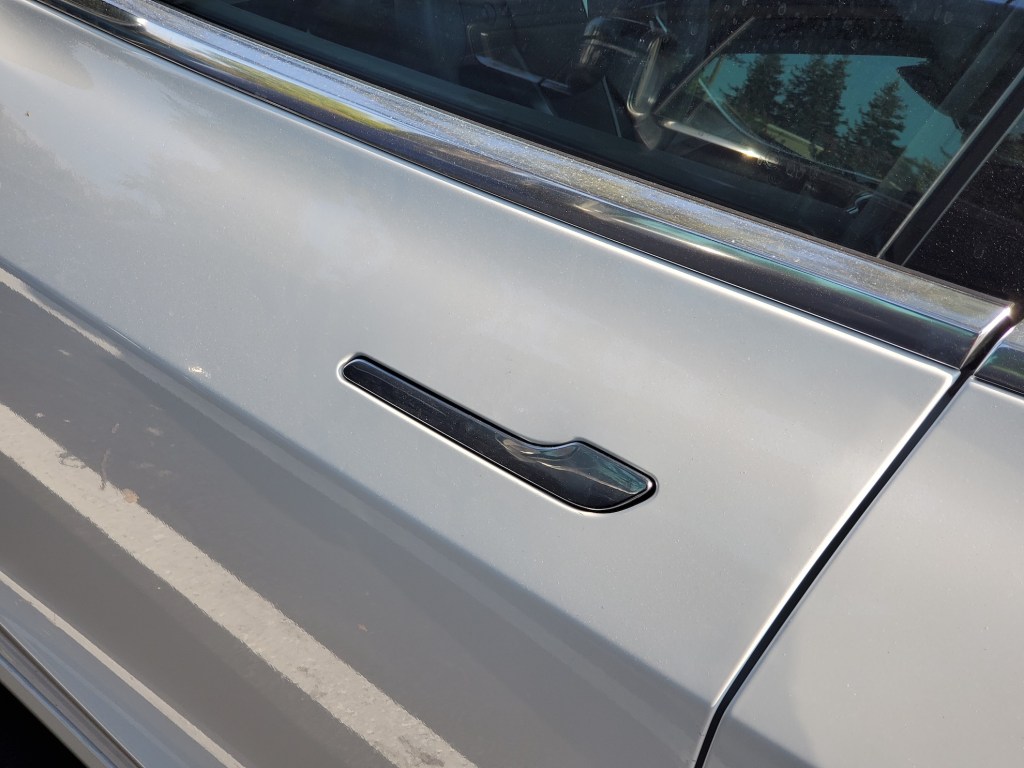
Under new safety rules published Monday by China’s Ministry of Industry and Information Technology, cars sold in the country must have mechanical releases on their door handles. The new rules, which go in effect January 1, 2027, will prohibit the hidden, electronically actuated door handles popularized by Tesla — and now found on numerous other electric vehicles in China.

The new rule dictates that each door (excluding the tailgate) should be equipped with a mechanically released external door handle. Vehicles must also have a mechanical release on the interior of the vehicle. Bloomberg previously reported on the new safety policy.

Numerous high-profile fatal incidents, in which occupants have become trapped in their vehicles, have raised concerns among safety regulators and advocates globally. China is the first country to issue a ban.

An investigation by Bloomberg last September uncovered problems with the concealed door handles on Tesla vehicles, citing several crashes in which first responders or occupants were unable to open the doors because the electronic door locks weren’t getting enough power from the vehicle’s battery system to work properly. The U.S. National Highway Traffic Safety Administration then opened a defect investigation into certain Tesla Model Y and Model 3 door handles. While Tesla does have manual releases inside its vehicles, federal investigators noted that the releases can be hard for children to access, and many owners are unaware of their existence. Some U.S. lawmakers have proposed regulation requiring manual door releases in all new vehicles.

Fatal incidents in China, including a crash involving a Xiaomi SU7 electric sedan, prompted regulators there to propose changes to EV door handles last year.

The Chinese government began the process in May 2025 with more than 40 domestic vehicle manufacturers, parts suppliers, and testing institutions participating in the initial research. More than 100 industry experts held multiple rounds of discussions to determine the standard framework and form a draft standard of what would become the Safety Technical Requirements for Automobile Door Handles rule, according to the Chinese government’s standards agency.

Techcrunch event

TechCrunch Founder Summit 2026: Tickets Live

On June 23 in Boston, more than 1,100 founders come together at TechCrunch Founder Summit 2026 for a full day focused on growth, execution, and real-world scaling. Learn from founders and investors who have shaped the industry. Connect with peers navigating similar growth stages. Walk away with tactics you can apply immediately

Save up to $300 on your pass or save up to 30% with group tickets for teams of four or more.

TechCrunch Founder Summit: Tickets Live

On June 23 in Boston, more than 1,100 founders come together at TechCrunch Founder Summit 2026 for a full day focused on growth, execution, and real-world scaling. Learn from founders and investors who have shaped the industry. Connect with peers navigating similar growth stages. Walk away with tactics you can apply immediately

Save up to $300 on your pass or save up to 30% with group tickets for teams of four or more.

Boston, MA
|
June 23, 2026

That included dozens of automakers, including Chinese companies such as BYD, Geely Holdings, SAIC, and Xiaomi, as well as foreign automakers, including General Motors, Ford, Hyundai, Nissan, Porsche, Toyota, and Volkswagen. Tesla, however, was not listed as an official “drafter,” according to information posted on the standards agency’s website.

Ref link: China is leading the fight against hidden car door handles
Posted on Leave a comment

Rivian’s AI assistant is coming to its EVs in early 2026 

Rivian’s two-year effort to build its own AI assistant will launch in early 2026. And when it does, the AI assistant will roll out to every existing EV in its lineup, not just the next-generation versions of its R1T truck and R1S SUV. 

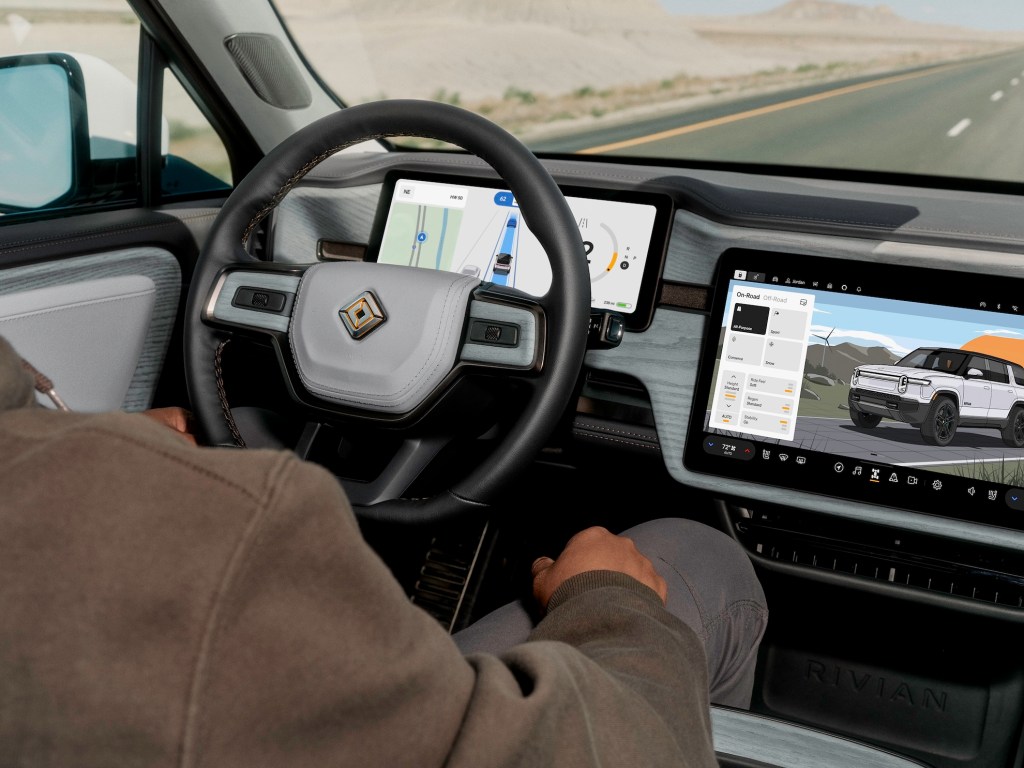
Drivers and passengers will be able to use the AI assistant to operate climate controls and handle other tasks contained within the vehicle’s infotainment system. It will also connect vehicle systems with third-party apps using an agentic framework built by Rivian engineers. Google Calendar will be the first third-party app to launch within the AI assistant, Rivian said Thursday.

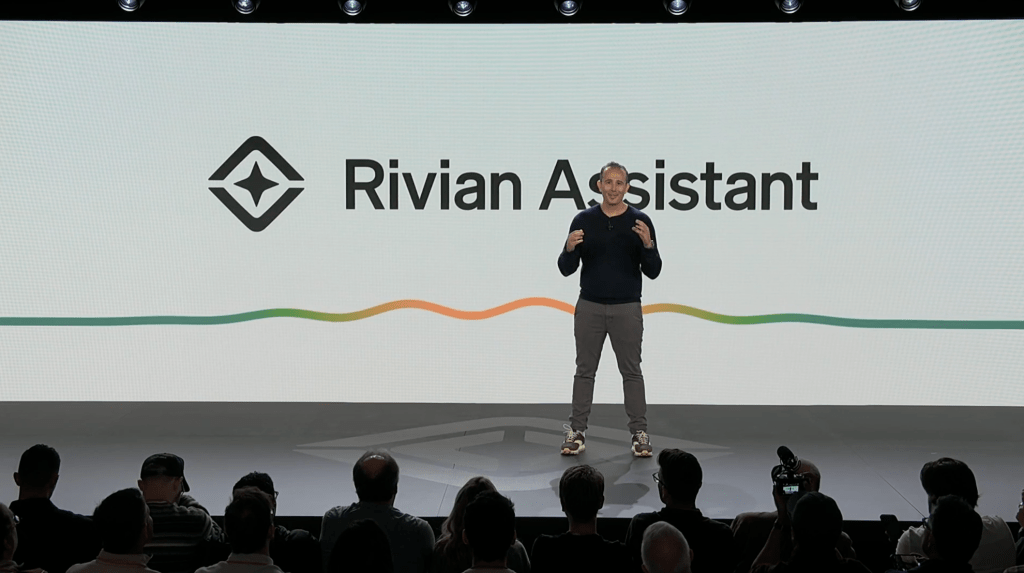
“The beauty here is we can integrate third-party agents, and this is completely redefining how apps in the future will integrate in our cars,” software development chief Wassym Bensaid said Thursday during the company’s AI & Autonomy event in Palo Alto, California.

The AI assistant will be augmented by frontier large language models — for instance, the Google Vertex AI and Gemini — for grounded data, natural conversation, and reasoning, according to Rivian.

Image Credits:Rivian

The AI assistant program, which TechCrunch first reported this week, reflects Rivian CEO RJ Scaringe’s push to become more vertically integrated. And that commitment was on full display at its AI & Autonomy event in Palo Alto, California. Beyond the AI assistant, the company detailed how it has developed a software and new hardware, including a custom 5nm processor built in collaboration with both Arm and TSMC, that will expand its hands-free driving assistance system and eventually let drivers take their eyes off the road.

This vertical integration work has been underway for years. In 2024, the EV maker completely reworked the guts of its flagship R1T truck and R1S SUV, changing everything from the battery pack and suspension system to the electrical architecture, sensor stack, and software user interface.

The company’s software team led by Bensaid has continued to work on building out the software stack. A smaller group — the size of which Rivian won’t disclose — focused on the AI assistant, which is designed to be model and platform agnostic, according to Bensaid.

Techcrunch event

Join the Disrupt 2026 Waitlist

Add yourself to the Disrupt 2026 waitlist to be first in line when Early Bird tickets drop. Past Disrupts have brought Google Cloud, Netflix, Microsoft, Box, Phia, a16z, ElevenLabs, Wayve, Hugging Face, Elad Gil, and Vinod Khosla to the stages — part of 250+ industry leaders driving 200+ sessions built to fuel your growth and sharpen your edge. Plus, meet the hundreds of startups innovating across every sector.

Join the Disrupt 2026 Waitlist

Add yourself to the Disrupt 2026 waitlist to be first in line when Early Bird tickets drop. Past Disrupts have brought Google Cloud, Netflix, Microsoft, Box, Phia, a16z, ElevenLabs, Wayve, Hugging Face, Elad Gil, and Vinod Khosla to the stages — part of 250+ industry leaders driving 200+ sessions built to fuel your growth and sharpen your edge. Plus, meet the hundreds of startups innovating across every sector.

San Francisco
|
October 13-15, 2026

To power this AI assistant, Rivian developed what it has described as a model- and platform-agnostic architecture that uses custom large language models and is branded as Rivian Unified Intelligence, or RUI. This hybrid software stack includes its own custom models and the “orchestration layer,” the conductor that makes sure the various AI models work together. Rivian said it has used other companies for specific agentic AI functions.

“The Riven Unified Intelligence is the connective tissue that runs through the very heart of Rivian’s digital ecosystem,” Bensaid said at the event. “This platform enables targeted agent solutions that drive value across our entire operation and our entire vehicle life cycle.”

For instance, RUI will be used for more than just providing an AI assistant, according to the company. It will also be used to improve vehicle diagnostics, which Rivian describes as “an expert assistant for technicians, scanning telemetry and history to pinpointing complex issues.”

The article was updated to clarify that the AI assistant will be augmented by frontier large language models.

Ref link: Rivian’s AI assistant is coming to its EVs in early 2026 

Posted on Leave a comment

Rivian goes big on autonomy, with custom silicon, lidar, and a hint at robotaxis

Rivian detailed Thursday how it plans to make its electric vehicles increasingly autonomous — an ambitious effort that includes new hardware, including lidar and custom silicon, and eventually, a potential entry into the self-driving ride-hail market, according to CEO RJ Scaringe.

The announcements at the company’s first “Autonomy & AI Day” event in Palo Alto, California, shed fresh light on Rivian’s technology development, much of which has been kept undercover as it pushes to begin production of its more affordable R2 SUV in the first half of 2026. Rivian’s event is also a very public signal to shareholders that it’s keeping pace, or even exceeding, the automated-driving capabilities of industry rivals like Tesla, Ford, General Motors, as well as automakers from Europe and China.

Rivian said it will expand the hands-free version of its driver-assistance software to “over 3.5 million miles of roads across the USA and Canada” and will eventually expand beyond highways to surface streets (with clearly painted road lines). This expanded access will be available on the company’s second-generation R1 trucks and SUVs. It’s calling the expanded capabilities “Universal Hands-Free” and will launch in early 2026. Rivian says it will charge a one-time fee of $2,500 or $49.99 per month.

“What that means is you can get into the vehicle at your house, plug in the address to where you’re going, and the vehicle will completely drive you there,” Scaringe said Thursday, describing a point-to-point navigation feature.

After that, Rivian plans to allow drivers to take their eyes off the road. “This gives you your time back. You can be on your phone, or reading a book, no longer needing to be actively involved in the operation of vehicle.”

Rivian’s driver assistance software won’t stop there; the EV maker laid out plans on Thursday to enhance its capabilities all the way up to what it’s calling “personal L4,” a nod to the level set by the Society of Automotive Engineers that means a car can operate in a particular area with no human intervention.

After that, Scaringe hinted that Rivian will be looking at competing with the likes of Waymo. “While our initial focus will be on personally owned vehicles, which today represent a vast majority of the miles driven in the United States, this also enables us to pursue opportunities in the ride-share space,” he said.

Techcrunch event

Join the Disrupt 2026 Waitlist

Add yourself to the Disrupt 2026 waitlist to be first in line when Early Bird tickets drop. Past Disrupts have brought Google Cloud, Netflix, Microsoft, Box, Phia, a16z, ElevenLabs, Wayve, Hugging Face, Elad Gil, and Vinod Khosla to the stages — part of 250+ industry leaders driving 200+ sessions built to fuel your growth and sharpen your edge. Plus, meet the hundreds of startups innovating across every sector.

Join the Disrupt 2026 Waitlist

Add yourself to the Disrupt 2026 waitlist to be first in line when Early Bird tickets drop. Past Disrupts have brought Google Cloud, Netflix, Microsoft, Box, Phia, a16z, ElevenLabs, Wayve, Hugging Face, Elad Gil, and Vinod Khosla to the stages — part of 250+ industry leaders driving 200+ sessions built to fuel your growth and sharpen your edge. Plus, meet the hundreds of startups innovating across every sector.

San Francisco
|
October 13-15, 2026

To help accomplish these lofty goals, Rivian has been building a “large driving model” (think: an LLM but for real-world driving), part of a move away from a rules-based framework for developing autonomous vehicles that has been led by Tesla. The company also showed off its own custom 5nm processor, which it says will be built in collaboration with both Arm and TSMC.

That custom chip powers what Rivian is referring to as its third-generation “autonomy computer,” or ACM3. The new computer can process 5 billion pixels per second and will start showing up on Rivian’s upcoming mass-market R2 SUV in late 2026.

Rivian will couple the ACM3 with a lidar sensor at the top of the windshield (from an undisclosed supplier) to provide “three-dimensional spatial data and redundant sensing,” which it says will help with “real-time detection for the edge cases of driving.”

“We expect that at launch in late 2026 this will be the most powerful combination of sensors and inference compute in consumer vehicles in North America,” senior vice president of electrical hardware Vidya Rajagopalan said at the event.

The R2 is set to start shipping in the first half of 2026, meaning the launch versions of the SUV will not have ACM3 or the lidar sensor. That means early versions of the R2 without the ACM3 and lidar hardware will most likely plateau at hands-free driving. Anyone hoping to do eyes-off or, later, unsupervised driving in a Rivian will need a vehicle with a lidar sensor.

“Adding lidar creates the ultimate sensing combination. It gives the most comprehensive 3D model of the space the vehicle is traveling through,” vice president of autonomy and AI James Philbin said Thursday. “The goal for our onboard sensing stack isn’t just human level, it’s superhuman level.”

This story has been updated to reflect that Rivian will not offer eyes-off driving in vehicles without lidar sensors.

Ref link: Rivian goes big on autonomy, with custom silicon, lidar, and a hint at robotaxis