Posted on Leave a comment

How iRobot lost its way home

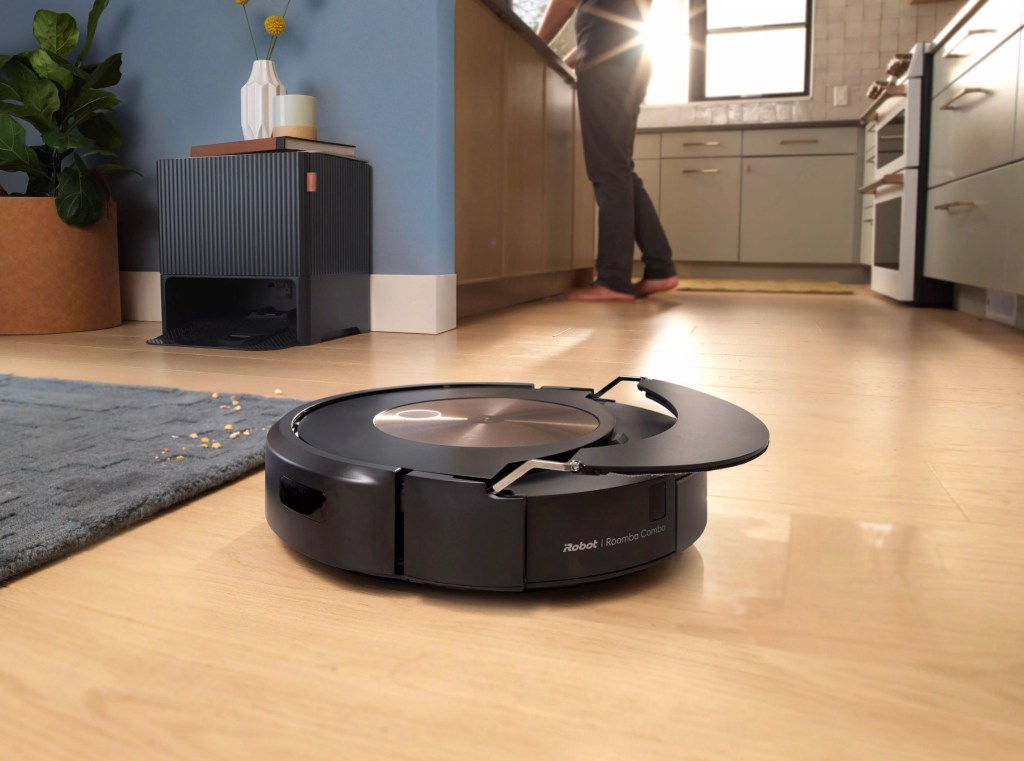
There’s something painfully American about the arc of iRobot, the company that taught your vacuum to navigate around the furniture. Founded in 1990 in Bedford, Massachusetts by MIT roboticist Rodney Brooks and his former students Colin Angle and Helen Greiner, the company filed for Chapter 11 bankruptcy on Sunday, ending a 35-year run that took it from the dreams of AI researchers to your kitchen floor and, finally, to the tender mercies of its Chinese supplier.

Brooks, the founding director of MIT’s Computer Science and Artificial Intelligence Lab and the robotics field’s resident provocateur, spent the eighties watching insects and having epiphanies about how simple systems could produce complex behaviors. By 1990, he’d translated those insights into a company that would eventually sell over 50 million robots. The Roomba, launched in 2002, became the rare gadget that transcended its category to become a verb, a meme, and, to the amusement of many, a cat-transportation device.

The money soon followed, with the company raising $38 million altogether, including from The Carlyle Group, before going public in a 2005 IPO that raised $103.2 million. By 2015, iRobot was flush enough to launch its own venture arm, prompting TechCrunch to wryly declare that “robot domination may have just taken another step forward.” The plan at the time was to invest $100,000 to $2 million in up to 10 seed and Series A robotics startups each year. It was the kind of move that marks a company’s arrival, the moment when you’re successful enough to fund the next generation’s dreams.

Then came what looked like salvation. In 2022, Amazon agreed to acquire iRobot for $1.7 billion in what would have been Amazon’s fourth-largest acquisition ever. In a press release announcing the news, Angle, who’d been CEO since the company’s inception, spoke about “creating innovative, practical products” and finding “a better place for our team to continue our mission.” It seemed like a fairy tale ending — the scrappy MIT spinoff absorbed into the Everything Store’s sprawling empire.

Except European regulators had other ideas. Indeed, amid threats they would block the deal — they believed that Amazon could foreclose rivals by restricting or degrading access to its marketplace — Amazon and iRobot agreed to kill the deal in January 2024, with Amazon paying a $94 million breakup fee and walking away. Angle resigned. The company’s shares nosedived. It shed 31% of its workforce.

What followed afterward was a slow-motion collapse. Earnings had been declining since 2021 thanks to supply chain chaos and Chinese competitors flooding the market with cheaper robot vacuums. The Carlyle Group, which provided a $200 million lifeline back in 2023, ultimately just prolonged the inevitable. (It finally sold that loan last month — presumably at a discount, though it didn’t say either way.)

Now it’s over, at least, the version of the company that existed previously. Shenzhen PICEA Robotics, iRobot’s main supplier and lender, will take control of the reorganized company. According to a release issued by iRobot on Sunday, the restructuring plan allows iRobot to remain as a going concern and “continue operating in the ordinary course with no anticipated disruption to its app functionality, customer programs, global partners, supply chain relationships, or ongoing product support.”

Techcrunch event

Join the Disrupt 2026 Waitlist

Add yourself to the Disrupt 2026 waitlist to be first in line when Early Bird tickets drop. Past Disrupts have brought Google Cloud, Netflix, Microsoft, Box, Phia, a16z, ElevenLabs, Wayve, Hugging Face, Elad Gil, and Vinod Khosla to the stages — part of 250+ industry leaders driving 200+ sessions built to fuel your growth and sharpen your edge. Plus, meet the hundreds of startups innovating across every sector.

Join the Disrupt 2026 Waitlist

Add yourself to the Disrupt 2026 waitlist to be first in line when Early Bird tickets drop. Past Disrupts have brought Google Cloud, Netflix, Microsoft, Box, Phia, a16z, ElevenLabs, Wayve, Hugging Face, Elad Gil, and Vinod Khosla to the stages — part of 250+ industry leaders driving 200+ sessions built to fuel your growth and sharpen your edge. Plus, meet the hundreds of startups innovating across every sector.

San Francisco
|
October 13-15, 2026

It also vowed to “meet its commitments to employees and make timely payments in full to vendors and other creditors for amounts owed throughout the court-supervised process.”

What this means for customers longer term is another question, one we’ve reached out to iRobot to ask. In its release, iRobot promises to keep supporting existing products during restructuring; at the same time, its legal disclosures acknowledge the inherent uncertainties of bankruptcy — whether suppliers stick around, whether the process goes as planned, whether the company survives at all.

As The Verge noted in a story about iRobot’s struggles last month, even if iRobot eventually collapses and takes its cloud services down with it, customers’ Roomba vacuums won’t become useless pucks. The physical controls should keep working — a Roomba owner could still jab the button to send it off to vacuum or tell it to head home.

What Roomba owners would lose is everything that make the devices feel futuristic, including app-based scheduling, the ability to tell it which rooms to clean, and voice commands barked at Alexa while sprawled on the couch.

Ref link: How iRobot lost its way home
Posted on Leave a comment

1X struck a deal to send its ‘home’ humanoids to factories and warehouses

Robotics company 1X found some big potential buyers for its humanoid robots designed for consumers — the portfolio companies of one of its investors.

The company announced a strategic partnership to make thousands of its humanoid robots available for EQT’s portfolio companies on Thursday. EQT is a large Swedish multi-asset investor, and its venture fund EQT Ventures, is one of 1X’s backers.

This deal involves shipping up to 10,000 1X Neo humanoid robots between 2026 and 2030 to EQT’s more than 300 portfolio companies with a concentration on manufacturing, warehousing, logistics, and other industrial use cases.

1X will sign individual deals with each of EQT’s interested portfolio companies, 1X confirmed to TechCrunch.

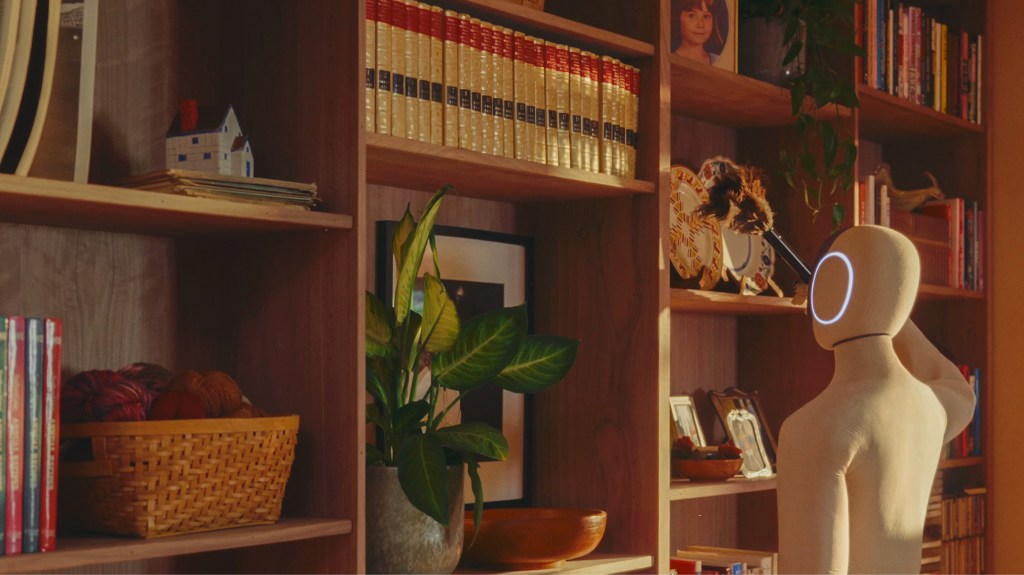
This partnership is particularly interesting because 1X’s Neo has been marketed as a humanoid for personal use and tagged as the “first consumer-ready humanoid robot designed to transform life at home.” Unlike some of 1X’s peers, like Figure, it has not been marketed as a bot for commercial purposes.

1X does have a robot designed for industrial purposes, Eve Industrial, but this deal specifically involves the Neo humanoid.

When the company opened up preorders for the $20,000 robot in October, the announcement was focused on how the robot would operate in someone’s home from descriptions of the different chores that the robot is able to perform and how it interacts with people.

Techcrunch event

Join the Disrupt 2026 Waitlist

Add yourself to the Disrupt 2026 waitlist to be first in line when Early Bird tickets drop. Past Disrupts have brought Google Cloud, Netflix, Microsoft, Box, Phia, a16z, ElevenLabs, Wayve, Hugging Face, Elad Gil, and Vinod Khosla to the stages — part of 250+ industry leaders driving 200+ sessions built to fuel your growth and sharpen your edge. Plus, meet the hundreds of startups innovating across every sector.

Join the Disrupt 2026 Waitlist

Add yourself to the Disrupt 2026 waitlist to be first in line when Early Bird tickets drop. Past Disrupts have brought Google Cloud, Netflix, Microsoft, Box, Phia, a16z, ElevenLabs, Wayve, Hugging Face, Elad Gil, and Vinod Khosla to the stages — part of 250+ industry leaders driving 200+ sessions built to fuel your growth and sharpen your edge. Plus, meet the hundreds of startups innovating across every sector.

San Francisco
|
October 13-15, 2026

This deal is quite a different use case.

That’s likely because humanoids for the home will remain a hard sell for quite some time while industrial use cases are an easier sell. The $20,000 price tag automatically limits the potential pool of consumer customers too.

The Neo specifically also comes with a privacy element that would be hard to swallow for many people — human operators from 1X are able to look through the robots eyes into someone’s home.

Humanoids also come with potential safety issues around pets and small children due to their size and instability. Multiple VCs and scientists in the robotics field told TechCrunch this summer that humanoid adoption wouldn’t be for multiple years, if not a decade away.

The company declined to share how many preorders it received for its Neo bot but a spokesperson said preorders “far exceeded” the company’s goal.

Founded in 2014, 1x has since raised more than $130 million in venture capital from firms, including EQT Ventures, Tiger Global, and the OpenAI Startup Fund, among others.

Ref link: 1X struck a deal to send its ‘home’ humanoids to factories and warehouses

Posted on Leave a comment

Rivian’s AI assistant is coming to its EVs in early 2026 

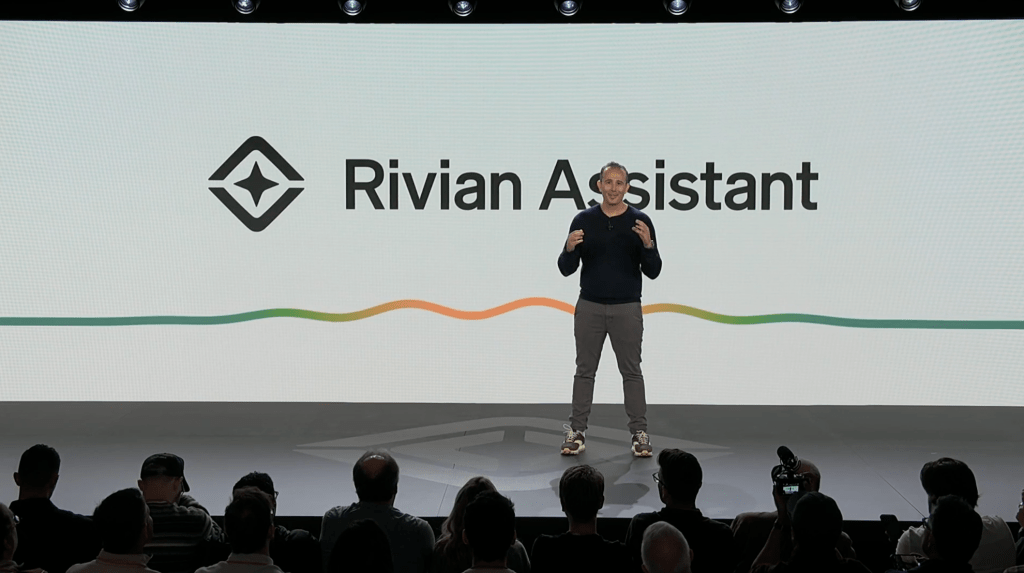
Rivian’s two-year effort to build its own AI assistant will launch in early 2026. And when it does, the AI assistant will roll out to every existing EV in its lineup, not just the next-generation versions of its R1T truck and R1S SUV. 

Drivers and passengers will be able to use the AI assistant to operate climate controls and handle other tasks contained within the vehicle’s infotainment system. It will also connect vehicle systems with third-party apps using an agentic framework built by Rivian engineers. Google Calendar will be the first third-party app to launch within the AI assistant, Rivian said Thursday.

“The beauty here is we can integrate third-party agents, and this is completely redefining how apps in the future will integrate in our cars,” software development chief Wassym Bensaid said Thursday during the company’s AI & Autonomy event in Palo Alto, California.

The AI assistant will be augmented by frontier large language models — for instance, the Google Vertex AI and Gemini — for grounded data, natural conversation, and reasoning, according to Rivian.

Image Credits:Rivian

The AI assistant program, which TechCrunch first reported this week, reflects Rivian CEO RJ Scaringe’s push to become more vertically integrated. And that commitment was on full display at its AI & Autonomy event in Palo Alto, California. Beyond the AI assistant, the company detailed how it has developed a software and new hardware, including a custom 5nm processor built in collaboration with both Arm and TSMC, that will expand its hands-free driving assistance system and eventually let drivers take their eyes off the road.

This vertical integration work has been underway for years. In 2024, the EV maker completely reworked the guts of its flagship R1T truck and R1S SUV, changing everything from the battery pack and suspension system to the electrical architecture, sensor stack, and software user interface.

The company’s software team led by Bensaid has continued to work on building out the software stack. A smaller group — the size of which Rivian won’t disclose — focused on the AI assistant, which is designed to be model and platform agnostic, according to Bensaid.

Techcrunch event

Join the Disrupt 2026 Waitlist

Add yourself to the Disrupt 2026 waitlist to be first in line when Early Bird tickets drop. Past Disrupts have brought Google Cloud, Netflix, Microsoft, Box, Phia, a16z, ElevenLabs, Wayve, Hugging Face, Elad Gil, and Vinod Khosla to the stages — part of 250+ industry leaders driving 200+ sessions built to fuel your growth and sharpen your edge. Plus, meet the hundreds of startups innovating across every sector.

Join the Disrupt 2026 Waitlist

Add yourself to the Disrupt 2026 waitlist to be first in line when Early Bird tickets drop. Past Disrupts have brought Google Cloud, Netflix, Microsoft, Box, Phia, a16z, ElevenLabs, Wayve, Hugging Face, Elad Gil, and Vinod Khosla to the stages — part of 250+ industry leaders driving 200+ sessions built to fuel your growth and sharpen your edge. Plus, meet the hundreds of startups innovating across every sector.

San Francisco
|
October 13-15, 2026

To power this AI assistant, Rivian developed what it has described as a model- and platform-agnostic architecture that uses custom large language models and is branded as Rivian Unified Intelligence, or RUI. This hybrid software stack includes its own custom models and the “orchestration layer,” the conductor that makes sure the various AI models work together. Rivian said it has used other companies for specific agentic AI functions.

“The Riven Unified Intelligence is the connective tissue that runs through the very heart of Rivian’s digital ecosystem,” Bensaid said at the event. “This platform enables targeted agent solutions that drive value across our entire operation and our entire vehicle life cycle.”

For instance, RUI will be used for more than just providing an AI assistant, according to the company. It will also be used to improve vehicle diagnostics, which Rivian describes as “an expert assistant for technicians, scanning telemetry and history to pinpointing complex issues.”

The article was updated to clarify that the AI assistant will be augmented by frontier large language models.

Ref link: Rivian’s AI assistant is coming to its EVs in early 2026 

Posted on Leave a comment

Security flaws in Freedom Chat app exposed users’ phone numbers and PINs

Messaging app Freedom Chat has fixed a pair of security flaws: one that allowed a security researcher to guess registered users’ phone numbers, and another that exposed user-set PINs to others on the app.

Freedom Chat, released in June, bills itself as a secure messaging app, and claims on its website that users’ phone numbers stay private.

But security researcher Eric Daigle told TechCrunch that users’ phone numbers and PIN codes, used for locking the app, could be easily obtained by exploiting vulnerabilities.

Daigle found the vulnerabilities last week and shared their details with TechCrunch, as Freedom Chat does not provide a public way to report security flaws, like a vulnerability disclosure program. TechCrunch then alerted Freedom Chat founder Tanner Haas to the security flaws by email.

Haas confirmed to TechCrunch that the app has now reset user PINs and released a new version. Haas added that the company is removing instances where users’ phone numbers were occasionally visible, and has notched up rate-limiting on its servers to prevent mass-guess attempts.

Daigle, who published his findings in a blog post, told TechCrunch it was possible to enumerate the phone numbers of close to 2,000 users who had signed up to use Freedom Chat since it launched. Daigle said Freedom Chat’s servers allowed anyone to flood it with millions of phone number guesses to determine if a user’s phone number was stored on the servers.

Per Daigle, this technique is identical to one described by the University of Vienna in research last month, where academics scraped data on some 3.5 billion user accounts who signed up to WhatsApp by matching billions of phone numbers against WhatsApp’s servers.

Daigle also found Freedom Chat was leaking users’ PIN codes. Using an open source network traffic inspection tool to analyze the data going in and out of the app, Daigle saw that the app would respond with the PIN codes of every other user in the same public channel — even if the PINs weren’t visible to users within the app itself.

According to Daigle, anyone who was in the default Freedom Chat channel, which users are automatically subscribed to when they first sign up, had their PIN broadcast to everyone else in the channel. Daigle told TechCrunch that knowledge of a person’s PIN could allow someone to open the app from a user’s stolen device.

In an app store update published Sunday, Freedom Chat noted: “A critical reset: A recent backend update inadvertently exposed user PINs in a system response. No messages were ever at risk, and because Freedom Chat does not support linked devices, your conversations were never accessible; however, we’ve reset all user PINs to ensure your account stays secure. Your privacy remains our top priority.”

Freedom Chat is Haas’ second messaging app, after Converso, which was delisted from app stores following the disclosure of security flaws that exposed users’ private messages and content.

Ref link: Security flaws in Freedom Chat app exposed users’ phone numbers and PINs