Posted on Leave a comment

NASA Selects Two Heliophysics Missions for Continued Development

NASA circular logo
NASA

NASA has selected one small explorer mission concept to advance toward flight design and another for an extended period of concept development.

NASA’s Science Mission Directorate Science Management Council selected CINEMA (Cross-scale Investigation of Earth’s Magnetotail and Aurora) to enter Phase B of development, which includes planning and design for flight and mission operations. The principal investigator for the CINEMA mission concept is Robyn Millan from Dartmouth College in Hanover, New Hampshire.

The proposed CINEMA mission aims to advance our understanding of how plasma energy flows into the Earth’s magnetosphere. This highly dynamic convective flow is unpredictable — sometimes steady and sometimes explosive — driving phenomena like fast plasma jets, global electrical current systems, and spectacular auroral displays.

“The CINEMA mission will help us to research magnetic convection in Earth’s magnetosphere — a critical piece of the puzzle in understanding why some space weather events are so influential, such as causing magnificent aurora displays and impacts to ground- and space-based infrastructure, and others seem to fizzle out,” said Joe Westlake, director of the Heliophysics Division at NASA Headquarters in Washington. “Using multiple, multi-point measurements to improve predictions of these impacts on humans and technology across the solar system is a key strategy for the future of heliophysics research.”

The CINEMA mission’s constellation of nine small satellites will investigate the convective mystery using a combination of instruments — an energetic particle detector, an auroral imager, and a magnetometer — on each spacecraft in a polar low Earth orbit. By relating the energetic particles observed in this orbit to simultaneous auroral images and local magnetic field measurements, CINEMA aims to connect energetic activity in Earth’s large-scale magnetic structure to the visible signatures like aurora that we see in the ionosphere. The mission has been awarded approximately $28 million to enter Phase B. The total cost of the mission, not including launch, will not exceed $182.8 million. Phase B will last 10 months, and if selected, the mission would launch no earlier than 2030.

NASA also selected the proposed CMEx (Chromospheric Magnetism Explorer) mission for an extended Phase A study. This extended phase is for the mission to assess and refine their design for potential future consideration. The principal investigator for the CMEx mission concept study is Holly Gilbert from the National Center for Atmospheric Research in Boulder, Colorado. The cost of the extended Phase A, which will last 12 months, is $2 million.

The CMEx concept is a proposed single-spacecraft mission that would use proven UV spectropolarimetric instrumentation that has been demonstrated during NASA’s CLASP (Chromospheric Layer Spectropolarimeter) sub-orbital sounding rocket flight. Using this heritage hardware, CMEx would be able to diagnose lower layers of the Sun’s chromosphere to understand the origin of solar eruptions and determine the magnetic sources of the solar wind.

The proposed missions completed a one-year early concept study in response to the 2022 Heliophysics Explorers Program Small-class Explorer (SMEX) Announcement of Opportunity.

“Space is becoming increasingly more important and plays a role in just about everything we do,” said Asal Naseri, acting associate flight director for heliophysics at NASA Headquarters. “These mission concepts, if advanced to flight, will improve our ability to predict solar events that could harm satellites that we rely on every day and mitigate danger to astronauts near Earth, at the Moon, or Mars.”

To learn more about NASA heliophysics missions, visit:

https://science.nasa.gov/heliophysics

-end-

Abbey Interrante / Karen Fox
Headquarters, Washington
301-201-0124 / 202-358-1600
abbey.a.interrante@nasa.gov / karen.c.fox@nasa.gov

Ref link: NASA Selects Two Heliophysics Missions for Continued Development
Posted on Leave a comment

NASA Works with Boeing, Other Collaborators Toward More Efficient Global Flights 

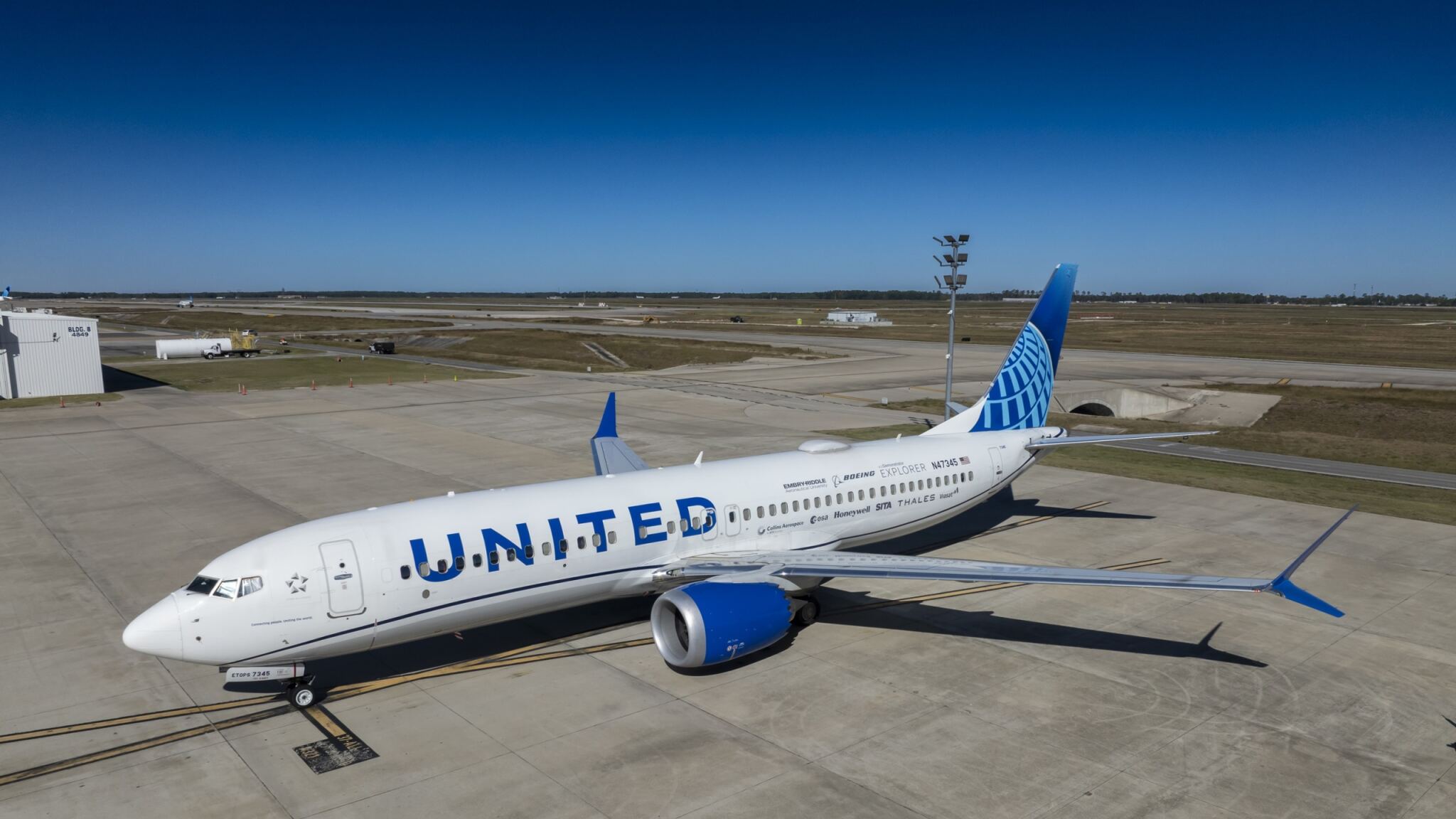
NASA works with Boeing and the ecodemonstrator plane is parked on the tarmac.
The 2025 Boeing ecoDemonstrator Explorer, a United Airlines 737-8, sits outside a United hangar in Houston.
Boeing / Paul Weatherman

Picture this: You’re just about done with a transoceanic flight, and the tracker in your seat-back screen shows you approaching your destination airport. And then … you notice your plane is moving away. Pretty far away. You approach again and again, only to realize you’re on a long, circling loop that can last an hour or more before you land. 

If this sounds familiar, there’s a good chance the delay was caused by issues with trajectory prediction. Your plane changed its course, perhaps altering its altitude or path to avoid weather or turbulence, and as a result its predicted arrival time was thrown off.  

“Often, if there’s a change in your trajectory – you’re arriving slightly early, you’re arriving slightly late – you can get stuck in this really long, rotational holding pattern,” said Shivanjli Sharma, NASA’s Air Traffic Management–eXploration (ATM-X) project manager and the agency’s Ames Research Center in California’s Silicon Valley. 

This inconvenience to travelers is also an economic and efficiency challenge for the aviation sector, which is why NASA has worked for years to study the issue, and recently teamed with Boeing to conduct real-time tests an advanced system that shares trajectory data between an aircraft and its support systems. 

Boeing began flying a United Airlines 737 for about two weeks in October testing a data communication system designed to improve information flow between the flight deck, air traffic control, and airline operation centers. The work involved several domestic flights based in Houston, as well as flight over the Atlantic to Edinburgh, Scotland. 

This partnership has allowed NASA to further its commitment to transformational aviation research.

Shivanjli sharma

Shivanjli sharma

NASA’s Air Traffic Management—eXploration project manager

The testing was Boeing’s most recent ecoDemonstrator Explorer program, through which the company works with public and private partners to accelerate aviation innovations. This year’s ecoDemonstrator flight partners included NASA, the Federal Aviation Administration, United Airlines, and several aerospace companies as well as academic and government researchers. 

NASA’s work in the testing involved the development of an oceanic trajectory prediction service – a system for sharing and updating trajectory information, even over a long, transoceanic flight that involves crossing over from U.S. air traffic systems into those of another country. The collaboration allowed NASA to get a more accurate look at what’s required to reduce gaps in data sharing. 

“At what rate do you need these updates in an oceanic environment?” Sharma said. “What information do you need from the aircraft? Having the most accurate trajectory information will allow aircraft to move more efficiently around the globe.” 

Boeing and the ecoDemonstrator collaborators plan to use the flight data to move the data communication system toward operational service. The work has allowed NASA to continue its work to improve trajectory prediction, and through its connection with partners, put its research into practical use as quickly as possible. 

“This partnership has allowed NASA to further its commitment to transformational aviation research,” Sharma said. “Bringing our expertise in trajectory prediction together with the contributions of so many innovative partners contributes to global aviation efficiency that will yield real benefits for travelers and industry.” 

NASA ATM-X’s part in the collaboration falls under the agency’s Airspace Operations and Safety Program, which works to enable safe, efficient aviation transportation operations that benefit the flying public and industry. The work is supported through NASA’s Aeronautics Research Mission Directorate.  

Ref link: NASA Works with Boeing, Other Collaborators Toward More Efficient Global Flights