Posted on Leave a comment

Google launched its deepest AI research agent yet — on the same day OpenAI dropped GPT-5.2

Google released on Thursday a “reimagined” version of its research agent Gemini Deep Research based on its much-ballyhooed state-of-the-art foundation model, Gemini 3 Pro.  

This new agent isn’t just designed to produce research reports — although it can still do that. It now allows developers to embed Google’s SATA-model research capabilities into their own apps. That capability is made possible through Google’s new Interactions API, which is designed to give devs more control in the coming agentic AI era. 

The new Gemini Deep Research tool is an agent equipped to synthesize mountains of information and handle a large context dump in the prompt. Google says it’s used by customers for tasks ranging from due diligence to drug toxicity safety research. 

Google also says it will soon be integrating this new deep research agent into services, including Google Search, Google Finance, its Gemini App, and its popular NotebookLM. This is another step toward preparing for a world where humans don’t Google anything anymore — their AI agents do. 

The tech giant says that Deep Research benefits from Gemini 3 Pro’s status as its “most factual” model that is trained to minimize hallucinations during complex tasks.

AI hallucinations — where the LLM just makes stuff up — are an especially crucial issue for long-running, deep reasoning agentic tasks, in which many autonomous decisions are made over minutes, hours, or longer. The more choices an LLM has to make, the greater the chance that even one hallucinated choice will invalidate the entire output. 

To prove its progress claims, Google has also created yet another benchmark (as if the AI world needs another one). The new benchmark is unimaginatively named DeepSearchQA and is intended to test agents on complex, multi-step information-seeking tasks. Google has open sourced this benchmark.  

Techcrunch event

Join the Disrupt 2026 Waitlist

Add yourself to the Disrupt 2026 waitlist to be first in line when Early Bird tickets drop. Past Disrupts have brought Google Cloud, Netflix, Microsoft, Box, Phia, a16z, ElevenLabs, Wayve, Hugging Face, Elad Gil, and Vinod Khosla to the stages — part of 250+ industry leaders driving 200+ sessions built to fuel your growth and sharpen your edge. Plus, meet the hundreds of startups innovating across every sector.

Join the Disrupt 2026 Waitlist

Add yourself to the Disrupt 2026 waitlist to be first in line when Early Bird tickets drop. Past Disrupts have brought Google Cloud, Netflix, Microsoft, Box, Phia, a16z, ElevenLabs, Wayve, Hugging Face, Elad Gil, and Vinod Khosla to the stages — part of 250+ industry leaders driving 200+ sessions built to fuel your growth and sharpen your edge. Plus, meet the hundreds of startups innovating across every sector.

San Francisco
|
October 13-15, 2026

It also tested Deep Research on Humanity’s Last Exam, a much more interestingly named, independent benchmark of general knowledge filled with impossibly niche tasks; and BrowserComp, a benchmark for browser-based agentic tasks.

As you might expect, Google’s new agent bested the competition on its own benchmark, and Humanity’s. However, OpenAI’s ChatGPT 5 Pro was a surprisingly close second all the way around and slightly bested Google on BrowserComp. 

But those benchmark comparisons were obsolete almost the moment Google published them. Because on the same day, OpenAI launched its highly anticipated GPT 5.2 — codenamed Garlic. OpenAI says its newest model bests its rivals — especially Google — on a suite of the typical benchmarks, including OpenAI’s homegrown one. 

Perhaps one of the most interesting parts of this announcement was the timing. Knowing that the world was awaiting the release of Garlic, Google dropped some AI news of its own.

Ref link: Google launched its deepest AI research agent yet — on the same day OpenAI dropped GPT-5.2
Posted on Leave a comment

Epic Games’ Fortnite is back in US Google Play Store, as court partially reverses restrictions it won on iOS

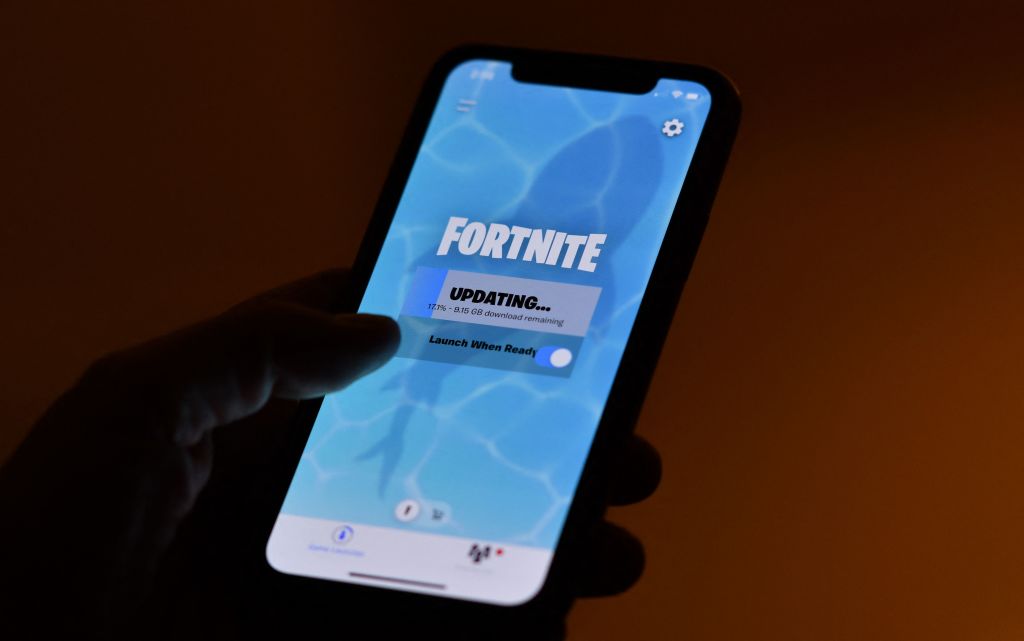
Epic Games’ popular battle royale, Fortnite, has returned to the U.S. Google Play Store following a court order.

The game maker had recently settled its five-year legal battle with the tech giant, which stemmed from a dispute around the percentage of in-app purchase sales that app developers had to share with the platforms. However, the company lost a little ground on its related lawsuit against Apple, which was also over in-app purchase restrictions and commission structure.

After Epic Games launched a version of its Fortnite game that routed around the existing in-app payment systems on iOS and Android devices in 2020, Apple and Google removed the game from their respective app stores. Epic Games used that move to then file antitrust lawsuits against both companies.

In Apple’s case, the court ruled the iPhone maker was not a monopolist but said Apple needed to allow developers to point to other payment mechanisms if they chose. Apple has been fighting the specific terms of that agreement, which were today partially overturned by an appeals court that called some of the restrictions “overbroad.”

Of note, the new filing states Apple can tell developers not to make their links to payments bigger or more prominent than Apple’s own. It also says Apple is allowed to charge a fee on purchases made outside its App Store. The latter is a significant blow to developers, who had finally been able to skirt Apple’s commission.

Meanwhile, Epic Games has reason to celebrate by returning to the Google Play Store after Google lost its court battle with the game developer, where it was ruled to have engaged in anticompetitive behavior. Under the new agreement, Google allows app developers to point to alternative payment mechanisms and caps the fees Google could charge.

Epic Games CEO Tim Sweeney called it a “comprehensive solution” that doubled down on Android as an open platform.

The Apple ruling is below:

Epic v Apple – 9th Circuit Order – 20251211 by TechCrunch

Ref link: Epic Games’ Fortnite is back in US Google Play Store, as court partially reverses restrictions it won on iOS

Posted on Leave a comment

Disney hits Google with cease-and-desist claiming ‘massive’ copyright infringement

Disney sent a cease-and-desist letter to Google on Wednesday, alleging that the tech giant has infringed on its copyrights, Variety reports.

Disney is accusing the tech giant of copyright infringement on a “massive scale,” claiming it has used AI models and services to commercially distribute unauthorized images and videos, according to the letter seen by Variety.

“Google operates as a virtual vending machine, capable of reproducing, rendering, and distributing copies of Disney’s valuable library of copyrighted characters and other works on a mass scale,” the letter reads. “And compounding Google’s blatant infringement, many of the infringing images generated by Google’s AI Services are branded with Google’s Gemini logo, falsely implying that Google’s exploitation of Disney’s intellectual property is authorized and endorsed by Disney.”

The letter alleges that Google’s AI systems infringe characters from “Frozen,” “The Lion King,” “Moana,” “The Little Mermaid,” “Deadpool,” and more.

Google didn’t confirm or deny Disney’s allegations but did say it will “engage” with the company. “We have a longstanding and mutually beneficial relationship with Disney, and will continue to engage with them. More generally, we use public data from the open web to build our AI and have built additional innovative copyright controls like Google-extended and Content ID for YouTube, which give sites and copyright holders control over their content,” a spokesperson said.

Disney’s move comes the same day that it signed a $1 billion, three-year deal with OpenAI that will bring its iconic characters to the company’s Sora AI video generator.

Techcrunch event

Join the Disrupt 2026 Waitlist

Add yourself to the Disrupt 2026 waitlist to be first in line when Early Bird tickets drop. Past Disrupts have brought Google Cloud, Netflix, Microsoft, Box, Phia, a16z, ElevenLabs, Wayve, Hugging Face, Elad Gil, and Vinod Khosla to the stages — part of 250+ industry leaders driving 200+ sessions built to fuel your growth and sharpen your edge. Plus, meet the hundreds of startups innovating across every sector.

Join the Disrupt 2026 Waitlist

Add yourself to the Disrupt 2026 waitlist to be first in line when Early Bird tickets drop. Past Disrupts have brought Google Cloud, Netflix, Microsoft, Box, Phia, a16z, ElevenLabs, Wayve, Hugging Face, Elad Gil, and Vinod Khosla to the stages — part of 250+ industry leaders driving 200+ sessions built to fuel your growth and sharpen your edge. Plus, meet the hundreds of startups innovating across every sector.

San Francisco
|
October 13-15, 2026

Ref link: Disney hits Google with cease-and-desist claiming ‘massive’ copyright infringement

Posted on Leave a comment

Google’s AI try-on feature for clothes now works with just a selfie

Google is updating its AI try-on feature to let you virtually try on clothes using just a selfie, the company announced on Thursday. In the past, users had to upload a full-body picture of themselves to virtually try on a piece of clothing. Now they can use a selfie and Nano Banana, Google’s Gemini 2.5 Flash Image model, to generate a full-body digital version of themselves for virtual try-ons.

Users can select their usual clothing size, and the feature will then generate several images. From there, users can choose one to make it their default try-on photo.

If desired, users still have the option to use a full-body photo or select from a range of models with diverse body types.

The new capability is launching in the United States today.

Image Credits:Google

Google first launched the try-on feature in July, allowing users to try on apparel items from its Shopping Graph across Search, Google Shopping, and Google Images. To use the feature, users need to tap on a product listing or apparel product result and select the “try it on” icon.

The move comes as Google has been investing in the virtual AI try-on space, as the company has a separate app dedicated specifically to that purpose. The app, called Doppl, is designed to help visualize how different outfits might look on you using AI.

Earlier this week, the tech giant updated it with a shoppable discovery feed that displays recommendations so users can discover and virtually try on new items. Nearly everything in the feed is shoppable, with direct links to merchants.

The discovery feed features AI-generated videos of real products and suggests outfits based on your personalized style. While some may not be fond of an AI-generated feed, Google likely views it as a way to showcase products in a format that people are already familiar with, thanks to platforms like TikTok and Instagram.

Ref link: Google’s AI try-on feature for clothes now works with just a selfie

Posted on Leave a comment

Google debuts ‘Disco,’ a Gemini-powered tool for making web apps from browser tabs

Google on Thursday introduced a new AI experiment for the web browser: the Gemini-powered product Disco, which helps to turn your open tabs into custom applications. With Disco, you can create what Google is calling “GenTabs,” a tool that proactively suggests interactive web apps that can help you complete tasks related to what you’re browsing and allows you to build your own apps via written prompts.

For instance, if you’re studying a particular subject, GenTabs might suggest building a web app to visualize the information, which could help you better understand the core principles.

Image Credits:Google

Or, in a less academic scenario, you could use GenTabs to help you create a meal plan from a series of online recipes or help you plan a trip when you’re researching travel.

These are things that you can already do today with some AI-powered chatbots, but GenTabs builds these custom experiences on the fly using Gemini 3, using the information in your browser and in your Gemini chat history. After the app is built, you can also continue to refine it using natural language commands.

The resulting generative elements in the GenTabs experience will link back to the original sources, Google notes.

Image Credits:Google

Like others in the AI market, Google has been experimenting with bringing AI deeper into the web-browsing experience. Instead of building its own stand-alone AI browser, like Perplexity’s Comet or ChatGPT Atlas, Google integrated its AI assistant Gemini into the Chrome browser, where it can optionally be used to ask questions about the web page you’re on.

With GenTabs, the focus is not only on what you’re currently viewing, but also on your overall browsing, spanning multiple tabs — whether that’s research, learning, or something else.

Techcrunch event

Join the Disrupt 2026 Waitlist

Add yourself to the Disrupt 2026 waitlist to be first in line when Early Bird tickets drop. Past Disrupts have brought Google Cloud, Netflix, Microsoft, Box, Phia, a16z, ElevenLabs, Wayve, Hugging Face, Elad Gil, and Vinod Khosla to the stages — part of 250+ industry leaders driving 200+ sessions built to fuel your growth and sharpen your edge. Plus, meet the hundreds of startups innovating across every sector.

Join the Disrupt 2026 Waitlist

Add yourself to the Disrupt 2026 waitlist to be first in line when Early Bird tickets drop. Past Disrupts have brought Google Cloud, Netflix, Microsoft, Box, Phia, a16z, ElevenLabs, Wayve, Hugging Face, Elad Gil, and Vinod Khosla to the stages — part of 250+ industry leaders driving 200+ sessions built to fuel your growth and sharpen your edge. Plus, meet the hundreds of startups innovating across every sector.

San Francisco
|
October 13-15, 2026

However, the feature is only initially going to be available to a small number of testers through Google Labs, who will offer feedback about the experience. The company says that interesting ideas that are developed through Disco may one day find their way into other, larger Google products.

It also suggests that GenTabs will be one of many Disco features to come over time, noting that GenTabs is the “first feature” being tested.

To access Disco, users will need to join a waitlist to download the app, starting on macOS.

Ref link: Google debuts ‘Disco,’ a Gemini-powered tool for making web apps from browser tabs