Posted on Leave a comment

WhatsApp’s biggest market is becoming its toughest test

WhatsApp, Meta’s messaging app that millions of Indians rely on daily, is facing a critical moment in India as recent government directions threaten to disrupt how the platform works for everyday users and businesses.

Issued late last month and made public earlier this month, the directions ask certain app-based communication services to keep accounts continuously linked to an active SIM card and impose stricter controls on how the apps function across devices.

New Delhi says the measures are aimed at curbing rising cyber fraud in India, the world’s most populous nation. Digital advocacy groups, policy experts, and industry groups representing major digital platforms — including Meta — have warned, however, that the approach risks regulatory overreach and could disrupt legitimate use, especially in a country where WhatsApp has evolved into everyday infrastructure for personal communication and small-business commerce.

The directions, which app providers including Meta, Telegram, and Signal must comply with within 90 days of their issuance on November 28, require messaging apps to remain tied to the SIM card used at sign-up. The web and desktop versions of these apps also require users to log out every six hours and re-link their devices via a QR code to regain access.

“Mandatory continuous SIM–device binding and periodic logout ensure that every active account and web session is anchored to a live, KYC-verified SIM, restoring traceability of numbers used in phishing, investment, digital arrest, and loan scams,” the telecom ministry said in a press release earlier this month, adding that India suffered cyber-fraud losses exceeding ₹228 billion (about $2.5 billion) in 2024 alone.

The Indian government has clarified that the rules do not apply when the SIM remains in the device, and the user is roaming.

While the directions apply broadly to major instant messaging apps, their impact is likely to be felt most acutely by WhatsApp, which is used by more than 500 million people in India. The app’s adoption in India is also unusually deep. As much as 94% of WhatsApp’s Indian monthly user base opened the app daily in November, while 67% of WhatsApp Business users in the country did the same, according to Sensor Tower data shared with TechCrunch. By comparison, 59% of WhatsApp monthly users in the U.S. opened the app daily, alongside 57% for WhatsApp Business.

Techcrunch event

Join the Disrupt 2026 Waitlist

Add yourself to the Disrupt 2026 waitlist to be first in line when Early Bird tickets drop. Past Disrupts have brought Google Cloud, Netflix, Microsoft, Box, Phia, a16z, ElevenLabs, Wayve, Hugging Face, Elad Gil, and Vinod Khosla to the stages — part of 250+ industry leaders driving 200+ sessions built to fuel your growth and sharpen your edge. Plus, meet the hundreds of startups innovating across every sector.

Join the Disrupt 2026 Waitlist

Add yourself to the Disrupt 2026 waitlist to be first in line when Early Bird tickets drop. Past Disrupts have brought Google Cloud, Netflix, Microsoft, Box, Phia, a16z, ElevenLabs, Wayve, Hugging Face, Elad Gil, and Vinod Khosla to the stages — part of 250+ industry leaders driving 200+ sessions built to fuel your growth and sharpen your edge. Plus, meet the hundreds of startups innovating across every sector.

San Francisco
|
October 13-15, 2026

Many merchants in India rely on the WhatsApp Business app — a smartphone-based version of the service tailored for small enterprises — typically registering the account on a SIM-linked phone while handling customer conversations through WhatsApp’s web or desktop client on another device. Unlike larger companies that use WhatsApp’s Business APIs for automated, CRM-linked communication, these small businesses access their customers through WhatsApp Business and its companion web interface, meaning mandatory SIM binding and frequent forced logouts could break workflows for order-taking, support, and customer engagement.

The potential disruption in India comes as WhatsApp has been steadily expanding its multi-device and companion-device capabilities, allowing users and businesses to stay logged in across phones, browsers, and devices without relying on a single active smartphone.

Rapid expansion to deep entrenchment

The directions come as WhatsApp is undergoing a significant shift in India, its biggest market, with growth increasingly driven by retaining existing users rather than rapidly expanding its new user base.

WhatsApp’s monthly active users in India on mobile devices are up 6% year-over-year in the fourth quarter to date, even as downloads have fallen nearly 49%, per Sensor Tower data shared with TechCrunch. Compared with late 2022, WhatsApp’s monthly active users in India are up 24%, while downloads are down 14% over the same period, the market intelligence firm said.

“It could be fair to say that user (MAU) growth for WhatsApp in India across the past few years has been driven more by retention (successfully re-engaging existing or previous users) than acquiring new users,” said Abraham Yousef, senior insights analyst at Sensor Tower.

Data from Appfigures shows WhatsApp Business has consistently recorded more estimated first-time installs than WhatsApp Messenger in India since early 2024, reflecting how growth has increasingly been driven by merchant adoption rather than broad-based consumer expansion.

Image Credits:Jagmeet Singh / TechCrunch

Part of that pattern reflects how WhatsApp is used in India, said Randy Nelson, head of insights at Appfigures. It is common for merchants to maintain separate WhatsApp identities for personal and customer communication, often enabled by dual-SIM phones, while a single business can generate multiple installs across staff and shop devices.

Sensor Tower data points in the same direction. WhatsApp Business monthly active users in India were still growing year over year in late 2025 and are up more than 130% compared with 2021, far outpacing WhatsApp Messenger’s roughly 34% growth over the same period, the market intelligence firm’s data estimates.

While overall engagement remains higher on WhatsApp — with Indian users opening the app daily and spending an average of 38 minutes a day in November, compared with 27 minutes on WhatsApp Business — the gap looks different in the U.S., where users spent about 23 minutes a day on WhatsApp and 27 minutes on WhatsApp Business, Sensor Tower estimates show.

India’s directions raise “serious questions of technical feasibility”

In a statement last week, industry body Broadband India Forum (BIF), whose members include Meta, said the measures could result in “material inconvenience and service disruption on ordinary users,” adding that they raise “serious questions of technical feasibility.”

The directions hinge on a new and still-contested classification of Telecommunication Identifier User Entities (TIUEs) under India’s telecom cybersecurity rules, said Kazim Rizvi, founding director of New Delhi-based public policy think tank The Dialogue, effectively placing messaging apps within a telecom framework — a shift from their traditional regulation under the country’s IT Act — through executive directions rather than formal legislation.

“The directions derive their power not from statute but from delegated legislation,” Rizvi told TechCrunch. “Moreover, the lack of public consultations or technical working groups risks creating compliance friction without addressing the underlying fraud vectors.”

India’s telecom ministry did not respond to a request for comments.

For now, companies including Meta have limited room to challenge the directions in court, according to tech policy experts.

Challenging the directions would typically require showing either that they exceed the scope of the underlying law or that they violate constitutional protections, said Dhruv Garg, a tech policy advisor and partner at the Indian Governance and Policy Project — a high bar that may be difficult to meet in this case.

Meta declined to comment on this article.

Ref link: WhatsApp’s biggest market is becoming its toughest test

Posted on Leave a comment

DoorDash driver faces felony charges after allegedly spraying customers’ food

A woman is facing felony charges in Evansville, Indiana over a DoorDash delivery in which she allegedly sprayed the food with a substance that made the customers vomit.

In a press release, the Vanderburgh County Sheriff’s Office said that it was contacted on December 7 by a man who said that he and his wife vomited and experienced a burning sensation in their mouth, nose, throat, and stomachs after eating fast food ordered through DoorDash.

The man told NBC News that he noticed something red had been sprayed on the delivery bag, so he checked footage from their doorbell camera. According to the sheriff’s department, the footage shows that after dropping off the food and taking a photo, the woman appeared to spray a substance towards the food from a small aerosol can attached to her keychain.

The sheriff’s department said that using DoorDash records, detectives identified the woman as Kourtney Stevenson of Kentucky, who told local police in a phone call that she had been working for DoorDash while visiting her father, and that she’d used pepper spray to spray a spider. But the department also said that with an overnight low of 35 degrees Fahrenheit, “outdoor spiders in Indiana are not active and would not be capable of crawling on exposed surfaces.”

When Stevenson allegedly declined to come in for an interview, detectives obtained a warrant to arrest her for battery resulting in a moderate injury and consumer product tampering. She is now awaiting extradition to Indiana.

A DoorDash spokesperson said in a statement that Stevenson has been banned from the platform.

“We have absolutely zero tolerance for this type of appalling behavior,” the spokesperson said. “The Dasher’s access to the platform has been permanently removed, and our team is supporting law enforcement with their investigation.”

Techcrunch event

Join the Disrupt 2026 Waitlist

Add yourself to the Disrupt 2026 waitlist to be first in line when Early Bird tickets drop. Past Disrupts have brought Google Cloud, Netflix, Microsoft, Box, Phia, a16z, ElevenLabs, Wayve, Hugging Face, Elad Gil, and Vinod Khosla to the stages — part of 250+ industry leaders driving 200+ sessions built to fuel your growth and sharpen your edge. Plus, meet the hundreds of startups innovating across every sector.

Join the Disrupt 2026 Waitlist

Add yourself to the Disrupt 2026 waitlist to be first in line when Early Bird tickets drop. Past Disrupts have brought Google Cloud, Netflix, Microsoft, Box, Phia, a16z, ElevenLabs, Wayve, Hugging Face, Elad Gil, and Vinod Khosla to the stages — part of 250+ industry leaders driving 200+ sessions built to fuel your growth and sharpen your edge. Plus, meet the hundreds of startups innovating across every sector.

San Francisco
|
October 13-15, 2026

The New York Times and NBC News both report that it’s not clear if Stevenson has a lawyer who can comment on her behalf.

Ref link: DoorDash driver faces felony charges after allegedly spraying customers’ food

Posted on Leave a comment

World launches its ‘super app,’ including crypto pay and encrypted chat features

World, the biometric ID verification project co-founded by Sam Altman, released the newest version of its app today, debuting several new features, including an encrypted chat integration and an expanded, Venmo-like capability for sending and requesting crypto. 

World was created by the startup Tools for Humanity in 2019, and originally launched its app in 2023. The company says that, in a world roiled by AI-generated digital fakery, it hopes to create digital “proof of human” tools that can help separate the humans from the bots.

During a small gathering at World’s headquarters in San Francisco on Thursday, Altman and World’s co-founder and CEO, Alex Blania, briefly introduced the new version of the app (which developers have termed a “super app”) before the product team took over to explain the new features. During his remarks, Altman said that the concept for World grew out of conversations he and Blania had had about the need to create a new kind of economic model. That model, based around web3 principles, is what World has been trying to accomplish through its verification network. “It’s really hard to both identify unique people and do that in a privacy-preserving way,” said Altman.

World Chat, the app’s new messenger, seems designed to do just that. It uses end-to-end encryption to keep users’ conversations safe (this encryption is described as being equivalent to Signal, the privacy-focused messenger), and also leverages color-coded speech bubbles to alert users to whether the person they’re talking to has been verified by World’s system or not, the company said. The idea is to incentivize verification, giving people the power to know whether the person they’re talking to is who they say they are. Chat was originally launched in beta in March.

The other big feature reveal on Thursday was an expanded digital payment system that allows app users to send and receive cryptocurrency. World app has functioned as a digital wallet for some time, but the newest version of the app includes broader capabilities. Using virtual bank accounts, users can also receive paychecks directly into World App and make deposits from their bank accounts, both of which can then be converted into crypto. You don’t have be verified by World’s authentication system to use these features.

Tiago Sada, World’s chief product officer, told TechCrunch that part of the reason chat was added was to create a more interactive experience for users. “What we kept hearing from people is that they wanted a more social World app,” Sada said. World Chat is designed to fill that need, creating what Sada says is a secure way to communicate. “It took a lot of work to make this feature-rich messenger that is similar to a WhatsApp or a Telegram, but with encryption and security of something that is a lot closer to Signal,” Sada said.

World (which was originally called Worldcoin) deploys a unique authentication process: interested humans get their eyes scanned at one of the company’s offices, where the Orb—a large verification device—converts the person’s iris into a unique and encrypted digital code. That code, the verified World ID, can then be used by the person to interact with World’s ecosystem of services, which are available through its app.

Techcrunch event

Join the Disrupt 2026 Waitlist

Add yourself to the Disrupt 2026 waitlist to be first in line when Early Bird tickets drop. Past Disrupts have brought Google Cloud, Netflix, Microsoft, Box, Phia, a16z, ElevenLabs, Wayve, Hugging Face, Elad Gil, and Vinod Khosla to the stages — part of 250+ industry leaders driving 200+ sessions built to fuel your growth and sharpen your edge. Plus, meet the hundreds of startups innovating across every sector.

Join the Disrupt 2026 Waitlist

Add yourself to the Disrupt 2026 waitlist to be first in line when Early Bird tickets drop. Past Disrupts have brought Google Cloud, Netflix, Microsoft, Box, Phia, a16z, ElevenLabs, Wayve, Hugging Face, Elad Gil, and Vinod Khosla to the stages — part of 250+ industry leaders driving 200+ sessions built to fuel your growth and sharpen your edge. Plus, meet the hundreds of startups innovating across every sector.

San Francisco
|
October 13-15, 2026

The addition of more social-friendly features is clearly meant to drive broader adoption of the app, which makes sense since scaling verification is the company’s main challenge. Altman has said that he would like the project to scan a billion people’s eyes, but Tools for Humanity claims to have scanned less than 20 million people.  

Since standing in long lines at a corporate office to have your eyeballs scanned by a giant metallic ball may seem slightly less than enticing to some users, the company has already sought to make its verification process less cumbersome. In April, Tools for Humanity announced its Orb Minis—hand-held, phone-like devices—that allow users to scan their own eyes from the comfort of their homes. Blania previously told TechCrunch that, eventually, the company would like to turn the Orb Minis into a mobile point-of-sale device or sell its ID sensor tech to device manufacturers. If the company takes such steps, it would drop the barrier to verification significantly, potentially inspiring much more widespread adoption.

Ref link: World launches its ‘super app,’ including crypto pay and encrypted chat features

Posted on Leave a comment

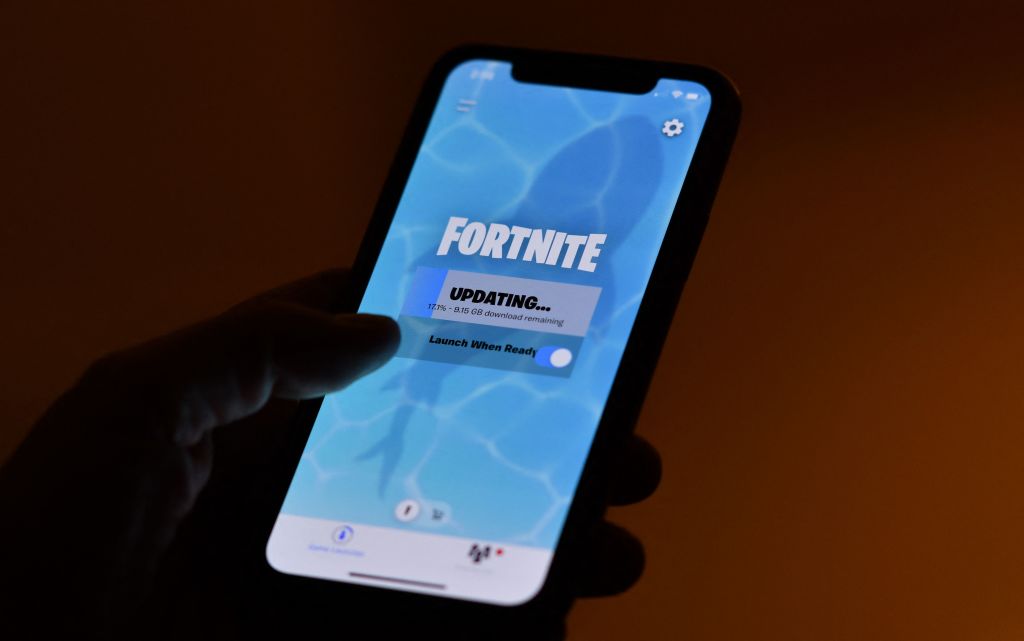
Epic Games’ Fortnite is back in US Google Play Store, as court partially reverses restrictions it won on iOS

Epic Games’ popular battle royale, Fortnite, has returned to the U.S. Google Play Store following a court order.

The game maker had recently settled its five-year legal battle with the tech giant, which stemmed from a dispute around the percentage of in-app purchase sales that app developers had to share with the platforms. However, the company lost a little ground on its related lawsuit against Apple, which was also over in-app purchase restrictions and commission structure.

After Epic Games launched a version of its Fortnite game that routed around the existing in-app payment systems on iOS and Android devices in 2020, Apple and Google removed the game from their respective app stores. Epic Games used that move to then file antitrust lawsuits against both companies.

In Apple’s case, the court ruled the iPhone maker was not a monopolist but said Apple needed to allow developers to point to other payment mechanisms if they chose. Apple has been fighting the specific terms of that agreement, which were today partially overturned by an appeals court that called some of the restrictions “overbroad.”

Of note, the new filing states Apple can tell developers not to make their links to payments bigger or more prominent than Apple’s own. It also says Apple is allowed to charge a fee on purchases made outside its App Store. The latter is a significant blow to developers, who had finally been able to skirt Apple’s commission.

Meanwhile, Epic Games has reason to celebrate by returning to the Google Play Store after Google lost its court battle with the game developer, where it was ruled to have engaged in anticompetitive behavior. Under the new agreement, Google allows app developers to point to alternative payment mechanisms and caps the fees Google could charge.

Epic Games CEO Tim Sweeney called it a “comprehensive solution” that doubled down on Android as an open platform.

The Apple ruling is below:

Epic v Apple – 9th Circuit Order – 20251211 by TechCrunch

Ref link: Epic Games’ Fortnite is back in US Google Play Store, as court partially reverses restrictions it won on iOS

Posted on Leave a comment

Google’s AI try-on feature for clothes now works with just a selfie

Google is updating its AI try-on feature to let you virtually try on clothes using just a selfie, the company announced on Thursday. In the past, users had to upload a full-body picture of themselves to virtually try on a piece of clothing. Now they can use a selfie and Nano Banana, Google’s Gemini 2.5 Flash Image model, to generate a full-body digital version of themselves for virtual try-ons.

Users can select their usual clothing size, and the feature will then generate several images. From there, users can choose one to make it their default try-on photo.

If desired, users still have the option to use a full-body photo or select from a range of models with diverse body types.

The new capability is launching in the United States today.

Image Credits:Google

Google first launched the try-on feature in July, allowing users to try on apparel items from its Shopping Graph across Search, Google Shopping, and Google Images. To use the feature, users need to tap on a product listing or apparel product result and select the “try it on” icon.

The move comes as Google has been investing in the virtual AI try-on space, as the company has a separate app dedicated specifically to that purpose. The app, called Doppl, is designed to help visualize how different outfits might look on you using AI.

Earlier this week, the tech giant updated it with a shoppable discovery feed that displays recommendations so users can discover and virtually try on new items. Nearly everything in the feed is shoppable, with direct links to merchants.

The discovery feed features AI-generated videos of real products and suggests outfits based on your personalized style. While some may not be fond of an AI-generated feed, Google likely views it as a way to showcase products in a format that people are already familiar with, thanks to platforms like TikTok and Instagram.

Ref link: Google’s AI try-on feature for clothes now works with just a selfie

Posted on Leave a comment

Google debuts ‘Disco,’ a Gemini-powered tool for making web apps from browser tabs

Google on Thursday introduced a new AI experiment for the web browser: the Gemini-powered product Disco, which helps to turn your open tabs into custom applications. With Disco, you can create what Google is calling “GenTabs,” a tool that proactively suggests interactive web apps that can help you complete tasks related to what you’re browsing and allows you to build your own apps via written prompts.

For instance, if you’re studying a particular subject, GenTabs might suggest building a web app to visualize the information, which could help you better understand the core principles.

Image Credits:Google

Or, in a less academic scenario, you could use GenTabs to help you create a meal plan from a series of online recipes or help you plan a trip when you’re researching travel.

These are things that you can already do today with some AI-powered chatbots, but GenTabs builds these custom experiences on the fly using Gemini 3, using the information in your browser and in your Gemini chat history. After the app is built, you can also continue to refine it using natural language commands.

The resulting generative elements in the GenTabs experience will link back to the original sources, Google notes.

Image Credits:Google

Like others in the AI market, Google has been experimenting with bringing AI deeper into the web-browsing experience. Instead of building its own stand-alone AI browser, like Perplexity’s Comet or ChatGPT Atlas, Google integrated its AI assistant Gemini into the Chrome browser, where it can optionally be used to ask questions about the web page you’re on.

With GenTabs, the focus is not only on what you’re currently viewing, but also on your overall browsing, spanning multiple tabs — whether that’s research, learning, or something else.

Techcrunch event

Join the Disrupt 2026 Waitlist

Add yourself to the Disrupt 2026 waitlist to be first in line when Early Bird tickets drop. Past Disrupts have brought Google Cloud, Netflix, Microsoft, Box, Phia, a16z, ElevenLabs, Wayve, Hugging Face, Elad Gil, and Vinod Khosla to the stages — part of 250+ industry leaders driving 200+ sessions built to fuel your growth and sharpen your edge. Plus, meet the hundreds of startups innovating across every sector.

Join the Disrupt 2026 Waitlist

Add yourself to the Disrupt 2026 waitlist to be first in line when Early Bird tickets drop. Past Disrupts have brought Google Cloud, Netflix, Microsoft, Box, Phia, a16z, ElevenLabs, Wayve, Hugging Face, Elad Gil, and Vinod Khosla to the stages — part of 250+ industry leaders driving 200+ sessions built to fuel your growth and sharpen your edge. Plus, meet the hundreds of startups innovating across every sector.

San Francisco
|
October 13-15, 2026

However, the feature is only initially going to be available to a small number of testers through Google Labs, who will offer feedback about the experience. The company says that interesting ideas that are developed through Disco may one day find their way into other, larger Google products.

It also suggests that GenTabs will be one of many Disco features to come over time, noting that GenTabs is the “first feature” being tested.

To access Disco, users will need to join a waitlist to download the app, starting on macOS.

Ref link: Google debuts ‘Disco,’ a Gemini-powered tool for making web apps from browser tabs

Posted on Leave a comment

Disney signs deal with OpenAI to allow Sora to generate AI videos featuring its characters

The Walt Disney Company announced on Thursday that it has signed a three-year partnership with OpenAI that will bring its iconic characters to the company’s Sora AI video generator. Disney is also making a $1 billion equity investment in OpenAI.

Launched in September, Sora allows users to create short videos using simple prompts. With this new agreement, users will be able to draw on more than 200 animated, masked, and creature characters from Disney, Marvel, Pixar, and Star Wars, including costumes, props, vehicles, and more.

These characters include iconic faces like Mickey Mouse, Ariel, Belle, Cinderella, Baymax, and Simba, as well as characters from Encanto, Frozen, Inside Out, Moana, Monsters, Inc., Toy Story, Up, and Zootopia. Users will also be able to draw on animated or illustrated versions of Marvel and Lucasfilm characters like Black Panther, Captain America, Deadpool, Groot, Iron Man, Darth Vader, Han Solo, Stormtroopers, and more.

Users will also be able to draw on these characters while using ChatGPT Images, the feature in ChatGPT that allows users to create visuals using text prompts.

The agreement does not include any talent likenesses or voices, Disney says.

“The rapid advancement of artificial intelligence marks an important moment for our industry, and through this collaboration with OpenAI we will thoughtfully and responsibly extend the reach of our storytelling through generative AI, while respecting and protecting creators and their works,” said Disney CEO Bob Iger in a statement.

Disney says that alongside the agreement, it will “become a major customer of OpenAI,” as it will use its APIs to build new products, tools, and experiences, including for Disney+.

Techcrunch event

Join the Disrupt 2026 Waitlist

Add yourself to the Disrupt 2026 waitlist to be first in line when Early Bird tickets drop. Past Disrupts have brought Google Cloud, Netflix, Microsoft, Box, Phia, a16z, ElevenLabs, Wayve, Hugging Face, Elad Gil, and Vinod Khosla to the stages — part of 250+ industry leaders driving 200+ sessions built to fuel your growth and sharpen your edge. Plus, meet the hundreds of startups innovating across every sector.

Join the Disrupt 2026 Waitlist

Add yourself to the Disrupt 2026 waitlist to be first in line when Early Bird tickets drop. Past Disrupts have brought Google Cloud, Netflix, Microsoft, Box, Phia, a16z, ElevenLabs, Wayve, Hugging Face, Elad Gil, and Vinod Khosla to the stages — part of 250+ industry leaders driving 200+ sessions built to fuel your growth and sharpen your edge. Plus, meet the hundreds of startups innovating across every sector.

San Francisco
|
October 13-15, 2026

“Disney is the global gold standard for storytelling, and we’re excited to partner to allow Sora and ChatGPT Images to expand the way people create and experience great content,” said Sam Altman, co-founder and CEO of OpenAI, in a statement. “This agreement shows how AI companies and creative leaders can work together responsibly to promote innovation that benefits society, respect the importance of creativity, and help works reach vast new audiences.”

It’s worth noting that Disney has sued the generative AI platform Midjourney for ignoring requests to stop violating its intellectual property rights. Disney also sent a cease-and-desist letter to Character.AI, urging the chatbot company to remove Disney characters from among the millions of AI companions on its platform.

Disney’s agreement with OpenAI indicates the company isn’t fully closing the door on AI platforms.

Ref link: Disney signs deal with OpenAI to allow Sora to generate AI videos featuring its characters